

When Rock in Rio Lisboa introduced the Smart City of Rock, the ambition was clear: use one of Europe’s largest festivals as a place to test ideas that could eventually improve real cities.
Now, with the first edition complete, the project has moved beyond its initial vision and produced its first measurable results.
Rather than treating innovation as a showcase, Smart City of Rock brought together startups, public institutions, researchers and technology partners inside a temporary city that welcomed hundreds of thousands of visitors over four festival days. The goal was to test solutions under real operating conditions, where mobility, accessibility, sustainability, safety, and visitor experience become practical challenges rather than theoretical discussions.
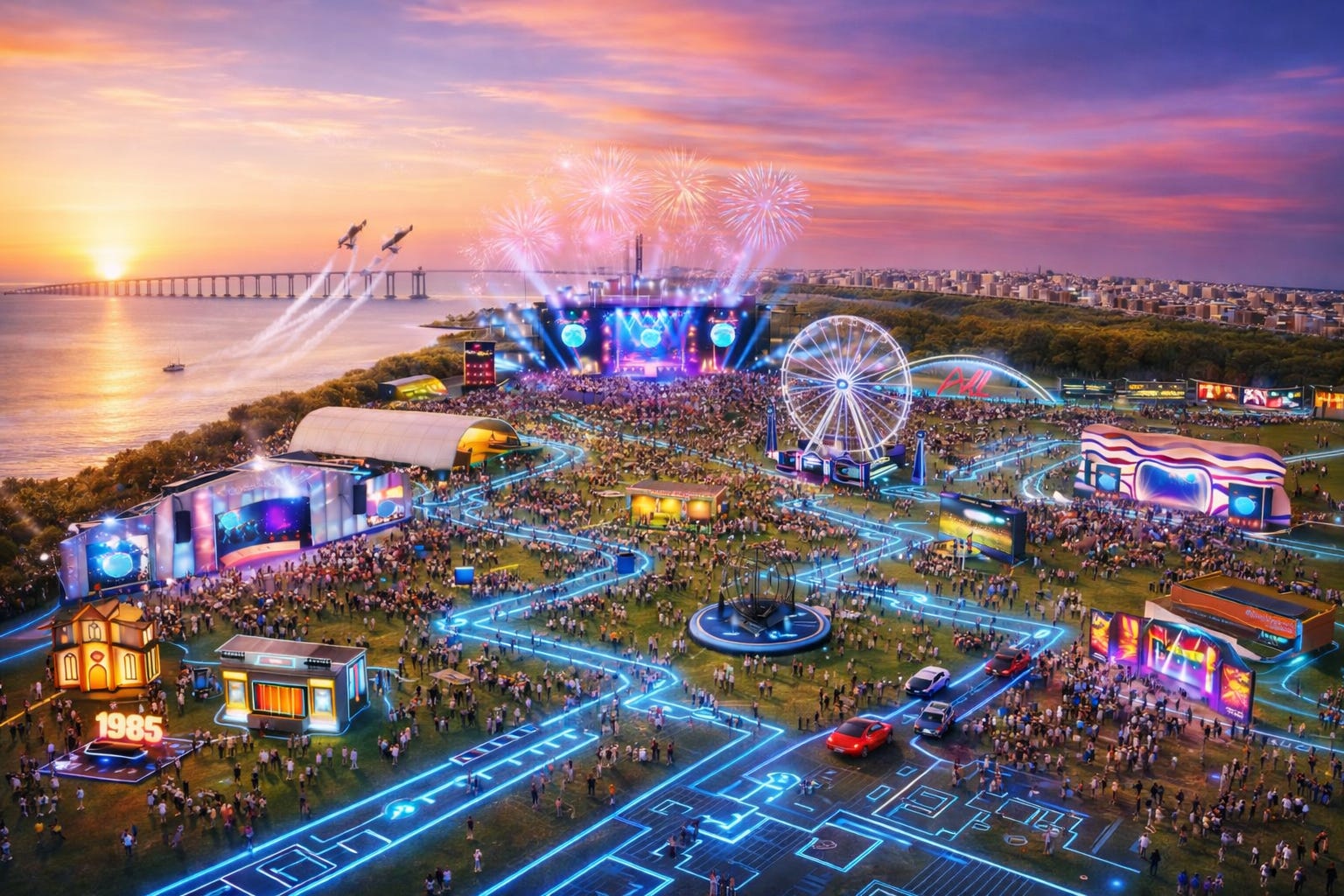
Image: Credits SAPO Tek
The numbers show the scale of that experiment.
More than 100 startups from eight countries applied to participate. Twenty were selected, and 13 later presented at the Smart Rock Tank, an investment event held after the festival at Unicorn Factory Lisboa. Organisers say the selected startups tested their products with real users, real operational demands and real data generated during the event.
Across the festival, the Smart City ecosystem brought together more than 30 organisations, including startups, technology companies, academic institutions and public entities. Together, they delivered 18 technology activations and 14 public experiences covering areas such as mobility, energy, accessibility, environmental monitoring, data and urban operations.
The Smart City Hub itself attracted 5,617 visitors, while 173 corporate stakeholders joined guided Smart Tours designed to introduce the technologies operating across the venue. Organisers also reported 139 business leads generated during the project, 1.24 terabytes of data processed through the Smart City Hub and eight pilot initiatives connected to the city of Lisbon.
Those results build on an idea already evident during the festival’s opening weekend. Instead of presenting disconnected technology demonstrations, the project positioned the Cidade do Rock as a functioning urban environment where different systems could operate together. Crowd management, digital infrastructure, environmental monitoring, accessibility, mobility and public information became parts of the same temporary city.
That systems approach also shaped the partnerships behind the initiative.
MEO Empresas joined as co-creator of the platform. Lisbon City Council connected the project with the city’s broader smart city agenda. The University of Lisbon contributed research projects and academic expertise, while Unicorn Factory Lisboa helped identify startups capable of testing their solutions in front of a large public audience.
The festival ended, but the initiative did not.
Days later, Smart Rock Tank brought together founders, investors, and institutional partners to discuss the startups that had participated in the festival. Inspired by investment pitch events, the session focused on companies whose technologies had already been demonstrated during Rock in Rio, creating opportunities for follow-up conversations around funding and future implementation.
According to Rock in Rio Executive Vice President Roberta Medina, the Smart City of Rock was designed to leverage Cidade do Rock beyond the festival experience by making technology more accessible to the public while testing solutions at scale for cities. Liquid Innovation Co. CEO Egon Barbosa said the objective is for solutions tested during the festival to move into cities and markets after proving themselves in real conditions.
Whether those ambitions translate into long-term urban adoption will only become clear over time. The first edition does not yet provide evidence of city-wide impact.
What it demonstrates is that a large entertainment event can also serve as a large-scale testing environment. Instead of limiting innovation to conference stages or laboratory settings, Smart City of Rock placed technologies inside a temporary city where thousands of people interacted with them as part of everyday festival life.
For Rock in Rio, the experiment was never only about making the festival smarter. It was about asking whether a festival can become infrastructure for innovation—and whether the lessons learned over four days can continue long after the music stops.
Reporting note: This article is based on public information available during Rock in Rio Lisboa 2026, the official PR, and interviews conducted last weekend in person during the event, while the festival was still underway.
Also read our insights from the first weekend:
Rock in Rio’s smartest headliner is not on stage

Halfway through Rock in Rio Lisboa 2026, the most interesting story at Parque Tejo may not be on the main stage at all.