

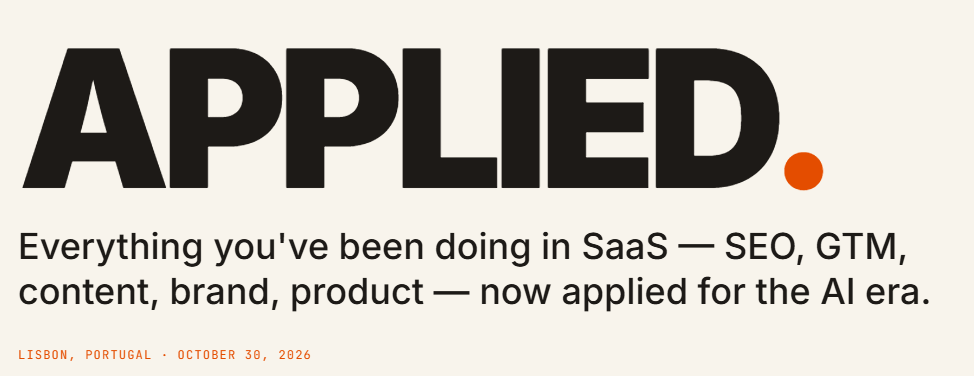
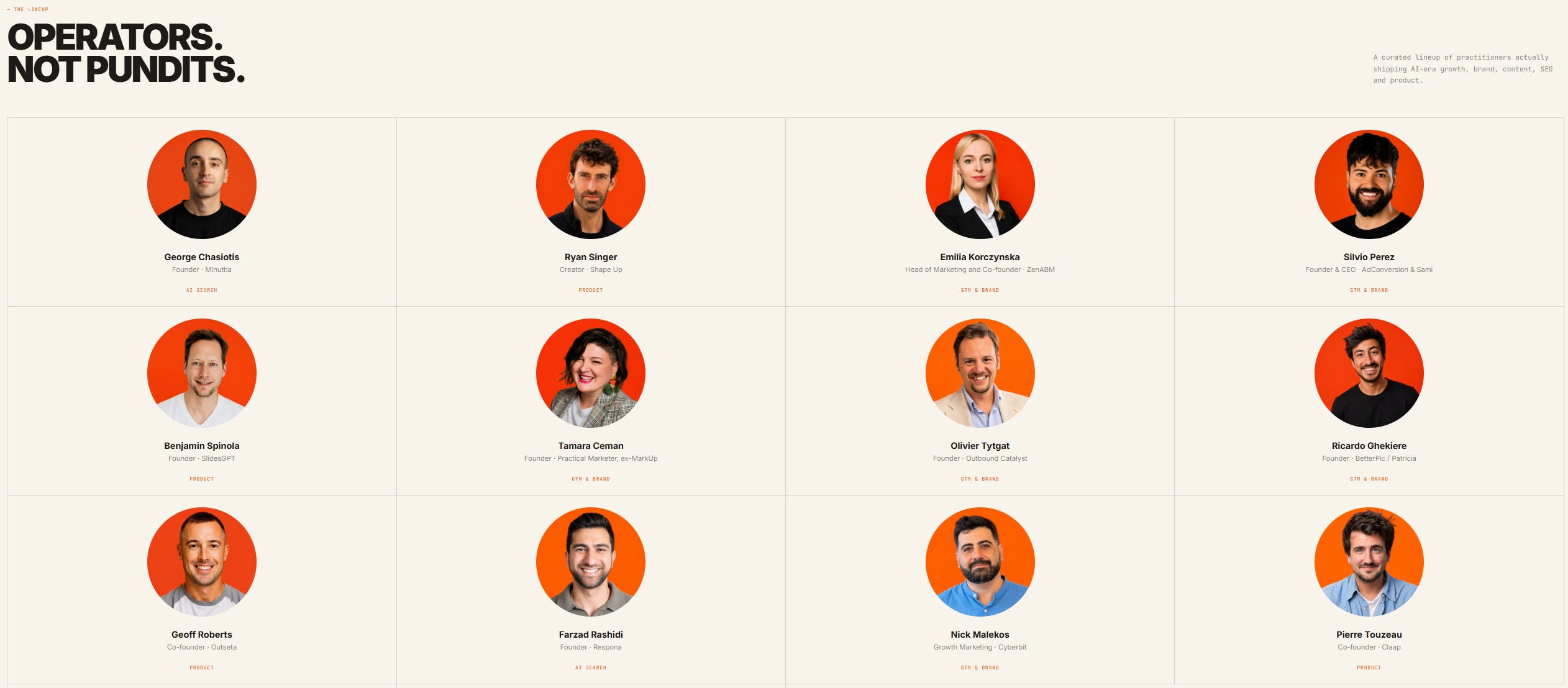
At Applied Conference in Lisbon on 30 October 2026, I joined a small roundtable led by Farzad Rashidi, founder of Respona. The session had an oddly industrial title: Citation engineering in practice. Behind it was a question that matters well beyond marketing: who gets to shape the evidence an AI assistant uses when it recommends a company?
Traditional search engine optimisation (SEO) was largely about earning a place among the links. Generative engine optimisation (GEO) is partly about appearing inside the answer itself. Ask for the best membership management platform, for example, and an assistant may compare several products, draw on web sources and present a shortlist before the buyer ever visits a supplier’s website.
A citation is the page the assistant points to as support. A recommendation is the brand it tells you to consider. The two are not interchangeable. A company can supply the source and still watch its competitor receive the recommendation.
From ranking pages to shaping the evidence
Rashidi began by questioning three popular tactics: self-promotional “best of” lists, planted Reddit endorsements, and requests to be added to articles that AI already cites. The first two are easy to copy; the third offers a narrow pool of opportunities.
His proposed method starts somewhere familiar: commercial search data. Identify valuable topics using signals such as search demand, advertising cost per click and competition. Translate those topics into realistic questions buyers might ask ChatGPT, Gemini or Google’s AI experiences. Then establish a baseline: which brands appear, for which questions, and which external pages are being cited?
The next step is more interesting. Instead of contacting only the authors of those already-cited pages and asking for a brand mention, identify other publications with comparable subject expertise and audiences. Tools such as Ahrefs can help locate domains that cover related topics. Offer them a stronger, more current comparison, review or practical guide. Publish it on their site, then measure whether the new material starts appearing in AI answers.
Rashidi described this as a repeatable alternative to buying an insertion in an ageing article. He said his company’s outreach data suggested that roughly one in a hundred contacted sites produced a placement. That is a proprietary figure from an interested provider, not an independently verified industry average. Still, the logic of widening the pool of possible publishers is understandable.
The underlying insight is familiar: a business praising itself carries less persuasive weight than someone else explaining why it might be the right choice. Referrals and independent reviews worked that way long before large language models.
But the strategy also changes the economics of promotion. The objective is no longer simply to attract visitors from a publisher’s article. It is to influence what another system learns from, cites and ultimately says about the brand.
That matters because fewer search journeys necessarily end with a click. In a Pew Research Center analysis of US Google use in March 2025, people clicked a conventional search result on 8% of pages containing an AI summary, compared with 15% without one. Links inside the summaries received clicks on only 1% of those pages. The study was observational and specific to Google, but it illustrates why being considered by an assistant may matter even when referral traffic does not follow.

The trouble with chasing freshness
The most provocative claim in the workshop was that publishing a new third-party article can be more useful than winning a mention in an old one. AI citations move quickly, Rashidi argued, so marketers should try to create tomorrow’s sources rather than rent space in yesterday’s.
Evidence supports the volatility, though it deserves careful interpretation. A study published by Ahrefs on 29 October followed about 37,500 citations across five AI tools for 20 days. Depending on the platform, 50–83% disappeared from the next day’s answers. Yet approximately three-quarters of citations that disappeared returned within the study window. Disappearance on one day is not proof that a source has permanently lost its place.
Freshness also does not simply mean publishing a new URL. Seer Interactive’s 2026 analysis examined 47,097 citations associated with 7,683 datable pages. Three-quarters of those pages had been updated within a year, but many were originally published much earlier. Consistently cited material was often established content that had been maintained, rather than the newest article in the category.
That suggests a less theatrical approach: update useful research, correct stale comparisons and build specialist authority over time. A new article can enter the conversation quickly. It does not follow that newness alone makes it accurate, independent or durable.
When third-party trust becomes a product
The uncomfortable part of citation engineering is how easily editorial credibility can become a purchasable input. The workshop discussed paying publishers to carry new content, as well as reciprocal arrangements between sites. Such collaborations can fund genuinely useful material. They can also produce apparently independent recommendations whose commercial origins are invisible to the reader.
This distinction is not merely philosophical. The EU’s Unfair Commercial Practices Directive prohibits paid editorial promotion that is not clearly identified as advertising. Google’s search spam policies also distinguish legitimate sponsored links from paid links intended to manipulate ranking signals. Whether a particular arrangement violates these rules depends on its details, but the principle should survive any algorithm change: sponsorship should not masquerade as independent judgement.
There is another measurement trap. The page may be cited after publication, and the brand may subsequently be mentioned more often. That sequence does not establish that the placement caused the recommendation. Model responses vary, source links disappear and return, and other campaigns may be running at the same time. Teams should track repeated answers across a stable set of commercially relevant questions, distinguish citations from brand recommendations, and connect changes to qualified demand rather than celebrating one screenshot.
What struck me in Lisbon was the continuity beneath the new terminology. The tools have changed, but the scarcity remains familiar. In an earlier Building Creative Machines article, I argued that generative AI makes creation cheap while leaving distribution difficult. Citation engineering is a particularly revealing expression of that tension: publishing more words has become easy; persuading an independent source to stand behind them has not.
The temptation is to manufacture third-party approval at scale. Yet as recommendation engines mediate buying decisions, the distinction between earned trust and paid influence matters more.
The strongest long-term GEO strategy may therefore be the least exotic one: make something worth recommending, publish evidence that can withstand scrutiny, and earn coverage from people free to disagree with you. Otherwise we risk building an AI search economy in which the citation looks like proof, but functions like an advert.