

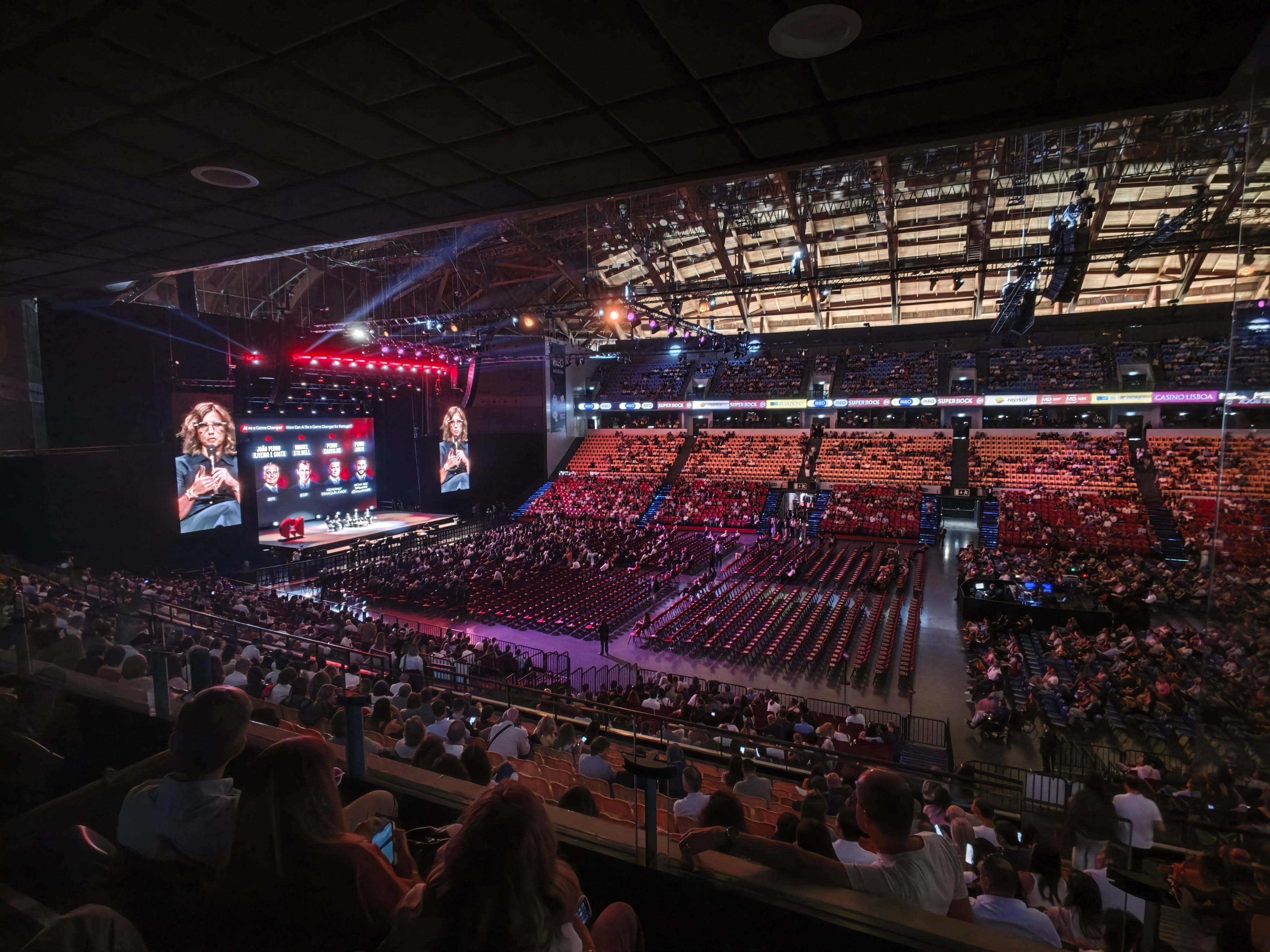
On 10 October, I was at Lisbon’s MEO Arena for the sixth Game Changers Forum. Barack Obama was the reason many people came. Yet the conversations before he took the stage gave his remarks an unexpected context: Portuguese executives had been debating how artificial intelligence might change the country’s economic prospects.
The contrast was striking. Business leaders spoke about what AI could make possible. The former US president asked what would happen if our capacity to decide, regulate and care failed to keep pace.
“Technology moves very quickly, but governments move very slowly,” Obama observed. He expects changes that once took decades to arrive within roughly ten years. The real question is whether society can develop the judgement to match that speed.
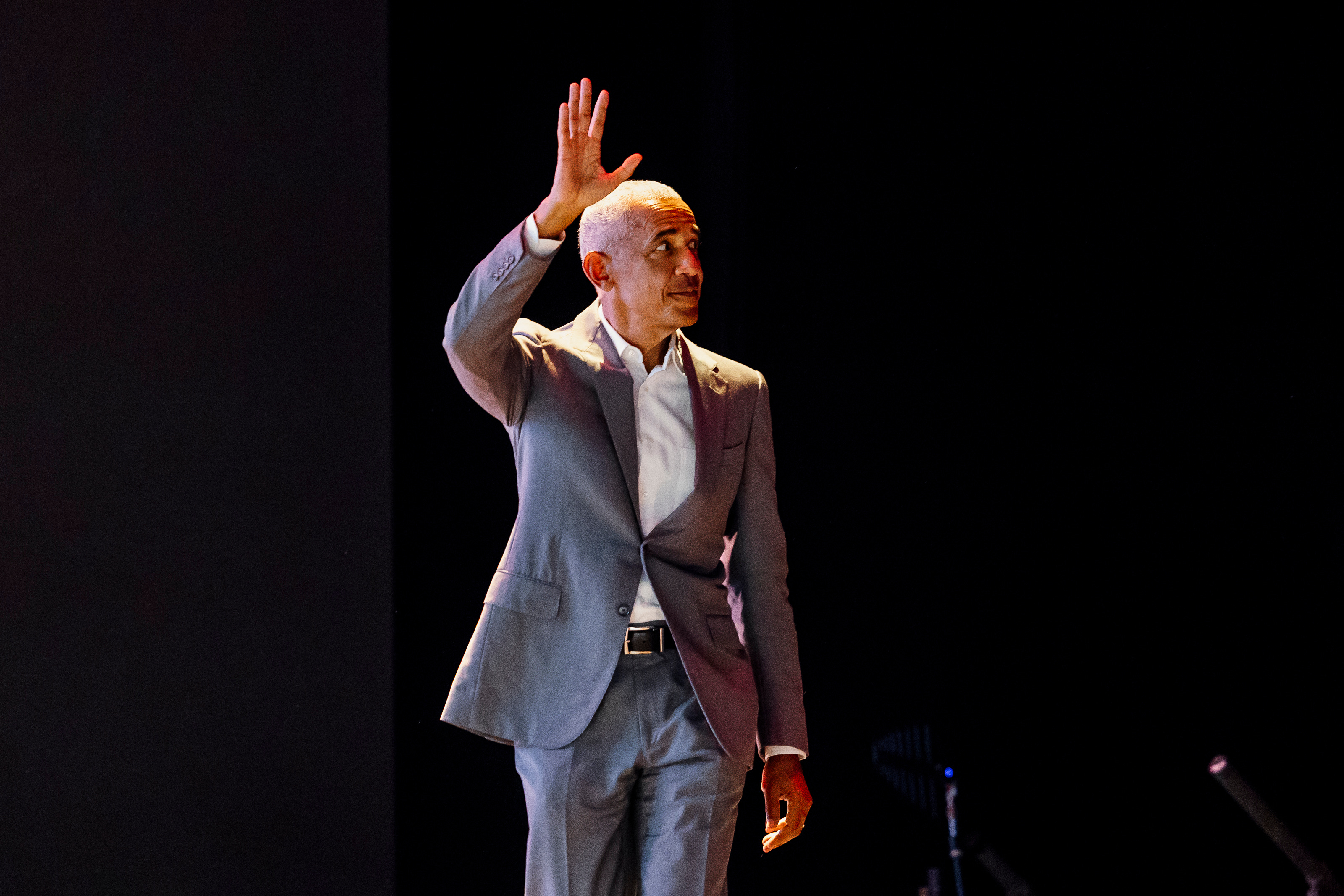
Credits: Nuno Ramos | Game Changers
A company of ten, competing with a thousand
João Pedro Oliveira e Costa, CEO of Banco BPI, offered one of the afternoon’s clearest images: a company employing ten people in Felgueiras (North of Portugal) could use AI to compete with a business employing hundreds or even a thousand in Lisbon.
It is a compelling possibility for a country built around small and medium-sized businesses. Software can increasingly support tasks that once demanded separate departments: translating product catalogues, preparing marketing material, analysing customers, drafting proposals, or handling routine enquiries. A smaller company can gain capabilities without reproducing every layer of its larger rival’s organisation.
But access to the same tools is not the same as competing on equal terms. Data, distribution, capital, reputation and experienced judgement still count. An AI-generated proposal is of little use if nobody trusts the supplier or checks its accuracy. The advantage goes to businesses that redesign how they work, rather than simply purchase more subscriptions.
Oliveira e Costa also challenged Portugal’s inherited education model and pointed to alternatives such as 42 Lisboa. There is a tangible connection here: BPI’s own investor materials describe AI Dive, a bank-wide training programme developed with 42 Portugal. It is an attempt to make AI literacy a workforce capability, not an executive presentation.
He finished with a call for indignation followed by execution. I liked that sequence. Recognising what needs changing is easy; taking responsibility for changing it is harder.
Portugal’s advantage is physical, too
Ana Figueiredo, CEO of MEO and Altice Portugal, took the discussion beneath the interface. She described an AI infrastructure built on three interdependent elements: energy, computing power and connectivity.
Portugal, she argued, has meaningful strengths in fibre networks and the submarine cables connecting Europe, Africa and the Americas. Its computing capacity, however, still has ground to make up. The distinction matters. A country can be well connected to the world’s AI services without owning much of the capacity or expertise behind them.
Figueiredo drew a useful parallel with the internet: connectivity helped Portuguese businesses overcome geographical distance. AI could help them overcome a different disadvantage, their small scale. But the promise depends on investment in secure networks, computing infrastructure, skills and a credible European approach to digital sovereignty. It will not arrive through optimism alone.
Others on the AI panel sharpened the point. EDP’s Miguel Stilwell d’Andrade said the same disruptive technology could be an opportunity or a threat depending on how Portugal responds. Generali Tranquilidade CEO Pedro Carvalho linked the opportunity to energy, broad adoption among smaller companies and ensuring the benefits reach more people.
The hidden lesson was that AI may make some business capabilities cheaper while making the underlying infrastructure, talent and coordination more strategically important.
Joana Pina Pereira and the four-year problem
Joana Pina Pereira, Generali Tranquilidade’s Chief Commercial and Marketing Officer, spoke in a different discussion about how businesses can help change Portugal. She argued that structural change needs stability beyond a single four-year political term.
That is also an AI argument, even though she was not speaking on the technical panel. Models improve in months; meaningful organisational transformation takes years. Companies need time to adapt their data, services, incentives and relationships with customers. Governments need a horizon longer than the next election to support education, infrastructure and investment.
Consider insurance. AI might help a team process claims faster or make customer communications clearer. Yet a quicker decision is not automatically a better one. The customer still needs an intelligible explanation, a fair process and someone accountable when the system gets it wrong. Those are not optional extras to the technology; they are central to the value of the service.
Pereira’s emphasis on continuity makes this challenge concrete. If organisations measure AI transformation only in short-term cost savings, they risk missing the slower work that earns public trust. Long-term thinking is not the enemy of innovation. It is often what makes innovation last.

Obama’s question: what are we optimising for?
Obama took the discussion somewhere that balance sheets struggle to capture. He spoke about teachers and nurses, whose contribution involves attention, empathy, and trust, and asked why societies so often undervalue those professions, especially when women do much of the work.
A machine may prepare a lesson or complete paperwork faster. It cannot settle, on its own, what a child needs from a teacher or what dignity demands from a care system. Obama made the stakes vivid with an extreme example: a decision to launch a nuclear weapon must never be delegated to an AI model without human judgement.
His concern extended to the people building the technology. He criticised the narrow cultural horizons of some technology leaders and defended the importance of literature, music and the arts. That struck me as especially relevant to Building Creative Machines. The imagination of the people who design a system shapes the range of human experience it can serve.
He also returned to young people: give them a voice, rethink the classroom that expects them merely to listen, and help them experience change as something they can initiate. His practical advice was disarmingly modest: choose one problem that matters and start working on it, with others.
And amid all the pressure to move faster, one sentence lingered: “We can all go slower.”
I did not hear that as an argument for delaying AI. I heard it as permission to distinguish urgency from haste. Portugal’s small businesses have a genuine opportunity. Its networks and institutions have real work to do. But the measure of success cannot be how quickly we automate whatever happens to be in front of us.
If AI reduces the cost of doing things, deciding which things are worth doing becomes more valuable. That is the challenge I carried out of the MEO Arena.