

At NFC Summit Lisbon 2026, one of Web3’s most culture-driven gatherings, mewe arrived with a clear message: the future of social media should not be built around surveillance, addictive feeds or users being treated as products.
Carlos Betancourt, CEO of mewe, sat down with us during the summit to discuss what comes after the ad-funded social model, how artificial intelligence can be useful without stripping people of their privacy, and why blockchain-based provenance may become essential in an era of synthetic content.
The conversation took place as the NFC Summit closed its fifth edition with its largest cultural programme to date. Held from 4 to 6 June at Unicorn Factory Lisboa, in the Beato Innovation District, the 2026 edition brought together 2,700 attendees from more than 60 countries, with 170 speakers and 110 sessions across three stages. Alongside digital art exhibitions, creator showcases, Web3 panels and community-led activations, the summit reinforced Lisbon’s role as a meeting point for artists, collectors, builders and institutions exploring the next phase of digital culture.
mewe was also part of the summit’s announcement cycle, unveiling its Watch Feed, a short-form vertical video experience designed to be free from tracking, data harvesting and algorithmic manipulation. The launch aligned closely with Betancourt’s wider argument: that social platforms can still offer compelling discovery, video and creator tools without relying on the surveillance-ad model that has defined much of the social media era.
Founded in 2012, mewe has long positioned itself as a privacy-first alternative to Facebook, promising no tracking, no data selling and greater user control. Under Betancourt, the company is now pushing further into Web3, with digital wallets (over 650k in just 3 months), tipping, creator rewards and decentralised infrastructure becoming part of its strategy. The aim, he says, is not merely to offer a safer social network, but to build one that serves people rather than advertisers.
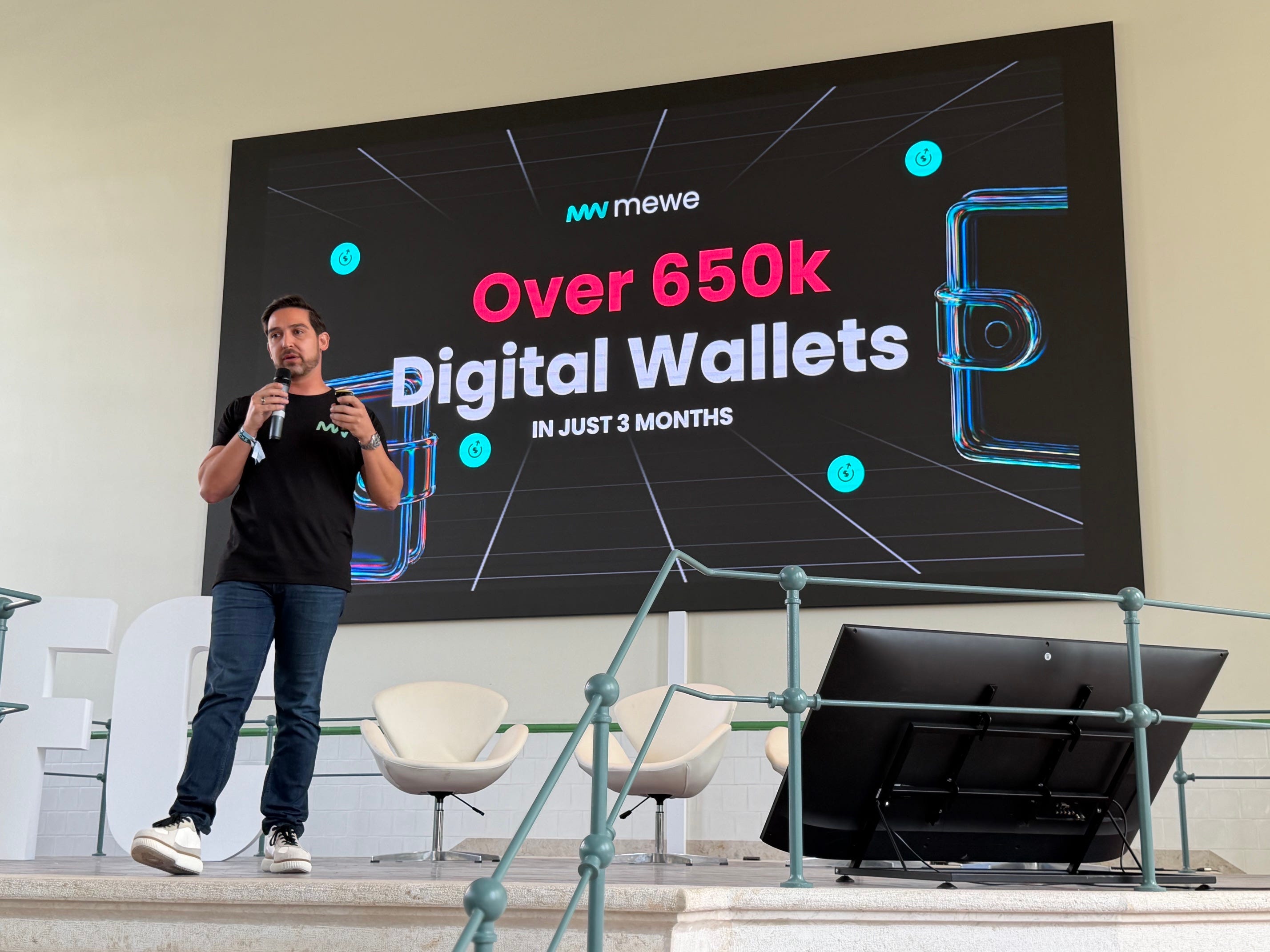
Image: Carlos Betancourt presenting at NFC Summit Lisbon, 2026. mewe Credits
If mewe is the anti-Facebook, what is the one thing Facebook gets wrong?
If mewe is seen as the anti-Facebook, I think Facebook really misses the mark by treating its users more like products than people. Their biggest mistake? Turning us into data farms just for ad revenue. They focus on getting people hooked, often pushing content that fuels anger or fear, instead of fostering genuine connections and sharing real information.
It’s not just about privacy; we need to focus on seeking the truth while keeping the spying to a minimum. People should have control over their own data and understand how the algorithms work—almost like giving them the power to fine-tune their own experience. Imagine platforms that genuinely help you connect with others, create, and gain insights about the world. This would include using on-device AI, open protocols, and setting up rewards that actually benefit people rather than just boosting profits.
While platforms like mewe and our L1 Soshi Network are nailing the privacy aspect by not selling user data, to really thrive, we need to offer something compelling—smart search features, a feed that brings you valuable content, thoughtful recommendations that don’t feel invasive, and strong protections against bots. We should aim to elevate society, not just create safer bubbles. Let’s build something that genuinely supports humanity’s potential, helping us to grow and explore—like reaching Mars—with free speech and real connections at the core.
Can AI be useful without collecting people’s private data?
Absolutely! This is definitely the direction we should head in. For platforms like mewe and our L1 Soshi Network on Avalanche, prioritising privacy through means such as on-device AI, end-to-end encryption, and decentralised technology is crucial. People are growing increasingly frustrated with being watched constantly.
However, we shouldn’t limit ourselves. To make AI truly useful, some data is needed for learning, but it doesn’t have to permanently store private information. Utilising strategies like federated learning, on-device training, and opt-in signals—coupled with cryptographic and moderation tools—ensures the platform can evolve without compromising users’ control.
I am fortunate to serve on the Board of Directors of Revmatics, a groundbreaking AI company that is revolutionising the marketing sector by providing businesses with an AI-driven platform. This allows them to eliminate manual guesswork and gain real clarity on performance, ensuring they understand their needs without invading privacy. This is a perfect example of how we can use AI without collecting private data.
The real challenge lies in creating a platform that not only looks appealing but also delivers engagement and features. Our aim is for the AI to excel in helping users connect, create, and collaborate effectively, positioning privacy as a compelling reason for people to choose us—not just an added benefit.
Question: How do you build a social network that serves users instead of advertisers?
Simple! Just throw out the whole surveillance-ad model like it’s last week’s leftovers. Users shouldn’t be the product; they should be the chefs cooking up a delicious social experience!
Incentives matter—if your business model relies on keeping people scrolling in rage, you might as well serve them digital junk food! Instead, let’s focus on maximum truth-seeking and provide curation and useful tools (think great search features and communities that won’t ghost you after you send a friend request).
Unlike others, like mewe, we won’t shove ads down your throat; you’ll have to opt in for those, and guess what? You’ll actually get rewarded for it! We let users control their own data and choose what they want to watch. Soon, mewe premium users will also be allowed to turn off all opt-in ads if that’s their preference.
Monetisation should come from value—not from a bunch of ad companies pretending to be social networks. The future is about platforms that accelerate human connection and progress. We want it to be so good that people happily fork over some cash or engage willingly—as if they just found their favourite new pizza joint after a long day. That’s how we win in the long run!
As generative AI grows, how can people know what is real online?
The surge of generative AI has brought us to a critical junction: we’re transitioning from “Can we find information?” to “Can we trust what we see?” This is a pivotal concern in today’s digital landscape.
To address this, we need robust truth-seeking systems combined with cryptographic provenance. Tools like blockchain signatures, signed media, and on-chain attestations offer powerful ways to verify authorship without relying on Big Tech gatekeepers.
However, it’s essential not to overwhelm everyday users with complexity. Verification should be seamless and automatic where it matters. Additionally, incorporating AI can help users identify misleading content. The platforms that succeed will prioritise truth over engagement farming, empower users, and make authenticity easy to navigate, rather than presenting it as an additional technical hurdle.
What does a truly human-centred social network look like in the AI era?
A human-centred social network like mwwe puts people first by maximising truth and capability over engagement farming. AI should enhance understanding, creation, and connection without invading privacy or pushing corporate agendas.
A few key elements include:
Transparency: Open algorithms, clear AI labelling, moderation tools and user controls to modify recommendations.
On-device Processing: Utilising local processing and cryptographic verification for authentic content.
Fostering Creativity: Features that enhance genuine creativity and relationships instead of addiction-driven mechanics.
Success Metrics: Success should be measured by human progress—better ideas, stronger communities, and real-world impact.
Thank you for the interview! I invite everyone to join mewe and experience a more human-centred approach to social networking!
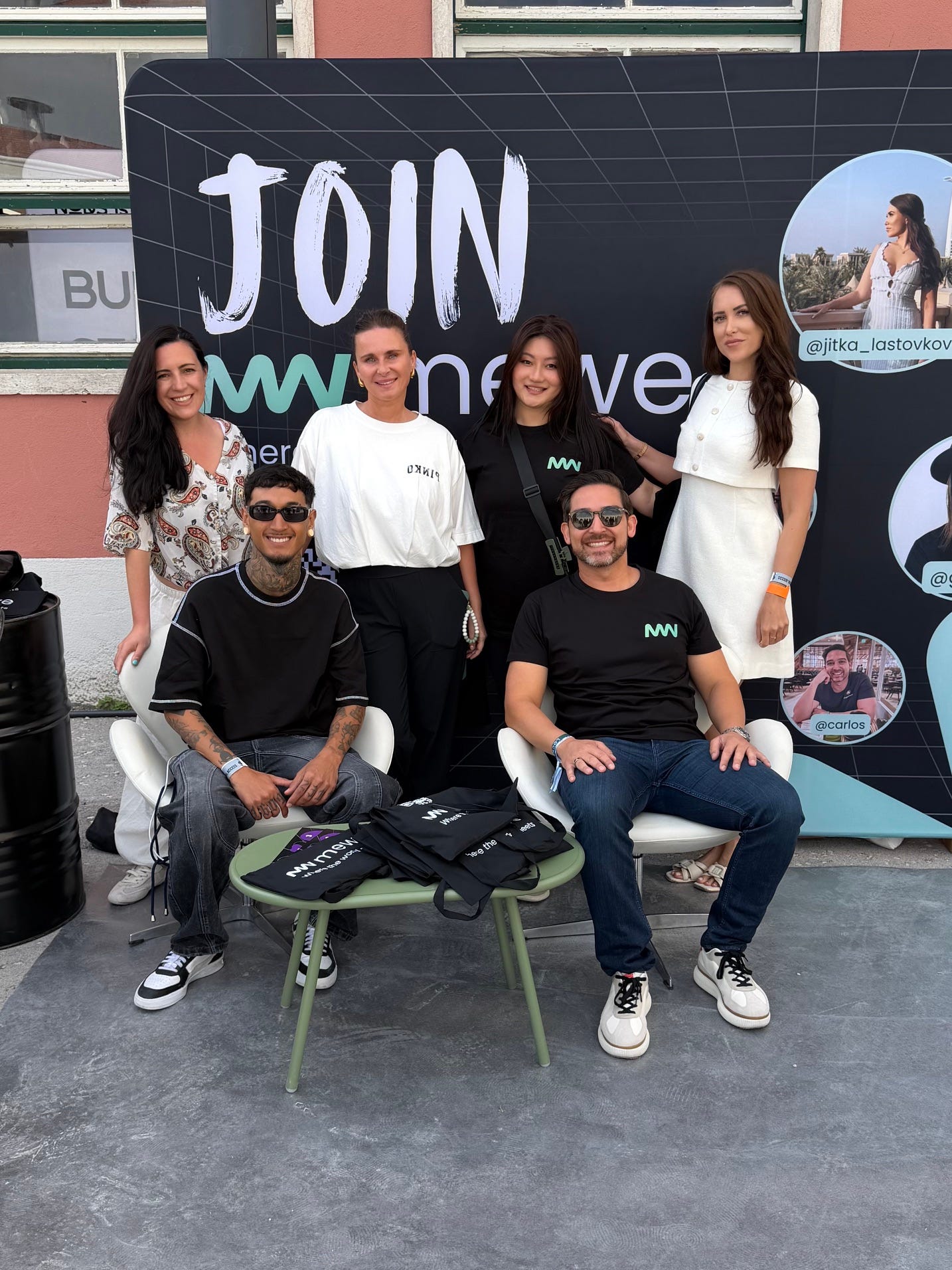
Image: mewe Team at NFC Summit Lisbon, 2026. mewe Credits
Carlos Betancourt’s vision for mewe is ambitious: move beyond the “anti-Facebook” label and turn privacy into the foundation for a broader social economy.
At NFC Summit Lisbon 2026, that message felt particularly timely. As AI makes content cheaper to generate and harder to verify, and as users grow more aware of how their attention and data are monetised, mewe is betting that the next social network will need to offer more than a clean feed. It will need to prove trust, reward value, protect identity and still feel simple enough for everyday users.
The central question is no longer whether people want an alternative to the old social media model. It is whether that alternative can be useful, engaging and human enough to become mainstream.
by Gonçalo Perdigão
Accredited Press Professional: CCPJ TE-882
ERC-Registered Media Organisation: 128149