

At Web Summit, ARIDGE’s modular aircraft raised a practical question: what has to work before personal flight becomes a useful service?
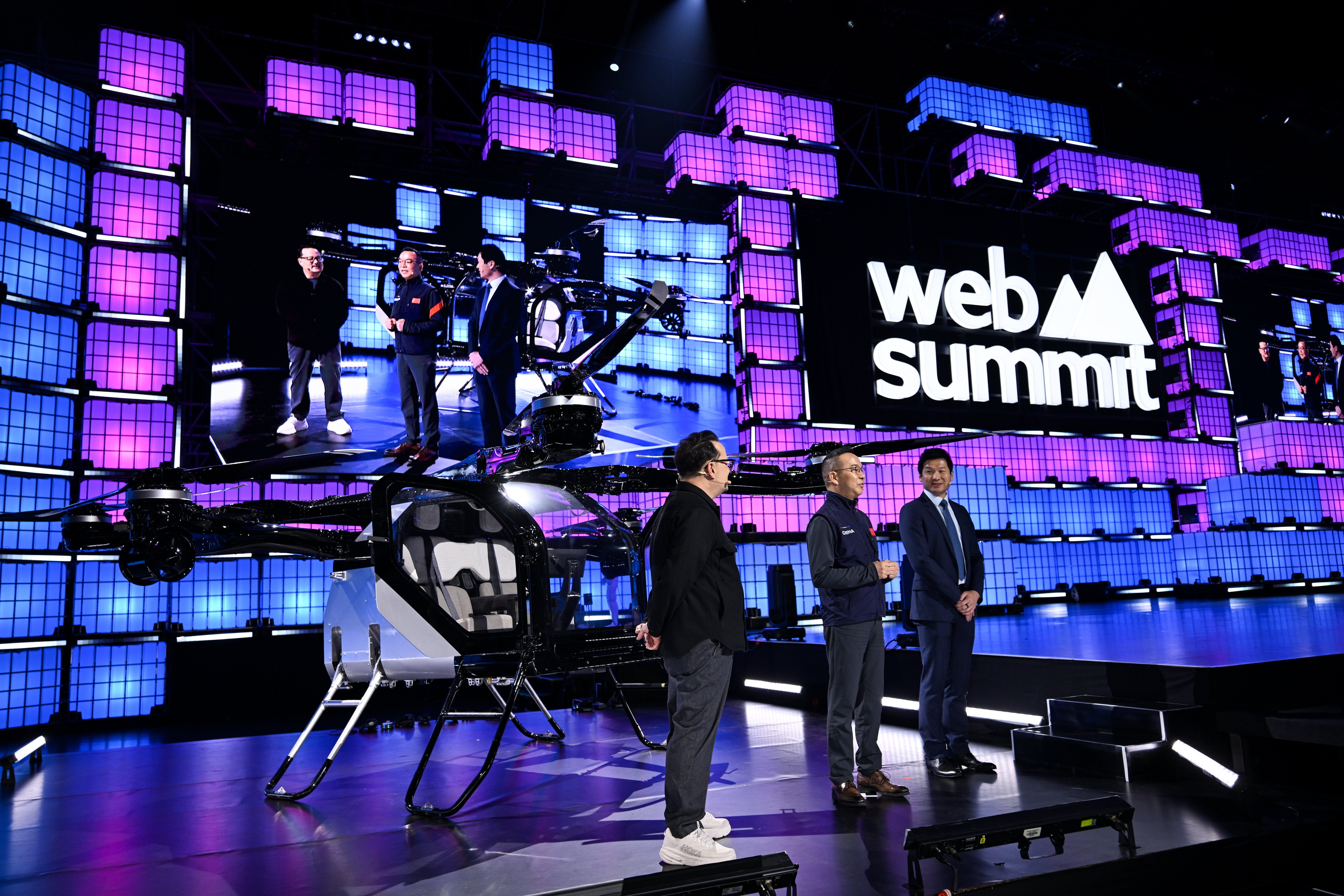
ARIDGE aircraft displayed on the Web Summit stage. Image supplied to Building Creative Machines.
I attended XPENG ARIDGE’s press conference at Web Summit on 10 November for Building Creative Machines. The company’s Land Aircraft Carrier is an easy subject for a headline. A large road vehicle carries a smaller aircraft, which can be deployed for flight.
The harder question is what happens after somebody buys one. Where can they fly? Who maintains it? What happens when the weather changes, or a planned landing becomes unavailable? Those questions are where this becomes interesting.
A practical idea inside an extravagant object
ARIDGE, formerly XPENG AEROHT, belongs to the XPENG ecosystem. Its modular design separates two very different jobs: moving along roads and moving through the air. The ground carrier transports the aircraft and recharges it. The aircraft unfolds for electric vertical take-off and landing, usually shortened to eVTOL.
That separation is worth paying attention to. Storage, transport and charging are awkward problems for personal aviation. Putting them into the same purchase is an attempt to make ownership less complicated. Whether it does so affordably and reliably will matter more than how unusual it looks.
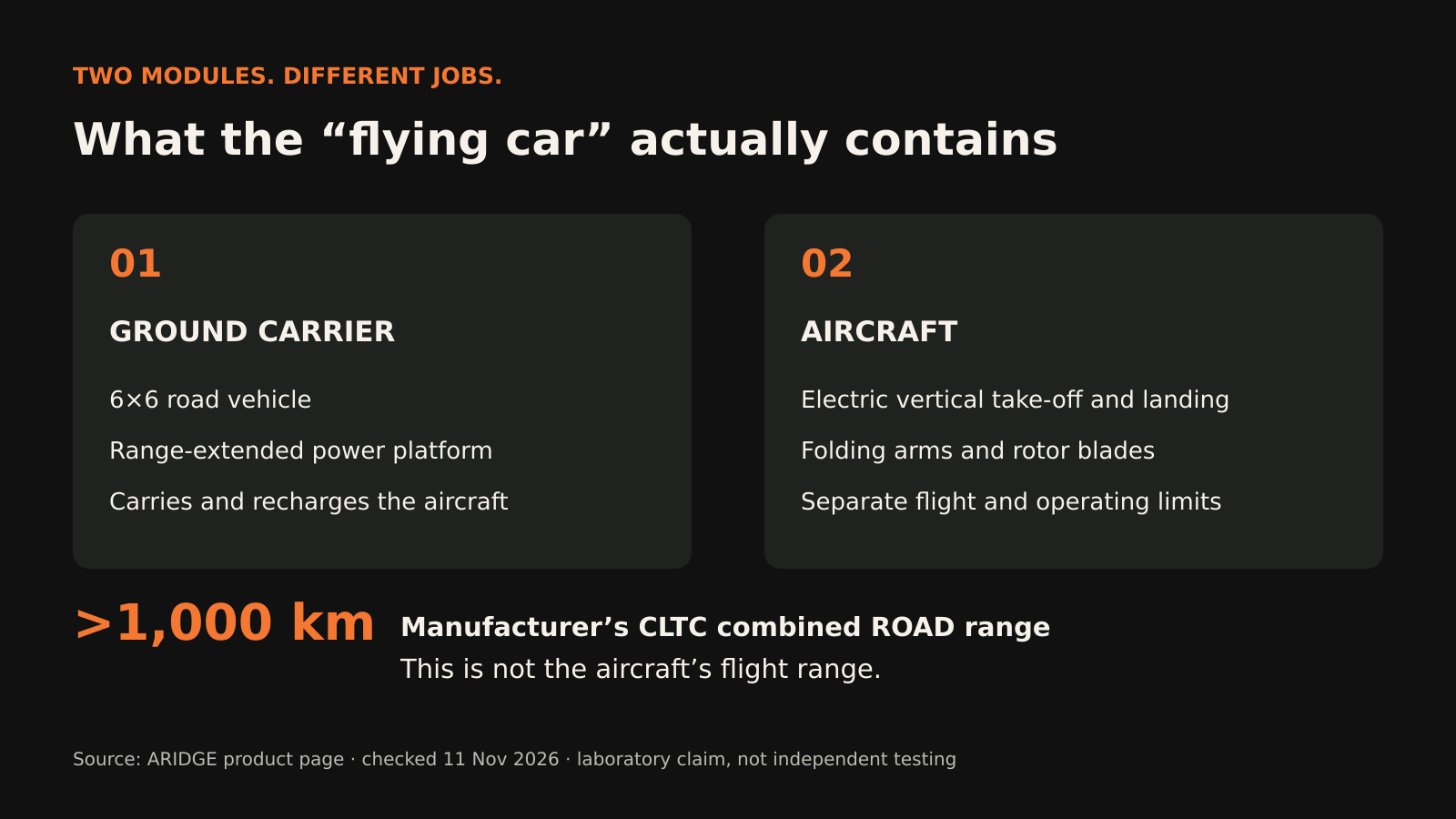
The road and air modules have different roles. The range figure belongs to the ground carrier, not the aircraft.
The numbers need careful reading. ARIDGE advertises more than 1,000 kilometres of combined road range under the CLTC test cycle, using its own laboratory data. The carrier has a range-extended power platform. This is neither a claim of 1,000 kilometres of flight nor evidence that the entire system runs only on batteries.
For a buyer, the more useful calculation would include the complete trip: driving to a permitted site, preparing the aircraft, flying, returning, recharging and maintaining both machines. A short flight can sit inside quite a long day.
Europe in 2028 is an ambition
Reporting on the Lisbon press conference points to a conditional timetable: customer deliveries in China in 2027, after final certification, and possible initial European deliveries or operations in 2028 if progress goes to plan. An indicative price of around US$300,000 has also been reported. That is not a confirmed European retail offer.
The company’s own profile describes a gradual route into the market, beginning with controlled settings such as scenic locations and flight camps before moving towards wider transport use. That is a more useful starting point than imagining thousands of commuters taking off from their driveways.
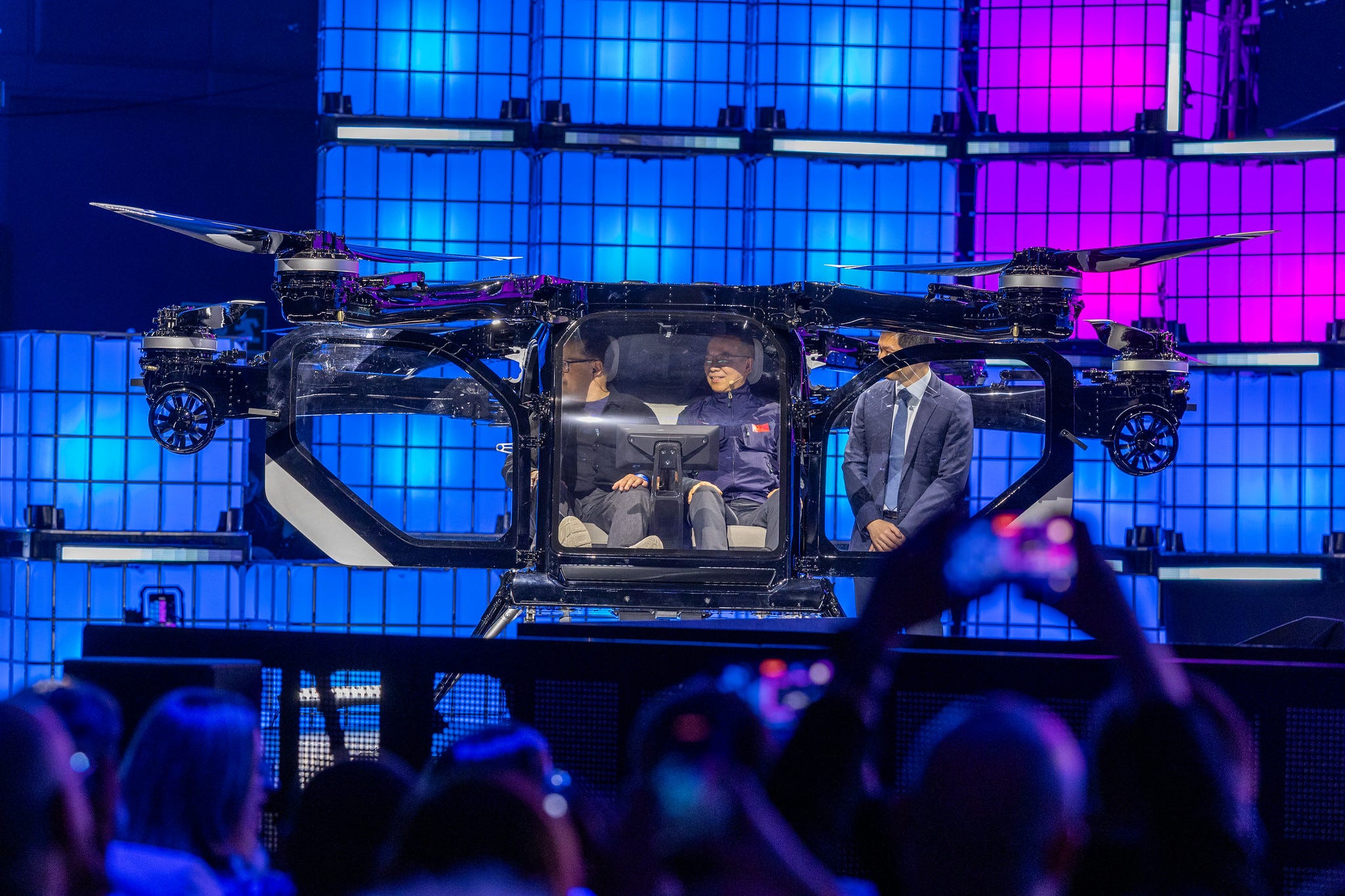
A close view of the aircraft on the Web Summit stage. Image supplied to Building Creative Machines.
Europe already has a regulatory framework for piloted air-taxi operations. The European Commission’s 2024 package covers operations, crew licensing and air-traffic rules, while aircraft still require certification. A framework creates a route to market; it does not approve every product that enters it. [4]
EASA describes certification as a process of demonstrating compliance through analysis, simulation, ground tests and flight tests. A demonstration can show that a machine flies. A certification programme has to examine a much wider set of conditions. [5]
Easier controls still need a dependable system
There is a familiar promise here for anyone following AI: let the machine handle more of the difficult work, so that more people can use it. That is an appealing direction. It also changes where we need to look for complexity.
A simpler interface leaves questions about the operating limits, the person responsible and the behaviour of the system when something goes wrong. We should be careful, too, about the word “intelligent”. The material available does not establish that this aircraft uses generative AI, or that it is approved for unrestricted pilotless flight.
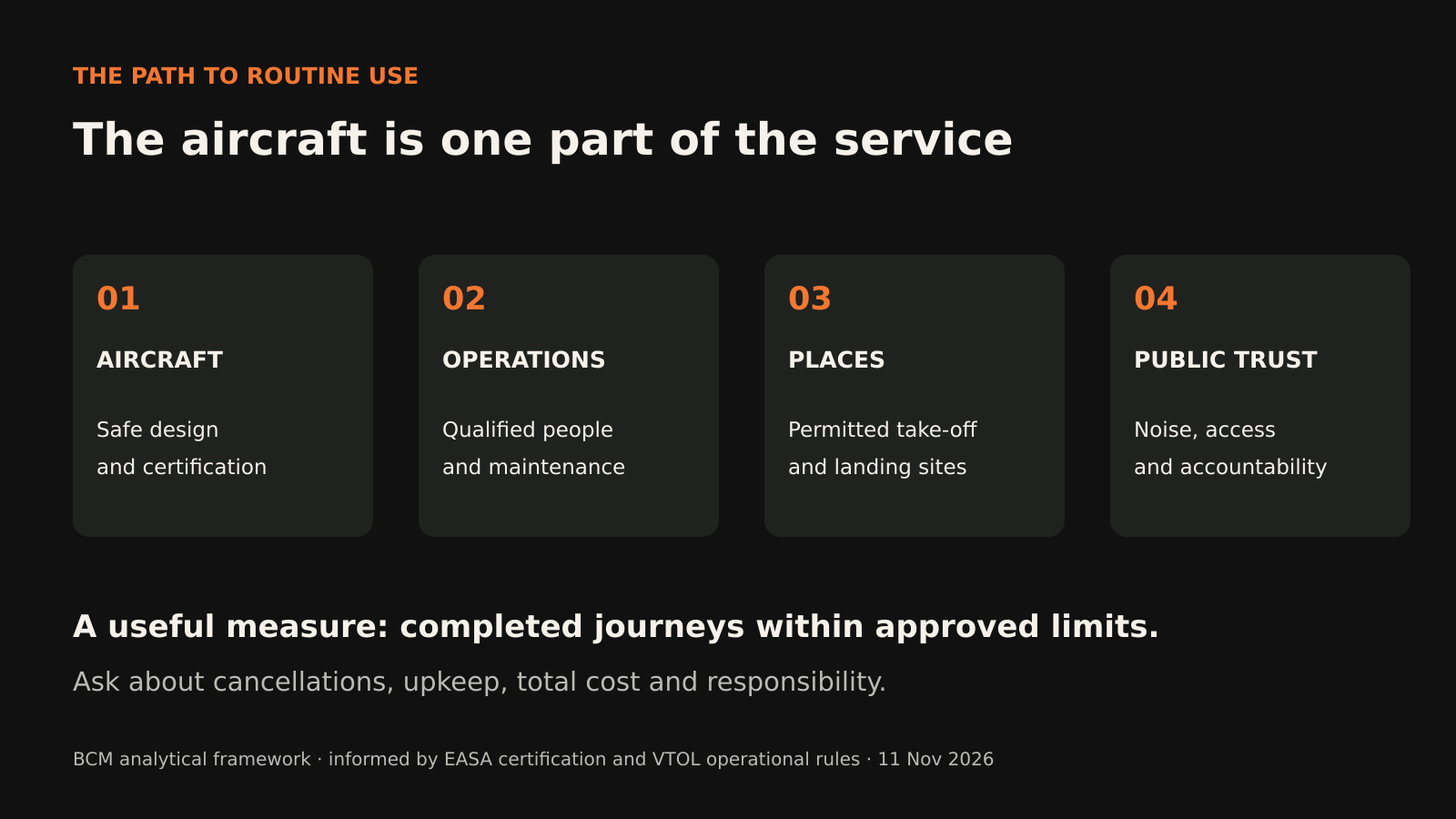
An editorial framework for assessing adoption, rather than a prediction of launch dates or a certification checklist.
For the first customers, a well-run flight camp may be a perfectly worthwhile product. It offers a place, supervision and a defined activity. For a city, the calculation becomes broader: noise, airspace, landing sites, access and the people underneath the route all enter the picture.
This is the part of the story I would keep following. How often can customers complete a planned journey? What does maintenance cost? Who takes responsibility when the service cannot operate? Those answers will tell us more about progress than another launch date.
ARIDGE has an intriguing way of packaging personal flight. The next achievement will be making the experience dependable enough that the owner can think about the destination rather than everything required to get there.
Follow us on Youtube and LinkedIn.