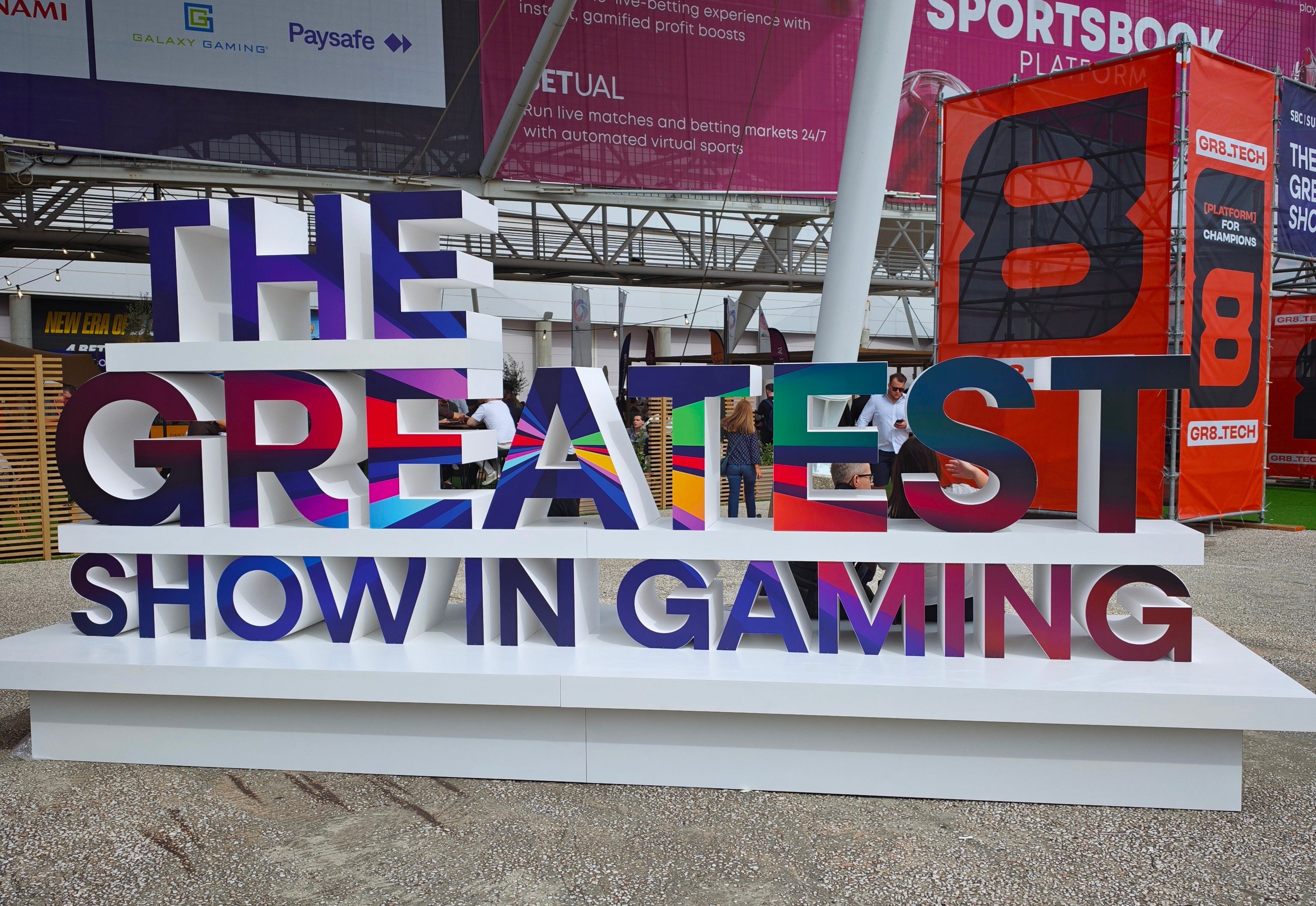
I went to the SBC Summit in Lisbon today expecting to hear a lot about betting, gaming, data and technology. I didn't expect Michael Jordan to give me (and a 40,000+ audience) a useful way to think about artificial intelligence.
Jordan took the opening Super Stage at the MEO Arena alongside Carsten Koerl, founder and CEO of Sportradar, and Jason Robins, co-founder and CEO of DraftKings. It was an unusual trio, but also a revealing one: the athlete, the sports-data company and the betting platform, sitting together at an event expected to bring more than 40,000 people from betting, gaming, payments, media and technology to Lisbon. (SBC Events)
Beneath all those industries sits the same basic problem.
Uncertainty.
A bookmaker does not know exactly what will happen next. Neither does a basketball player. Neither does an AI model. They use information to make the best possible decision before the outcome is known.
That, rather than another story about Jordan’s competitiveness, is where things get interesting.

AI is not an answer machine
Much of the language around AI still implies certainty.
Ask a question. Get an answer. Automate the process. Save 30 per cent. Repeat.
Real systems are messier. Modern AI works with probabilities, incomplete information and imperfect predictions. The interesting question, then, is not whether an AI can produce an answer. It is what you do with an answer that might be wrong.
Betting understands this instinctively.
An odds-maker does not need to know the future. It needs to price uncertainty well enough, often enough, to operate a viable business. The quality of an individual prediction matters, but so do the system around it, the data feeding it, the exposure it creates and the ability to adjust when new information arrives.
Companies deploying AI should be thinking in similar terms.
Instead, many still judge AI by its highlights.
A model writes an impressive document. An agent completes a complex task. A demo produces something nobody in the room expected.
Wonderful.
But a highlight reel is not a season.
Stop judging AI by its best shot
Michael Jordan won six NBA championships, six Finals MVP awards and five regular-season MVP awards. The remarkable part is not that he could produce extraordinary moments. Plenty of talented athletes can do that. What made the record exceptional was sustained performance across years, opponents, and changing circumstances.
That distinction matters enormously in AI.
The relevant question is rarely: Can the model do this?
It is: How often can the system do this well enough?
If an AI customer-service agent gives a brilliant answer 95 times and a dangerous one five times, the demo does not tell you whether you have a good product. If an AI coding tool makes developers dramatically faster but introduces defects that take longer to discover, measuring lines of generated code tells you very little. If an AI marketing engine produces ten times more content but customers increasingly ignore it, generation has increased while value has fallen.
You need a scoreboard.
Accuracy. Conversion. Error rates. Human corrections. Cost per task. Latency. Escalations. Customer complaints. Time saved. Revenue created.
Which metric matters depends on the job. The important thing is that something outside the AI has to determine whether the AI is actually good.
It was striking that, a few hours after Jordan appeared on stage, SBC’s own AI Academy was addressing this gap: moving AI from experiments into production, understanding its limitations, and building workflows with human review.
The hard part of AI is increasingly not getting a machine to do something impressive.
It is getting it to perform reliably when it counts. Shot selection may matter more than better models
Another useful basketball idea: not every possible shot is a good shot.
The same should be true of AI.
Companies are currently discovering hundreds of things that AI can do. That does not mean they should do all of them.
A €200-per-month AI system that eliminates a €20,000 operational problem may be extremely valuable. A sophisticated agent that saves someone eleven minutes a week may not be. A model that is 98 per cent accurate might be excellent for categorising internal documents and unacceptable for making certain high-consequence decisions without review.
This is where AI strategy becomes less about technology and more about shot selection.
What decision are we trying to improve?
What is a correct answer worth?
What does an incorrect answer cost?
How frequently does the decision occur?
And where should a human still have the ball?
Those questions are less exciting than watching an agent autonomously operate a browser. They are also much closer to where the money is.
The model is not the team
There is an obvious danger in turning Jordan into a metaphor for individual brilliance.
Basketball is a team sport.
Jordan’s six championships were Chicago Bulls championships. Extraordinary individual ability operated inside a system of teammates, coaching, tactics, training and constant feedback.
AI works the same way.
The model is one component.
The more interesting competitive advantage may sit around it: proprietary data, distribution, workflow design, evaluation, domain expertise, customer relationships and the humans who know when the machine is wrong.
That becomes particularly visible in betting and gaming, where the SBC Summit agenda stretches from predictive modelling and real-time sports data to fraud, personalisation, responsible gaming and player protection. An algorithm in isolation solves very little. Value appears when technology is embedded inside a functioning system.
Jordan himself made a related point in Lisbon when discussing his work with DraftKings and Sportradar. He said that when he gets involved with a company, the relationship has to feel authentic and that “the consumer has to connect to that.”
That may be one of the more useful warnings for the AI industry.
Customers do not care how technically impressive your AI stack is. They experience the product.
If AI makes that product faster, cheaper, safer, more personal or simply better, they may value it.
If it merely allows the company to say it uses AI, they probably will not.

Performance beats prediction
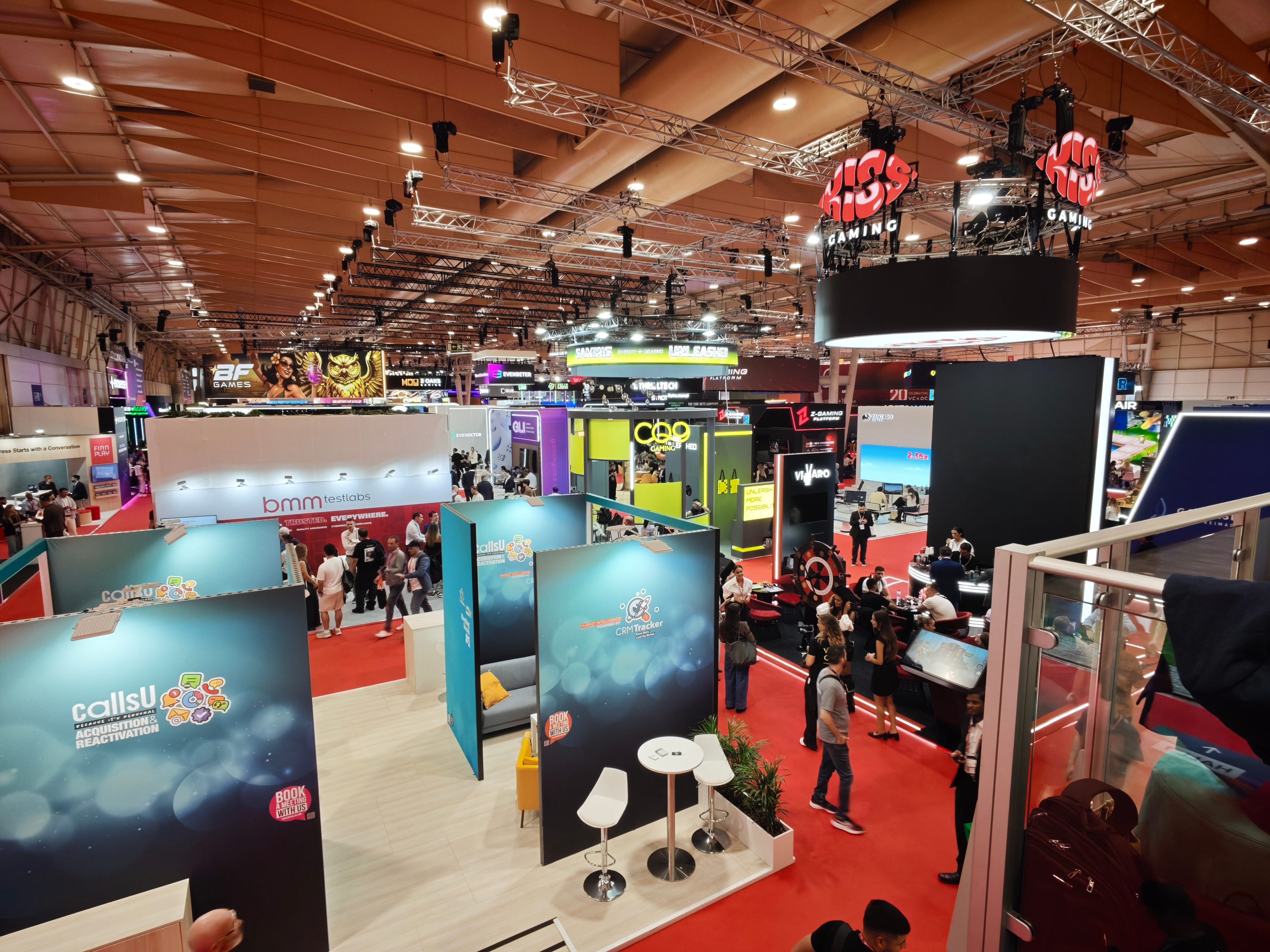
Walking around SBC Summit makes the obsession with prediction impossible to miss. Odds, models, data feeds, player behaviour and risk are everywhere.
But prediction is only the beginning.
Knowing the probability of a shot going in is different from taking the shot. Knowing the probability of an outcome is different from building a business around it. And having an AI that can recommend an action is different from creating an organisation that can act on it.
Perhaps that is what Michael Jordan can teach us about AI.
Not how to become a champion.
How to stop confusing potential with performance, as he said.
AI does not need to be perfect to be valuable. But it does need to perform repeatedly in the messy conditions of the real world.
And unlike a demo, the real world keeps score.
P.S. Thanks, Lisbon, for having us