

As the capabilities of artificial intelligence continue to evolve, so does its impact on industries ranging from software development to content creation. Today, Anthropic introduces two significant updates to its AI suite—Claude 3.5 Sonnet and Claude 3.5 Haiku—alongside a groundbreaking feature, AI "computer use." These advancements represent a significant step forward in AI-powered automation, coding, and user interaction. This article will explore what these updates mean for businesses, especially those seeking to improve workflows, automate repetitive tasks, and integrate AI into their daily operations.
The Power of Claude 3.5 Sonnet: Pioneering AI in Coding and Automation
Claude 3.5 Sonnet is an enhanced version of its predecessor, offering significant improvements in coding, tool use, and autonomous AI tasks. With its strong performance across various benchmarks—notably in agentic coding—Claude 3.5 Sonnet is rapidly becoming the go-to AI for businesses involved in software development. Its coding efficiency has jumped from 33.4% to 49% on SWE-bench Verified, outperforming many state-of-the-art models, including OpenAI's latest reasoning systems.
For companies like GitLab and Replit, these improvements translate directly into better DevOps and software evaluation processes. Businesses now have access to AI that can execute multi-step workflows faster and more accurately, which is crucial for reducing time to market and increasing productivity in engineering teams.
Claude 3.5 Haiku: AI Efficiency Meets Affordability
While Sonnet excels in specialized tasks, Claude 3.5 Haiku focuses on making AI speed and performance accessible at scale. Matching the capabilities of Claude 3 Opus—Anthropic's previous largest model—Claude 3.5 Haiku excels in coding tasks while offering reduced latency and increased efficiency. This makes it ideal for customer-facing applications, where speed and cost are critical factors.
From automating sub-agent tasks to generating personalized user experiences in retail, Claude 3.5 Haiku is a robust solution for businesses looking to harness AI’s power without compromising affordability or speed.
A New Era of AI: Introducing Computer Use
One of the most exciting developments from Anthropic is the public beta of "computer use" for Claude 3.5. This feature allows the AI to interact with computers like humans—moving a cursor, clicking buttons, and typing text. This capability opens up new possibilities for automating tasks that require multiple steps across different software platforms, from filling out forms and managing data to more complex operations like software testing and workflow automation.
Early adopters like Replit and Asana already use Claude 3.5 Sonnet’s computer navigation abilities to streamline operations. Replit, for instance, leverages this feature for app evaluation within its Replit Agent product, enabling more efficient quality control in software development.
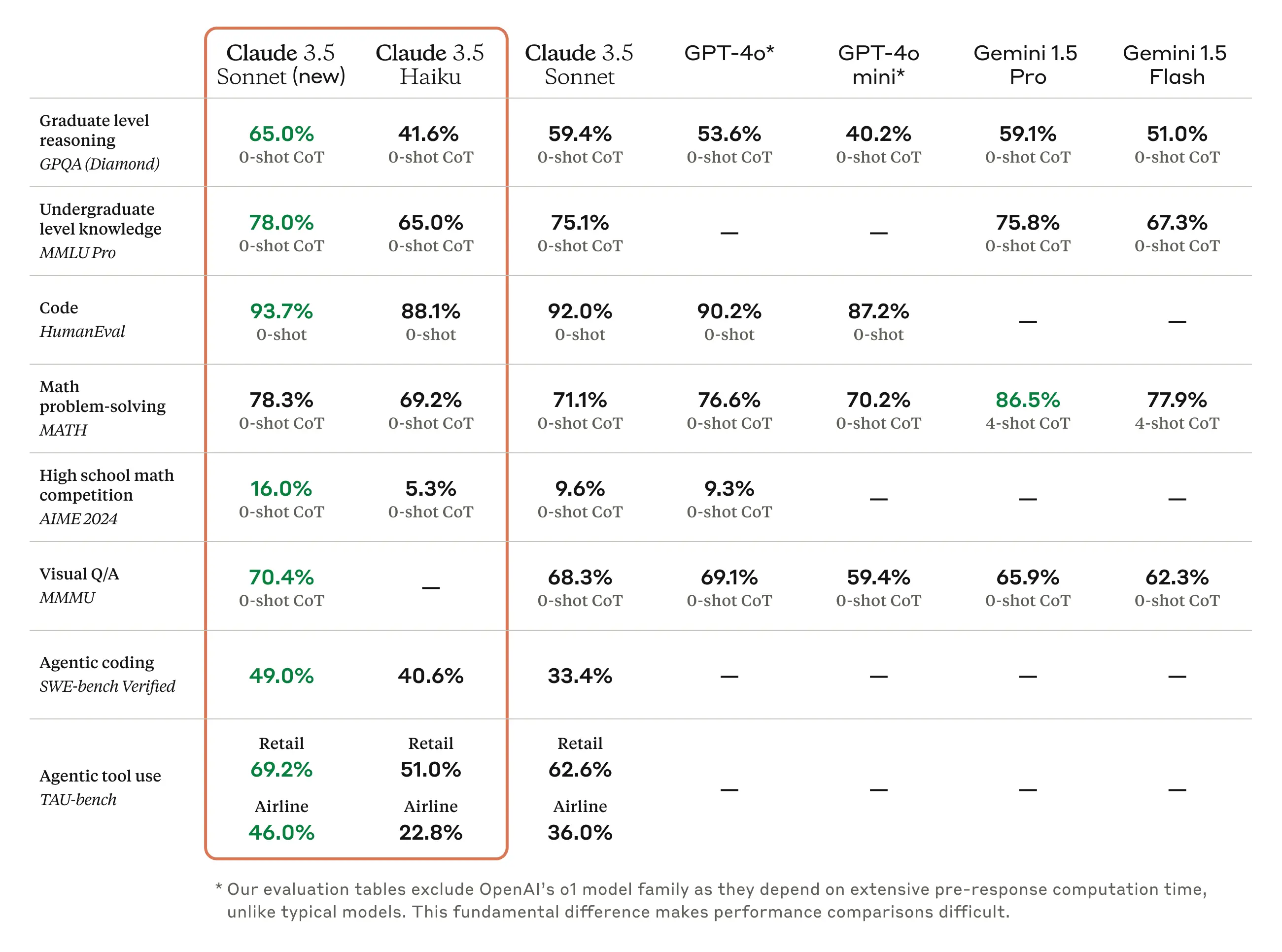
Source: Anthropic
Why This Matters for Businesses
The implications of these advancements are vast for industries aiming to integrate AI into their workflows. Here’s why:
Efficiency Gains: The combination of Claude 3.5 Sonnet’s coding expertise and computer use can drastically reduce the manual effort required to complete tasks, leading to faster project completion and fewer errors.
Cost-Effective Automation: Claude 3.5 Haiku provides a cost-effective option for businesses that need high-performance AI without breaking the bank, making it accessible to small and medium-sized enterprises.
Scalability: As AI becomes more adept at handling repetitive, multi-step tasks, businesses can scale their operations more efficiently, deploying AI across a broader range of functions, from data entry to customer support.
Custom Solutions: Claude's computer use feature, its ability to navigate user interfaces, can be tailored to a wide variety of industries—whether it’s automating administrative tasks in healthcare or streamlining retail inventory management.
Use Cases Across Industries
Software Development: Claude 3.5 Sonnet is valuable for automating the software development lifecycle. Companies like GitLab have already seen improvements in DevSecOps tasks, where AI enhances problem-solving and task management without increasing latency.
Retail and E-commerce: Claude 3.5 Haiku can help retailers analyze massive datasets, such as purchase histories and inventory records, to generate personalized shopping experiences. The AI’s ability to quickly process large volumes of data makes it a game-changer for dynamic pricing strategies or automated inventory updates.
Healthcare: Claude’s computer use capability can potentially revolutionise healthcare administrative functions, such as managing patient records or automating billing processes. Healthcare providers can focus more on patient care by reducing human error and increasing speed.
The Road Ahead: Learning and Evolving
While Claude 3.5's computer use capability is still in beta and has some limitations—such as difficulty performing certain actions like dragging or zooming—the technology is expected to improve rapidly. Developers can already integrate this feature via Anthropic’s API, Amazon Bedrock, or Google Cloud’s Vertex AI, and early feedback will help shape future iterations of this groundbreaking tool.
As AI continues to evolve, businesses across all sectors must stay informed and agile in adapting to technological advancements. Claude 3.5’s new features, including computer use, offer a glimpse into a future where AI can take on more complex, human-like tasks, allowing companies to focus on strategic decisions while leaving the repetitive work to machines.
Conclusion: A Leap Forward for AI-Driven Business
With the release of Claude 3.5 Sonnet, Haiku, and the experimental computer use feature, Anthropic is pushing the boundaries of what AI can achieve in a business context. These advancements are poised to reshape how organizations approach automation, software development, and multi-step workflows.
By integrating AI that can navigate computer systems and automate complex tasks, businesses can unlock new levels of efficiency and creativity. As these models continue to improve, the potential for AI to transform industries will only grow—making it an exciting time to explore the possibilities of generative AI in your organization.