

The keyboard is a relic
Typing trained our fingers; voice will train our tools.
We built software around letters; we are now building it around intent.
Keystrokes slow thought; speech moves at the speed of ideas.
Once, we learned shortcuts; now, systems learn us.
Generative models make voice the primary interface
Large models can parse accents, slang, emotion, and pauses.
They map messy speech to clean structure and action.
They resolve ambiguity by asking short questions back.
The result is not dictation; it is dialogue.
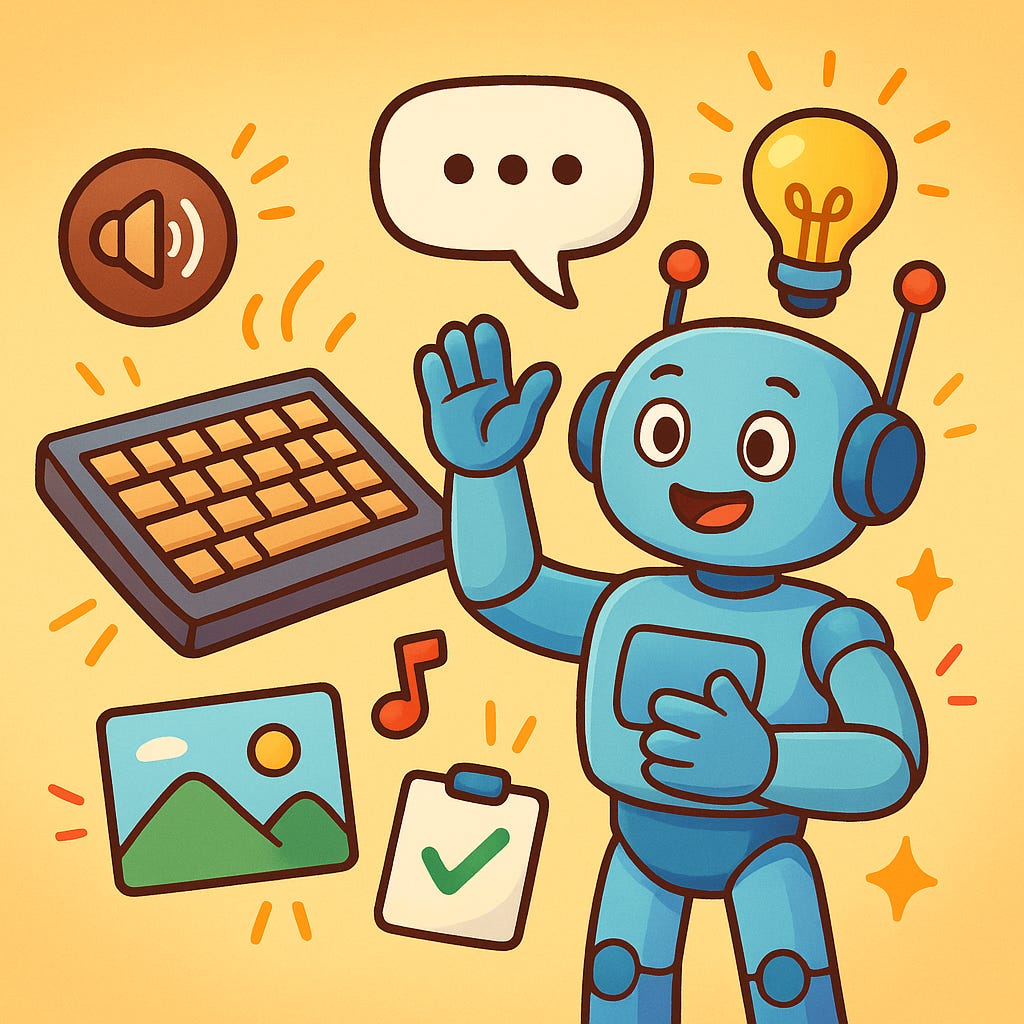
Vibe coding replaces syntax with intention
You describe the feel; the model proposes the form.
“Make it moody, minimal, fast” becomes code, copy, and colour.
Constraints become conversation, not configuration.
The IDE becomes a collaborator that hears subtext as well as text.
Work turns into a live call with your machine
You narrate a plan; the system drafts tasks and follows up.
You sketch aloud; it generates assets and variations.
You correct with a sigh, a tone, a “hmm, not quite”—and it adapts.
Meetings become prompts; minutes become actions.
Hands-free becomes brain-free
Voice frees posture, attention, and mobility.
You switch context without switching windows.
You work while walking, cooking, commuting, and caring.
Accessibility becomes universality, not an edge case.
Real-time perception changes the contract
Assistants now listen, watch, and act at once.
They understand your screen, your camera, your environment.
They answer while you perform the task, not after.
The computer stops waiting for you and starts keeping up. Check: Google DeepMind
Why is this happening now
Models are getting cheaper to run and better at reasoning.
Investment, adoption, and capability curves are compounding.
The centre of gravity has shifted from apps to agents.
The market is voting for interaction, not input. Check: Stanford HAI
New etiquette for human–AI conversation
Speak in outcomes, not steps.
Use short, vivid nouns and verbs.
Signal uncertainty and let the model propose options.
Treat silence as a tool; the pause carries meaning.
Design moves from UI to UX to “you”
The best interface is your natural style.
Systems will learn your pace, humour, and boundaries.
Personal context becomes the new API surface.
Trust will hinge on consent, memory controls, and clear handover.
Risks we must address
Voice is fast; fabrication can be faster.
Transcription errors can be harmful in high-stakes settings.
Always route critical tasks through verification and audit trails.
Privacy must be the default, not a buried toggle.
What to build next
Vibe-aware coding copilots for creative stacks.
Voice-native CRMs that log, summarise, and promise responsibly.
Hands-free dashboards that explain, not just display.
Agent workbenches that test, simulate, and safely deploy actions.
How to work tomorrow morning
Open your laptop and talk first.
State the goal; let the system draft the path.
Edit by voice, accept by glance, confirm by tap.
Type only when precision demands it.
The new literacy
We will still write, but we will write less to machines.
We will speak, gesture, and share context instead.
We will compose interactions, not inputs.
Typing taught us to adapt to computers; voice will teach computers to adapt to us.