

Walk into a football ground in 2030, and the biggest upgrade may not be the roof, the seats, or the size of the screen. It will be the intelligence quietly stitched into everything: the turnstiles, the concourses, the connectivity, the security operations room, even the way food queues form and dissolve. Across Europe, clubs and organisers are using artificial intelligence to make matchdays smoother, safer and more immersive, while preserving the sport’s rituals.
This isn’t “American-style entertainment” bolted onto football. It’s AI used in practical, fan-first ways: reducing friction, improving safety, and giving supporters better information at the moments that matter most.
The stadium of the future is not a theme park. It’s a finely tuned system designed to let football feel more like football, less like standing in a queue.
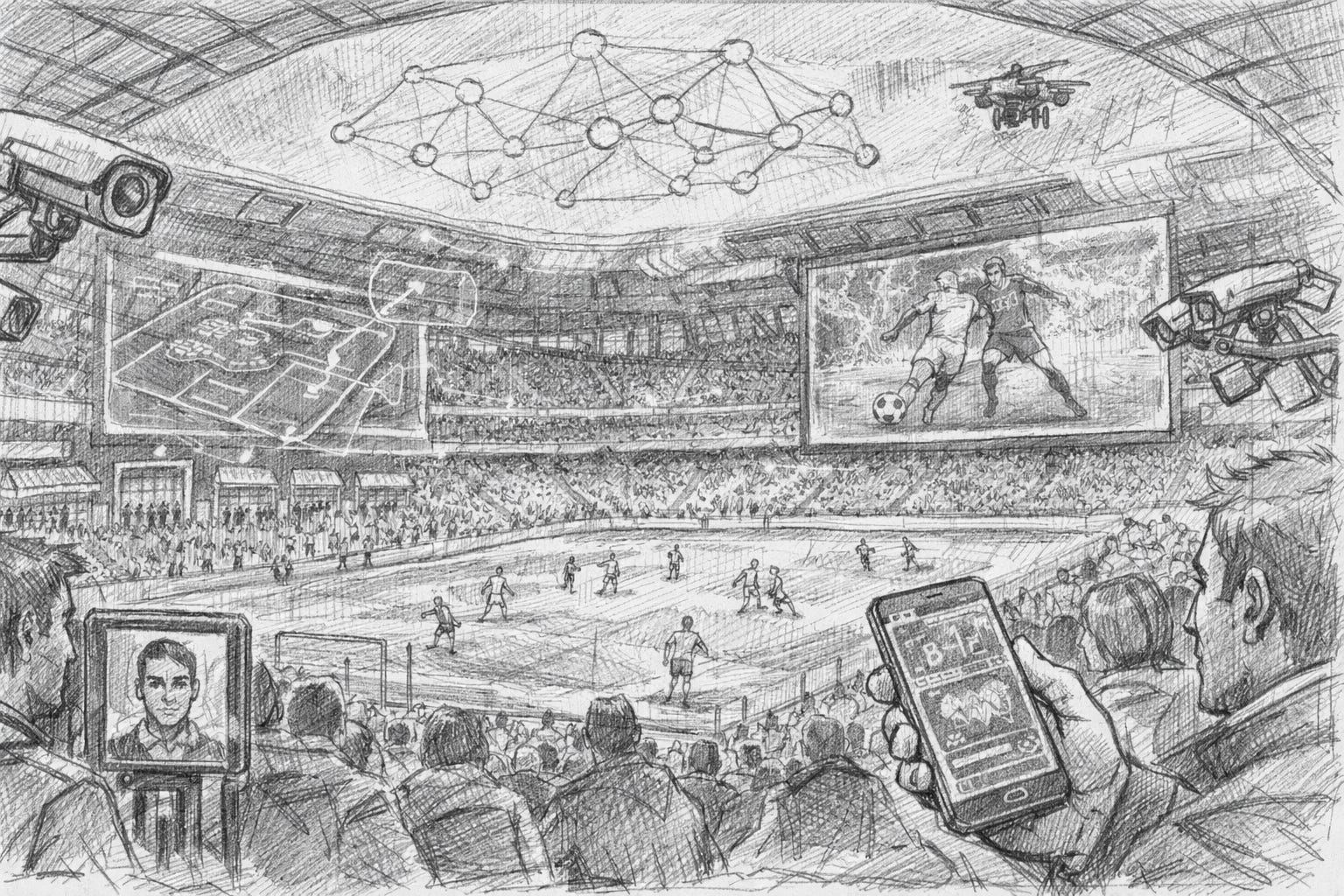
Frictionless entry and smarter crowd flow
Anyone who has missed a goal while waiting to get through the turnstiles understands the simplest stadium truth: the best technology is the kind you barely notice. AI is increasingly being applied to the most basic pain points—entry, congestion, and navigation.
Computer vision and predictive analytics can help stadium operators anticipate pinch points before they happen: which gates are busiest, where concourses are about to clog, and how flows change after a goal, half-time, or a late surge from the away end. With the right sensor network, AI models can suggest real-time interventions, such as opening an additional lane, redirecting fans to quieter entrances, or dynamically adjusting stewarding patterns.
For supporters, that can mean shorter queues, clearer wayfinding, and more reliable “time to seat” even on high-demand fixtures. For clubs, it means safer operations and better compliance with the strict crowd-management standards set by UEFA across its competitions.
Personalised matchday services without losing the communal feel
Personalisation in a stadium sounds like it could clash with football’s collective spirit, everyone singing the same song, living the same moments. Done well, AI personalisation is less about isolating fans and more about removing annoyances.
In app experiences, AI-driven recommendations can surface what you actually need: the quickest route to your block, the least busy kiosk near your seat, accessible facilities if required, or the best time to leave your seat to avoid missing key moments. For international visitors—common at elite European clubs—AI translation and content adaptation can make stadium information instantly usable.
The best versions of this don’t feel like “targeting”. They feel like competence: the stadium finally understands how people move, what they search for, and where time gets wasted.
Food, drink and retail: the queue is the enemy
If there’s one place supporters instantly feel “the future”, it’s the concourse. AI is already reshaping how clubs handle catering and retail:
Demand forecasting: Models predict peaks by fixture type, kick-off time, weather, and historical patterns, thereby improving stock and staffing levels.
Queue prediction and routing: Apps can show expected waiting times and direct supporters to less crowded points.
Dynamic operations: Kiosks can adjust menus or prep priorities in response to real-time orders.
The payoff is practical: fewer sold-out staples, fewer half-time bottlenecks, and less time spent watching the clock rather than the pitch.
Immersive replays, highlights and “second-screen” match intelligence
European supporters often say they don’t want a stadium to feel like watching at home. Fair. But AI can enhance in-stadium viewing without replacing the live experience.
Think contextual highlights in the official app: key moments stitched together within minutes, player heatmaps, or tactical trends presented in plain language. AI-generated clip selection can provide rapid replays that match what the crowd is reacting to—without fans having to search or scroll.
For clubs with large international followings, Real Madrid is the obvious example; AI can also tailor content by language and fan segment, ensuring tourists and season-ticket holders both get what they need without the experience becoming generic.
Safety, security and smarter stewarding
This is the part of stadium AI that matters most, and it’s also the area where governance must be strongest.
AI-assisted monitoring can help operators spot emerging issues faster: overcrowding in a concourse, unusual surges, barriers under pressure, or medical incidents that need rapid response. The goal is not “surveillance for its own sake”; it’s early intervention and better situational awareness—especially for high-profile fixtures and European nights where demand, emotion and risk all rise.
In the UK, where matchday operations are heavily scrutinised and continuously improved, AI offers an additional layer: better resource deployment, quicker incident triage, and clearer decision-making under pressure.
Pitch, facilities and sustainability: invisible wins supporters still feel
Not every upgrade is fan-facing, but many still shape the matchday. AI can optimise energy use, lighting, heating and maintenance schedules—reducing costs and emissions without impacting comfort. Predictive maintenance can prevent escalator failures, turnstile breakdowns and connectivity issues that turn a big fixture into a logistical mess.
Even the pitch can benefit indirectly: modelling can help plan irrigation, lighting cycles and wear patterns in multi-use stadiums. The best playing surface is the one nobody talks about because it simply performs.
Real-world direction: Real Madrid and top UK clubs
The most advanced European stadium experiences tend to come from two places:
Global giants with the budget, scale and year-round visitor traffic to justify investment (Real Madrid are frequently cited as a benchmark for modern stadium ambition and premium fan experience).
Top UK clubs that operate in a market where matchday reliability, safety processes, and supporter expectations are relentlessly high—driving innovation in ticketing, operations and digital services.
The most important point is that “AI stadiums” aren’t a single gadget or app feature. They’re an ecosystem: connectivity, data, operations, content and service design working together.
FIFA, UEFA and the standards question
European football’s governing bodies are increasingly setting expectations for safety, broadcasting, and event operations for major tournaments and club competitions. As stadium technology advances, the pressure is on to ensure innovation stays compatible with matchday integrity: fairness, privacy, accessibility, and clear accountability when automated systems influence decisions.
In practice, the “stadium of the future” will be shaped as much by standards and governance as by sensors and software. The clubs that win trust will be the ones that treat AI as infrastructure—tested, transparent and secure—rather than a marketing slogan.
What the stadium of the future will actually feel like
Supporters won’t arrive thinking, “I’m entering an AI-enabled venue.” They’ll notice something simpler:
They got in faster.
They found their seat easier.
They spent less time queuing.
They felt safer in crowded moments.
They had better information when it mattered.
And then, crucially, they forgot about the technology, because the football took over.
That’s the real promise of AI in European stadiums: not to distract from the match, but to remove the obstacles around it, so the experience becomes more human, more communal, and more focused on the ninety minutes.