

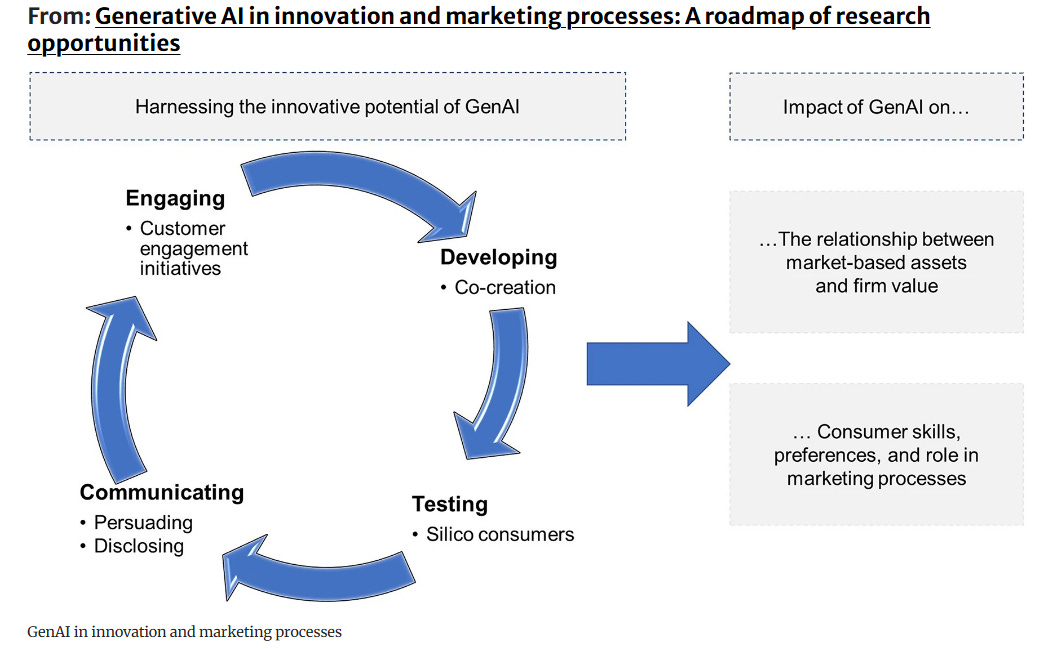
Artificial Intelligence (AI) continues to be a driving force in innovation, reshaping industries and redefining possibilities. A recent study titled "Generative AI in Innovation and Marketing Processes: A Roadmap of Impact," conducted by researchers at the University of St. Gallen and published in September 2024, provides a comprehensive analysis of how generative AI is transforming innovation and marketing strategies.
Advancements in Generative AI
The study highlights several key areas where generative AI is making significant contributions:
Product Development: Generative AI models are increasingly utilized to design new products by analyzing market trends and consumer preferences, resulting in more targeted and successful product launches.
Marketing Content Creation: AI-driven tools are creating personalized marketing content, which enhances customer engagement and improves conversion rates.
Customer Interaction: Chatbots and virtual assistants powered by generative AI are providing more natural and effective customer service, significantly improving overall customer satisfaction.
Challenges and Considerations
Despite these advancements, the study outlines several challenges that need to be addressed:
Data Privacy: The use of AI in marketing raises significant concerns about data privacy and the ethical use of consumer information.
Bias and Fairness: AI models can inadvertently perpetuate biases present in the training data, potentially leading to unfair outcomes and reducing the inclusivity of generated content.
Integration: Incorporating AI into existing workflows requires substantial changes in organizational processes and culture, posing integration challenges that need careful management.
The Path Forward
To harness AI's full potential in innovation and marketing, the study suggests:
Ethical Frameworks: Developing and adhering to ethical guidelines is crucial for navigating the complexities of AI integration, particularly in creative and customer-centric domains.
Continuous Learning: Organizations should invest in ongoing training and development programs to keep pace with rapid advancements in AI technologies.
Collaborative Approaches: Encouraging collaboration between AI systems and human creativity can lead to more innovative and effective solutions, combining computational power with human insight.
Conclusion
In conclusion, while AI has made significant progress in creative and strategic fields, it is essential to address the accompanying challenges thoughtfully. By fostering collaboration, ensuring transparency, and upholding ethical practices, we can build creative machines that augment human ingenuity and enrich the cultural and artistic fabric of our society.
For a more in-depth exploration, refer to the full study: "Generative AI in Innovation and Marketing Processes: A Roadmap of Impact" by researchers at the University of St. Gallen.