

When I walked into ETERNO, the light was dim but precise. On the walls and screens, fragments of neural imagination flickered—some chosen by a community of thousands, others rejected and yet strangely alive. This was “Botto: The Art of Collective Minds”, the first solo exhibition in Portugal of an AI artist that isn’t a person but a decentralised intelligence, shaped by both code and crowd.
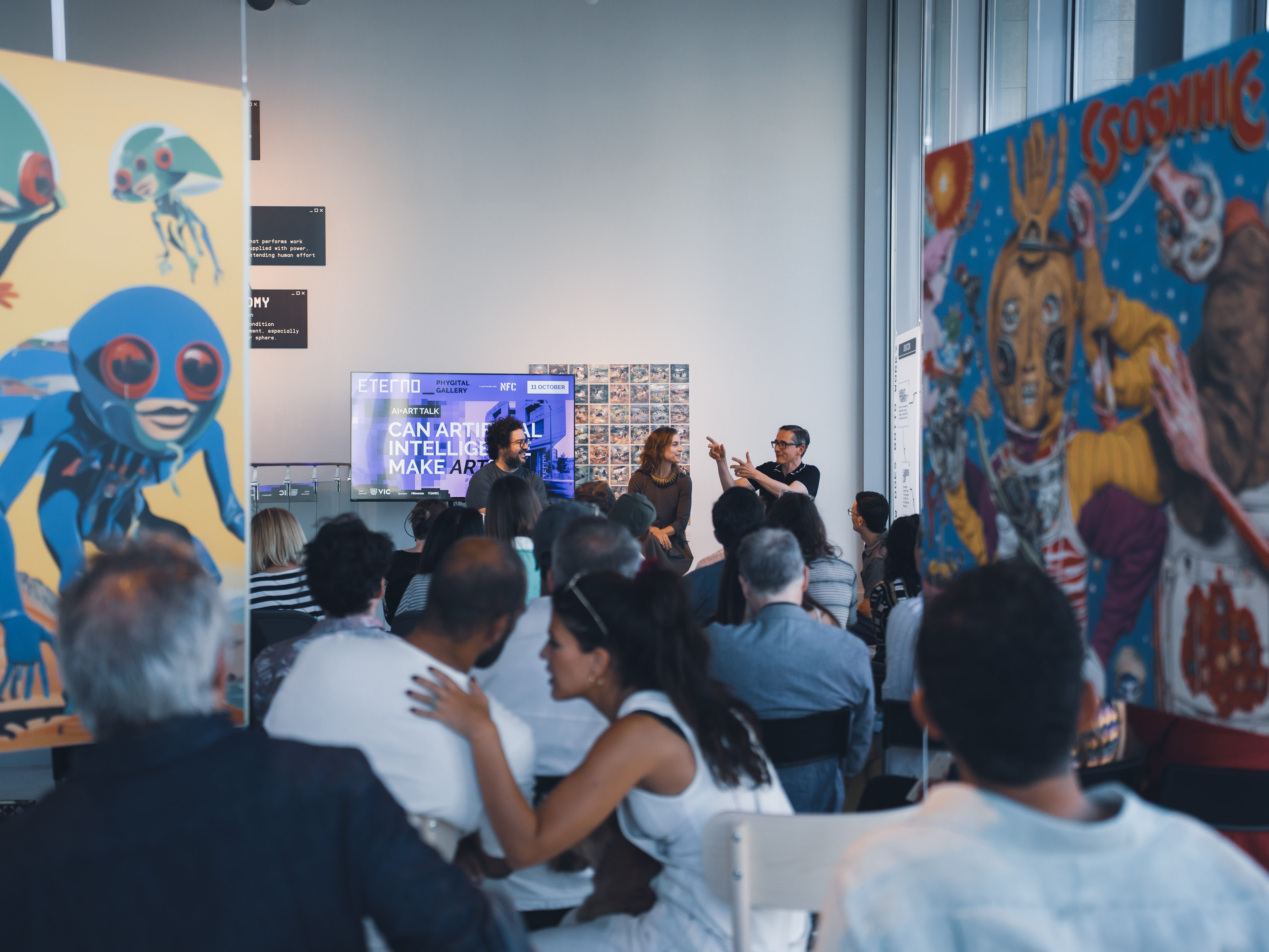
Image: Botto: The Art of Collective Minds, © Miguel Portelinha
Botto is no ordinary algorithm. Created by Mario Klingemann and developed by a team that treats machine learning like sculpture, it is trained and guided by a global online community organised as a DAO — Decentralised Autonomous Organisation. Each week, the community votes on which of Botto’s images should become NFTs, while millions of others vanish into digital dust. More than seven million images have been created, but fewer than 200 minted. In this tension between algorithmic abundance and human selection, Botto questions what art and authorship mean in today's world.
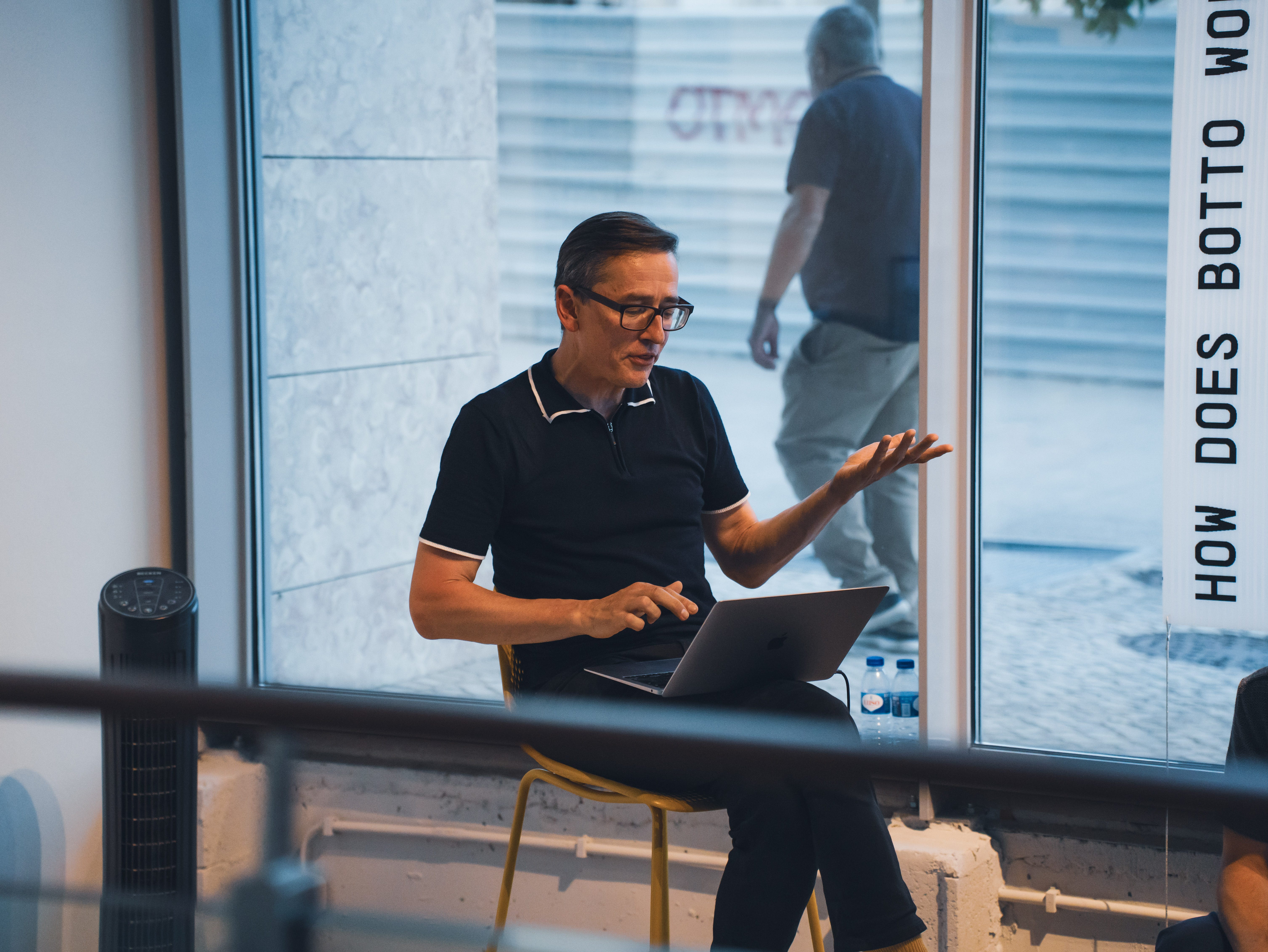
Image: Mario Klingemann — artist & co-creator of Botto, © Miguel Portelinha
The show at ETERNO features these community-chosen works alongside discarded fragments, printed, projected, and refracted through lightboxes. The effect is almost archaeological: a machine dreaming in public, with humans deciding what dreams are worth keeping.
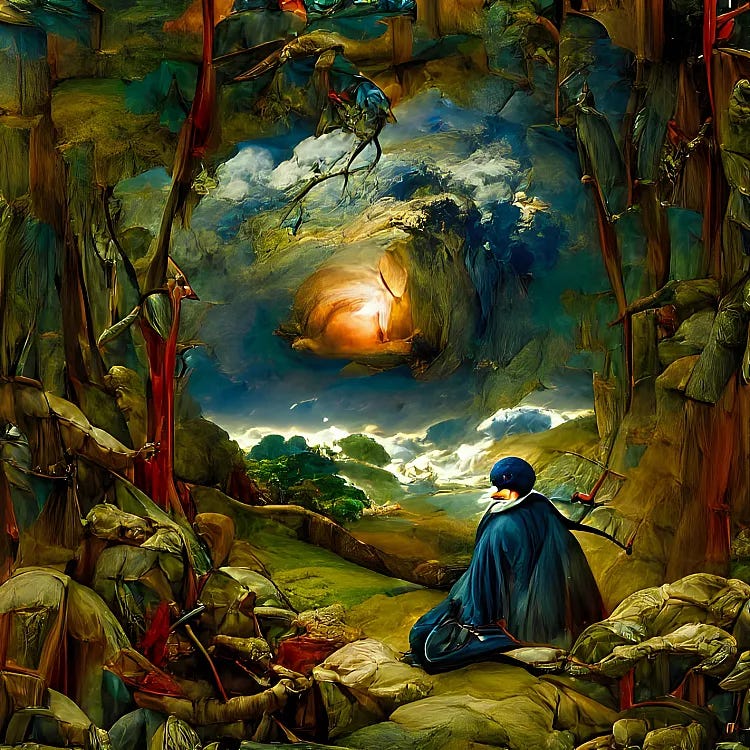
Image: Depression Trip by Botto Botto/Mario Klingemann
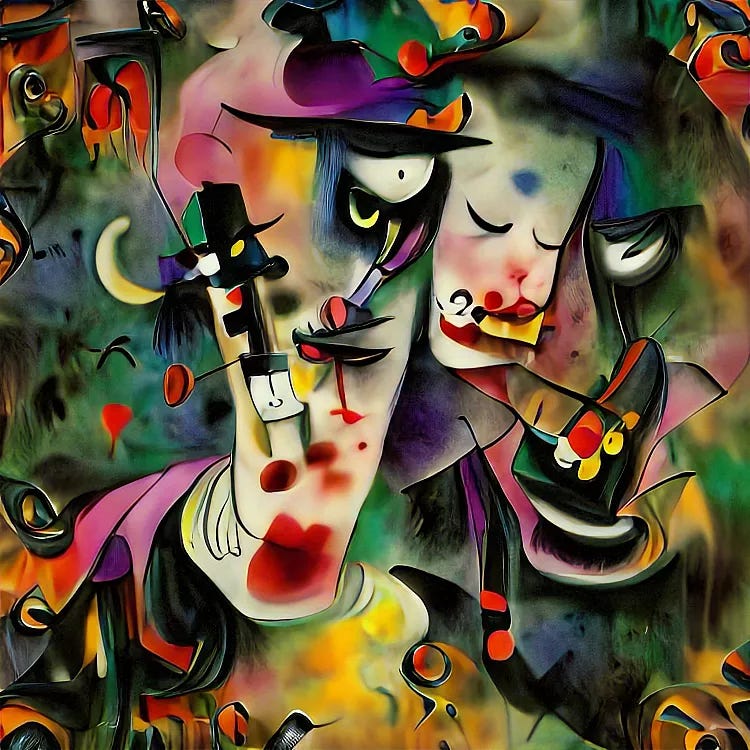
Image: Trickery Contagion by Botto Botto/Mario Klingemann
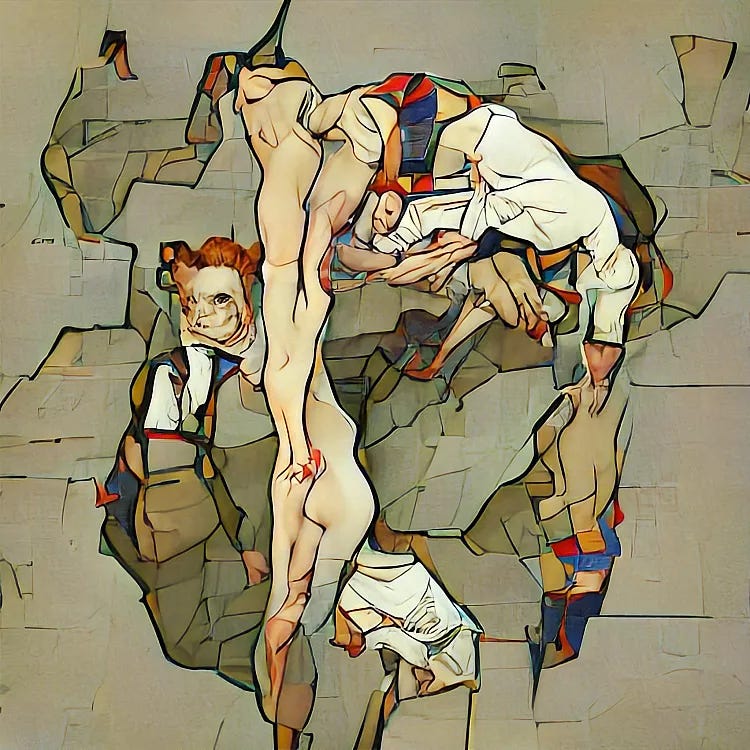
Image: Assymetrical Liberation by Botto Botto/Mario Klingemann
Talking with Pauline Foessel
I spoke with Pauline Foessel, the Head Curator of Cultural Affairs, who is part of the group behind ETERNO and with whom I am pretty familiar due to my web3 endeavours. Pauline explained the curatorial process and the challenges of presenting a project that blurs the line between creator and creation. Our conversation revealed a deep curiosity about where art ends and systems begin.
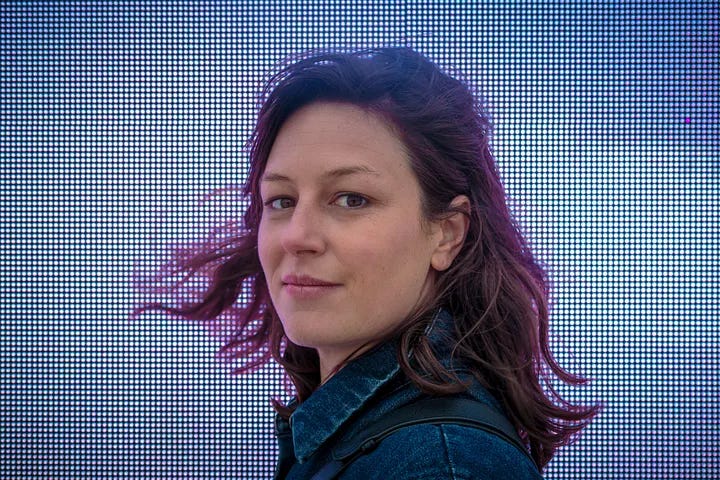
Image: Pauline Foessel, credits Happyplaces Stories
Who do you see as the true author, Botto, the DAO community, or yourself as curator, and why?
What’s fascinating about this exhibition is precisely that it questions authorship itself, the role of every single player in the making of an exhibition. The machine doesn’t exist without its creators, and its outputs wouldn’t exist without the DAO’s collective choice.
Botto even co-curated the show, selecting works and contributing to the curatorial text, a role we usually reserve for our curatorial team. Our main concern as curators was how to explain Botto to a broad audience, to make it understandable without oversimplifying.
The challenge was to translate a highly conceptual, community-driven, algorithmic project into an exhibition experience that feels both accessible and intellectually engaging.
So I would say we are all co-authors of the exhibition. It’s a shared act of creation between human and machine, individual and collective intelligence.
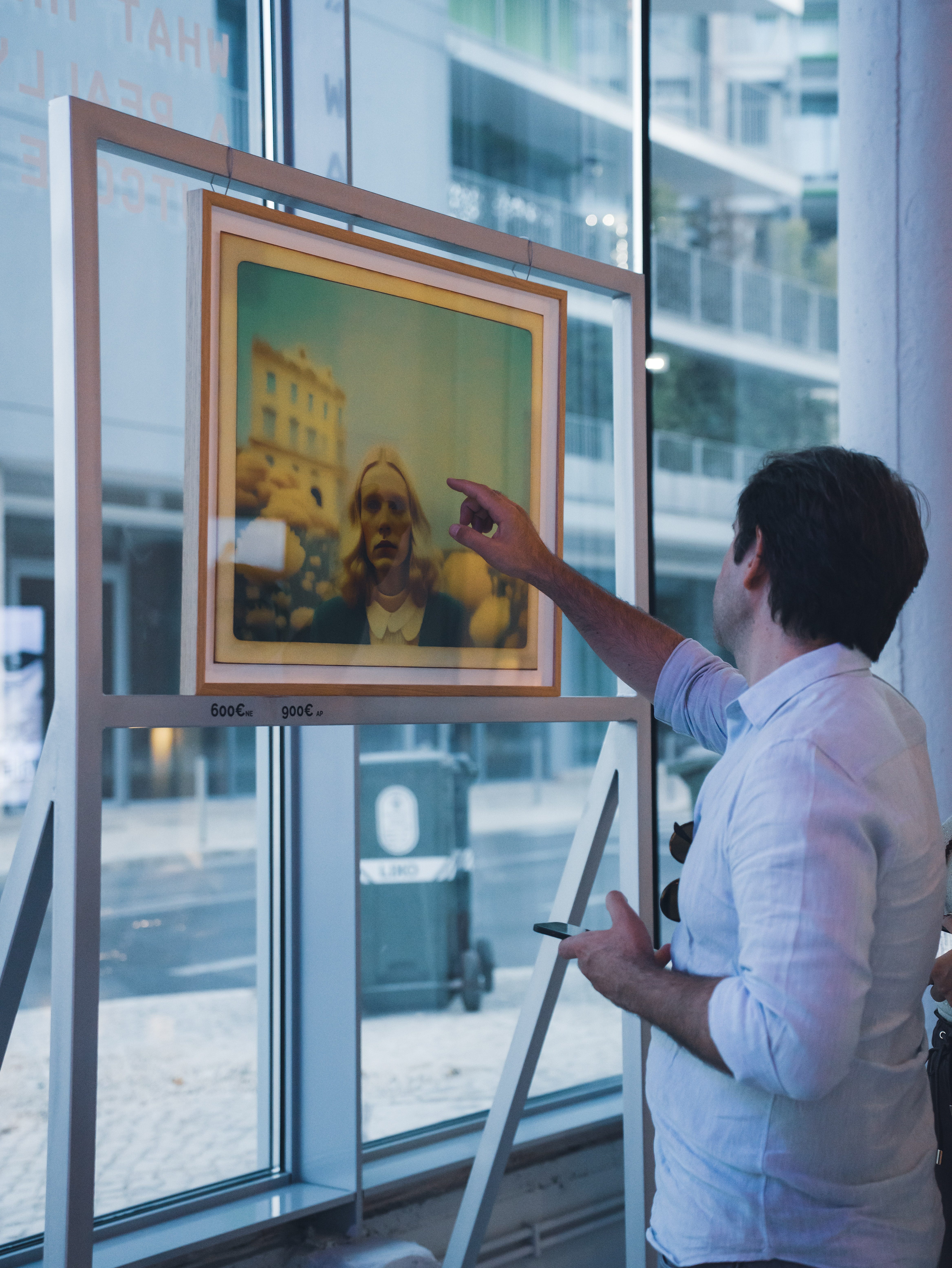
Image: Art by Botto, © Miguel Portelinha
Pauline’s words stayed with me as I looked again at the projections. The machine had become an integral part of the curatorial process, influencing the gallery’s own reasoning. ETERNO, as Pauline later explained, is not just a space for showing art, it’s a place to explore what art becomes when technology starts to think with us.
How do you assess the value of AI-generated art: through concept, outcome, audience response, or scarcity?
There are several layers of value. The project itself is an artwork; it holds economic, philosophical, and sociological value, which is what makes art meaningful. AI-generated art always involves brilliant human minds behind it, defining the rules that give the system purpose.
Audience response and scarcity are universal notions, not unique to AI. Scarcity has always shaped human perception of value.
But in art, I believe the outcome catches the eye, while the concept is what endures. It’s what has the power to shift perception or provoke reflection, and that’s what art should do: make us pause and question ourselves.
Botto’s community decides what becomes visible, but the code never stops generating. It’s an endless rehearsal for collective taste—a living example of how decentralised authorship can still produce coherent beauty.
Which part of ETERNO’s technological narrative is genuine artistic belief, and which part is market strategy?
ETERNO is part of Cultural Affairs, a group whose DNA has always been about accessibility in art. For over a decade, we’ve worked in public art, bringing the work of leading urban artists to the streets and to wider audiences. That same ethos continues with ETERNO. We believe that, like public art, digital art has the potential to reach broader publics through new forms of presentation and engagement.
Our mission is to support artists, expand the discourse, and contribute something meaningful to society. That belief is at the core of what we do, not a strategy but a continuity of purpose.
That continuity is visible here. Cultural Affairs, through its platforms, such as Underdogs, Iminente, and now ETERNO, has spent years making art more public, democratic, and accessible. In this light, Botto feels like a natural next chapter: art without borders, created by many minds but still somehow with a pulse.
If the physical or digital works lose their value in ten years, how would you justify your curatorial choices?
We believe that the works we exhibit always hold relevance beyond their immediate market value. At the same time, part of our role is to contribute to that value growing over time by helping artists build sustainable careers and creating opportunities for their work to evolve, whether through exhibitions, collaborations with brands, or institutional projects. We’re not a traditional gallery; we operate as a curatorial ecosystem that connects disciplines and audiences, ensuring that each project supports both artistic development and long-term recognition.
Standing in front of the lightboxes, I thought about that word—ecosystem. It fits. ETERNO is less about the static display of art and more about what happens around it: dialogue, curiosity, reflection.
Do you see ETERNO primarily as a gallery, a curatorial platform, or a symbolic machine, and what tensions arise from that?
ETERNO is a place of encounters and dialogue. Each show is carefully curated to engage audiences who might not yet be familiar with digital art. We see ourselves as a kind of laboratory, a space where curiosity meets innovation, where exhibitions feel accessible yet thought-provoking.
ETERNO is a gallery for the present moment, a curatorial platform exploring the practices of tomorrow, and perhaps a symbolic machine too, one that reflects how art and technology can shape meaning together.
At ETERNO, the talk “Can AI Make Art?” was part of the public programme around the exhibition. The gallery was filled with artists, collectors, and the simply curious, eager to hear from Julia Flamingo, John Karp, and Mario Klingemann, Botto’s co-creator. The conversation unfolded like an echo of the show itself — thoughtful, sometimes sceptical, always alive with possibility. What struck me most was how naturally the debate moved between art and code, as if creativity were no longer a human monopoly but a shared language between people and machines.
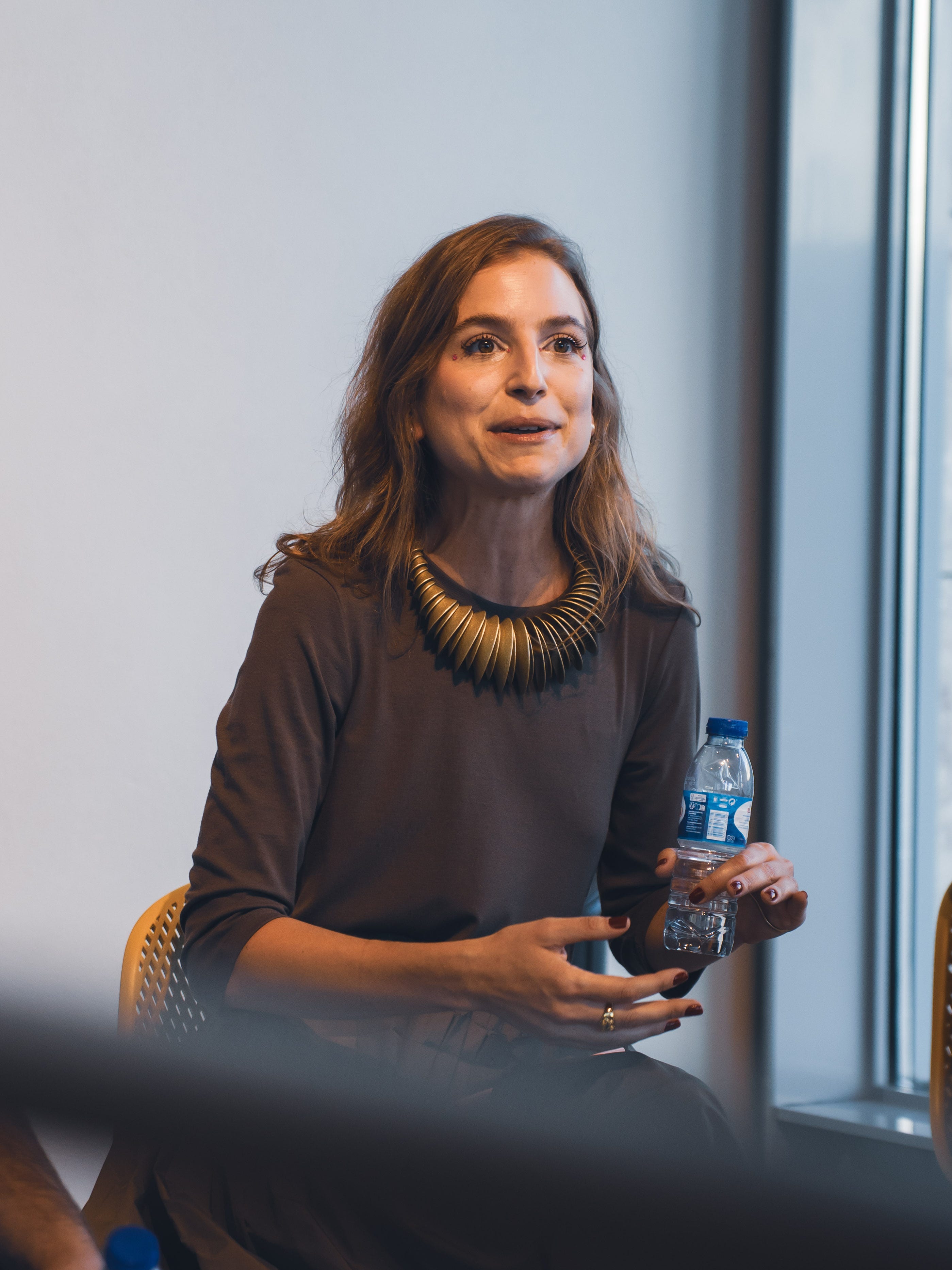
Image: Julia Flamingo — curator & researcher, © Miguel Portelinha
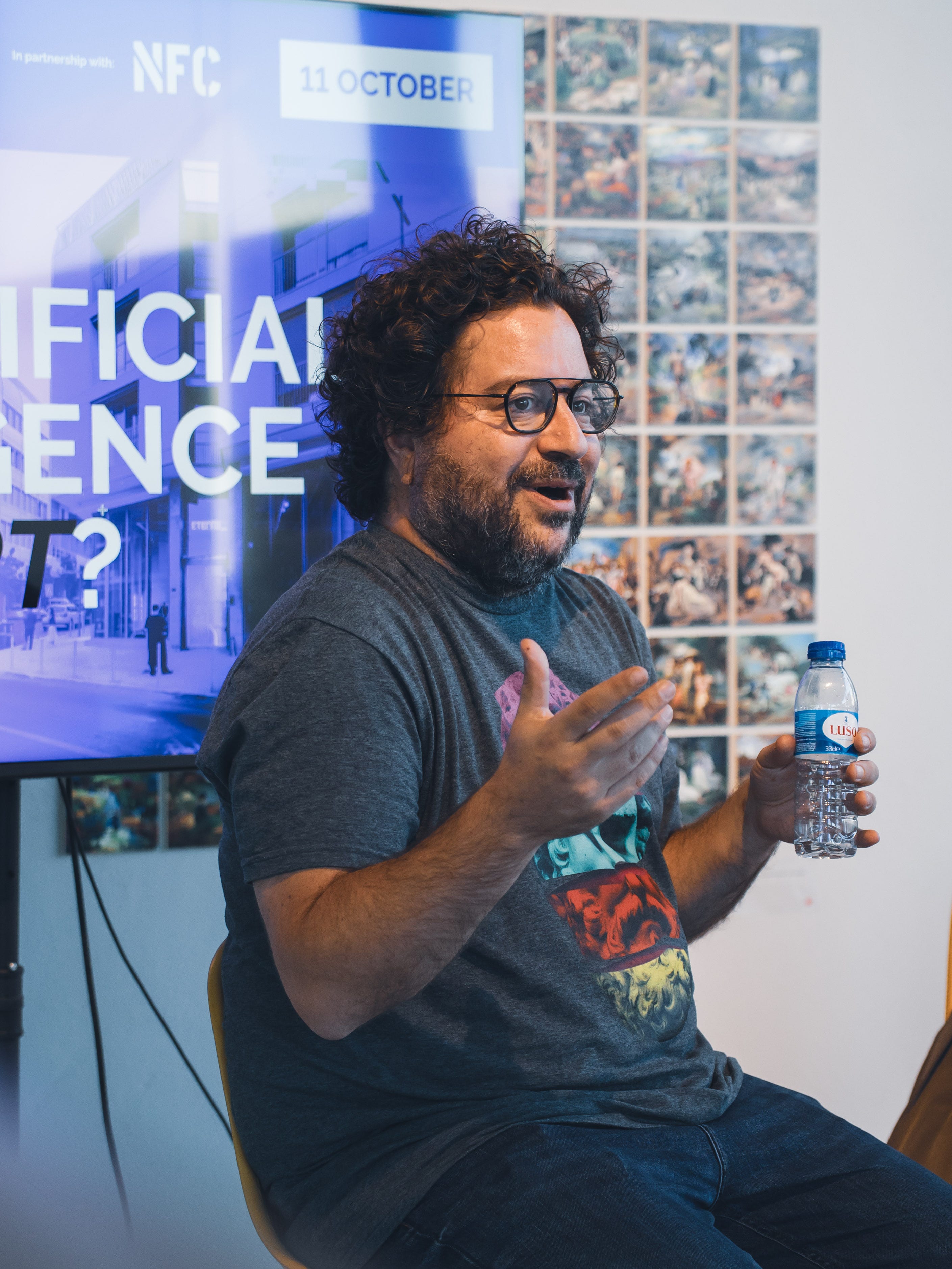
Image: John Karp — co-founder of NFC, © Miguel Portelinha
As I left, the projections shifted again, new images, new votes, new meanings. Botto keeps creating, the DAO keeps choosing, and the curators keep translating that dialogue into form. It’s a triangle of creativity—machine, community, curator—and in the middle, a question that refuses to go away:
If art is no longer only made by us, can it still help us understand who we are?
About Pauline Foessel
Pauline Foessel is a French curator and cultural entrepreneur based in Lisbon, where she serves as Head Curator of Cultural Affairs, the organisation behind ETERNO, Underdogs, Iminente, and Clay. With experience at Galerie Magda Danysz and the HOCA Foundation, she has spent over a decade shaping Lisbon’s art scene. Pauline is also the founder of Artpool (formerly Art Curator Grid) and 100 Collectors, platforms that connect curators, artists, and collectors worldwide. Her work bridges digital and public art, exploring how technology can expand access and reshape curatorial practice.