

We had the opportunity to talk with Natalia Santander during the last Crypto: AI Conference, discovering the mind of a genuinely generative artist.
Follow Natalia Santander work and contributions:
https://www.instagram.com/meta.piel/
https://www.linkedin.com/in/nattsan/
https://on.muro.art/artist/natalia-santander-metapiel-4410
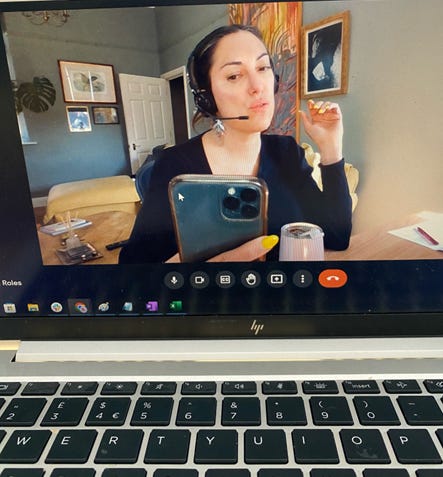
1 With your experience in talent acquisition and now in generative art, how do you see the intersection of creativity and AI evolving regarding skill sets that will be valued in the future?
The intersection of AI and creativity is transforming not only how we create but also how we think about talent, work, and everything else.
Generative AI is already embedded in our lives. For example, LinkedIn’s recent launch of an AI assistant for B2B is an exciting signal of how automation reshapes recruitment. By handling repetitive tasks, AI enables recruiters to focus on strategy, creative thinking, and reshaping traditional ideas around talent acquisition.
There’s an intriguing parallel here with generative art, where the artist co-creates with AI to bring forth unexpected, collective expressions. Similarly, in talent acquisition, AI facilitates a kind of co-creation with the “unconscious collective” of data—patterns, candidate personas, and market insights. Just as an artist combines intuition with machine learning, recruiters are beginning to merge their expertise with AI’s data-driven insights to uncover talent pools that might otherwise remain invisible. The new talent of the recruiter could be to find new pathways and connections of talent pools, new markets, versus demand and transferable skills and design a captivating people growth strategy for a client.
As recruiters and companies work with AI, they aren’t just automating—they’re engaging with a broader, almost collective intelligence that reshapes how we understand and access potential..the entire outcome of this is yet to be seen. We will shape it together, and as we know, we will all become prompt engineers and manipulate searches to obtain standard to niche results. This domain lies almost exclusively in the monopoly of LinkedIn and the new AI-enhanced capabilities of the HR/recruitment ATSs. I know that Ashby just embedded a powerful one.
In the future, I see more open-source or at least paid but more malleable capabilities for building one’s own tools.
The most valued skills will likely revolve around building new models of collaboration, learning to talk to machines and humans, and translating these conversations. Maybe a job of the future would be a robot translator!! Haha, both with AI and with the diverse and dynamic talent pools that emerge from this shift.
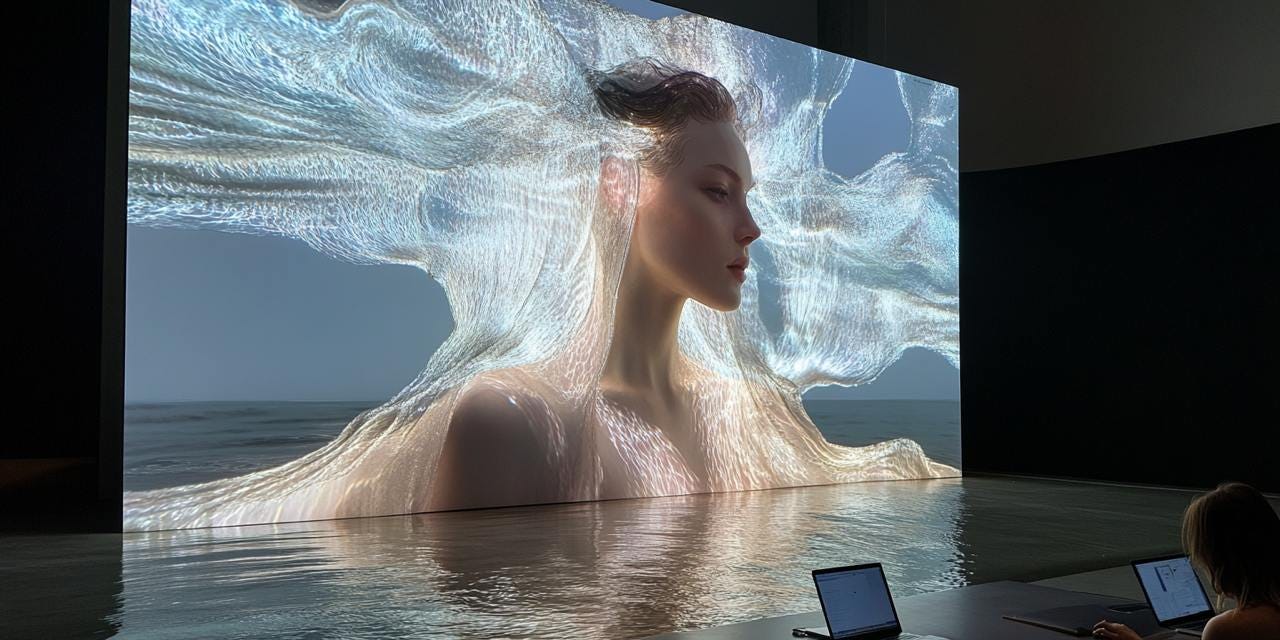
2 Generative art is reshaping how we think about creativity and ownership in digital spaces. What excites you most about AI's role in transforming artistic expression and the concept of ownership?
AI's transformative power in creativity and ownership is both exciting and complex. What fascinates me most is how AI democratizes artistic expression, allowing anyone, regardless of technical skill, to create intricate works once only accessible to highly trained and specialized artists.
The shift toward AI-driven creativity also redefines ownership. In a digital world where replication and distribution are instant, traditional notions of ownership as a singular, tangible asset become less relevant. The artist's role in the post-production process—adding context, intent, and human touch—becomes crucial in claiming a creation as their own. While AI art is increasingly used without proper credit, complicating ownership and compensation, NFTs once seemed like a solution for digital ownership. Yet, their evolution has shifted toward brand-driven campaigns and collectors’ platforms, making the monetization of digital art more complex. Still, AI-generated art is finding new niches in competitions, awards, and large-scale tailored content for events, indicating that the landscape is continually evolving.
This change in ownership and creation dynamics is mirrored in fields beyond art, like our mentioned talent acquisition. Talent acquisition itself isn’t traditionally a creative industry, but AI tools in recruitment can mirror how AI is used in generative art. I find that using AI creatively to uncover incredibly well-matched talent is one of the most exciting ways to apply these tools. While recruitment might not be inherently creative, creatively applying AI to identify candidates from vast, previously unexplored networks can feel like crafting a work of art or, more so, when curating a whole team of individuals. In this sense, talent acquisition professionals who use AI creatively are co-creators with the machine, uncovering hidden gems that might have been overlooked.
This shift from individual ownership to shared creation, where AI, human input, and collective data play intertwined roles, redefines how we create art and how we think about talent. Using AI as a collaborative tool, whether in art or recruitment, makes the creative process more inclusive and multifaceted. Like AI-driven art, talent acquisition is becoming a dynamic, ongoing conversation between technology, human intuition, and data, where the lines between authorship, ownership, and recognition are continuously evolving.
In both the creative and talent acquisition industries, we are transitioning from a model of individual ownership to shared, collaborative creation, where AI’s role becomes just as important as the human input guiding it. This paradigm shift is revolutionizing art and the future of work, offering new ways for all creators to collaborate, innovate, and connect.
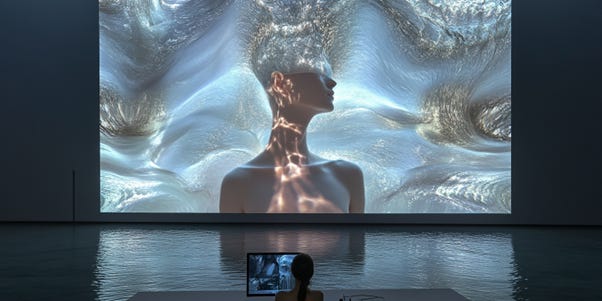
3 How has your approach to creativity evolved in your journey from talent acquisition to generative art? Do aspects of your previous work inform how you approach generative art today?
In my parallel journey through talent acquisition and generative art, my approach to creativity has been touched in fascinating ways, although some core principles remain constant. In recruitment, I was always focused on optimizing processes like semi-automating tasks to quickly map the market and uncover hidden candidate pool opportunities. This mindset has translated directly into my creative work today. Just as I used technology to streamline recruitment efforts and promptly assess the talent landscape, I now apply similar techniques in generative art.
I approach creating my universes, styles, AI models, and concepts with the same lens, leveraging AI to help me explore vast creative landscapes. This curating exercise of collecting words to represent my memories and the new artistic language of 2024 allows me to dive deep into the worlds I want to convey, experimenting with different elements, textures, and styles until I can crystallize a concrete, synthetic message into a structured prompt that will after several tries come closer to a vision I hold within. Just as I once needed to understand the market to build effective talent pipelines rapidly, I now use the power of AI to create cohesive, powerful artistic expressions that resonate deeply with my vision. In both realms, the goal is to merge data-driven strategy with creative intuition, and AI has become the tool that empowers this approach in art, much like it did in recruitment.
4 Looking to the future, what impact do you believe AI-driven creativity will have on our understanding of culture and innovation, especially within the metaverse and Web3 spaces?
Looking to the future, I believe AI-driven creativity will revolutionize our understanding of culture and innovation, particularly within the immersive environments of the metaverse, Web3, and VR/AR. AI can act as a bridge between the physical and digital realms, offering us a path to reconnect with our multidimensional, omnipresent essence. This shift will allow us to transcend traditional geographical, linguistic, or cognitive boundaries by fostering more fluid, collaborative, and personalized experiences.
In these virtual spaces, culture will no longer be confined to passive consumption; it will become a dynamic, co-created force where individuals can shape and influence their environment. This democratization of creativity will lead to new forms of expression, connectivity, and self-discovery.
Additionally, AI-driven innovations will redefine the Self-Care and Healing industries by integrating play, mindfulness, and immersive interaction principles. Healing through play and interactive experiences is grounded in neuroscience, which suggests that the brain’s neural pathways are strengthened through creative engagement and playful exploration. In the future, healing will not just be a passive experience but an active, co-created journey where individuals can tap into their full potential, accessing therapeutic experiences that are tailored, immersive, and deeply personal.
One of the most potent aspects of AI-driven creativity is the freedom it grants us in self-representation. In the metaverse, our avatars can become extensions of our inner selves, expressing parts of our identity that may be difficult to convey in the physical world. Whether we choose to be a flying frog, a fairy, or something entirely surreal, this flexibility in form breaks down many barriers to acceptance, fostering a culture where creativity and diversity are celebrated. As a result, the psychology of acceptance and the reduction of bullying could become central to these new digital spaces as individuals feel more empowered to explore and represent who they are.
The innovation AI brings will also transform our relationship with craftsmanship and luxury. Unique, artisanal pieces will emerge as the new epitome of luxury in a world where many creations can be digitally replicated. Handcrafted goods, authentic materials, and personal artistry will gain increasing value as rare treasures within the digital economy. However, AI won’t simply replace traditional crafts; it has the potential to democratize luxury by empowering new creators to become digital artisans. With generative tools, individuals without access to conventional craftsmanship can design and produce high-quality, custom creations that express individuality and precision.
Furthermore, 3D printing combined with AI could revolutionize sustainability in this new luxury landscape. Digitized artisanal marvels can be created and then repurposed or recycled in people’s homes, cutting down on waste and reducing the need for mass production. These new luxury products would be as customizable as they are environmentally conscious, reflecting the values of a generation that increasingly prioritizes sustainability. By allowing consumers to transform, repair, or reimagine their items, AI and 3D printing offer a fresh concept of luxury: one that values uniqueness, sustainability, and adaptability, blending technology with a renewed appreciation for craft and conscious consumption.
Ultimately, AI-driven creativity in Web3 and the metaverse could foster a more inclusive, expressive, and multidimensional culture where innovation flows freely, and art, identity, and technology continually reshape each other. In this space, trends might be more personalized and more complicated to predict, reflecting an era where people are empowered to define and explore their unique visions rather than simply following existing trends. This is an exciting horizon where personal and cultural narratives can be endlessly reimagined, enhanced by the fusion of human creativity with AI's transformative power.