

At the recent Branding & Business Summit, held at the Sala Tejo at MEO Arena in Lisbon, Portugal, a new forum dedicated to the future of brands, leadership, technology, and business strategy was launched. Organised by Imagens de Marca and Brands Community, in association with SIC Notícias, the summit brought together thinkers, CEOs, creatives, policymakers, and entrepreneurs to discuss how organisations must adapt in an era of accelerated change. The program explored geopolitics, artificial intelligence, talent, leadership, innovation, and the strategic role of branding in building stronger companies and stronger countries.
It was a pleasure to be there and experience the event's energy firsthand. The conversations were rich, multidimensional, and refreshingly practical, crossing industries and perspectives rather than getting stuck in traditional marketing language. This was a serious discussion about decision-making, trust, culture, competitiveness, and the future of business.
One of the most anticipated speakers was Martin Lindstrom, a globally recognised leader in branding, consumer behaviour, and business transformation. Over the years, he has advised iconic companies such as LEGO, Disney, and PepsiCo, helping them reconnect with customers and reinvent relevance. He is widely known for pioneering the concept of “small data”, the human observations and behavioural clues that reveal what consumers truly feel, often more accurately than large spreadsheets ever can.
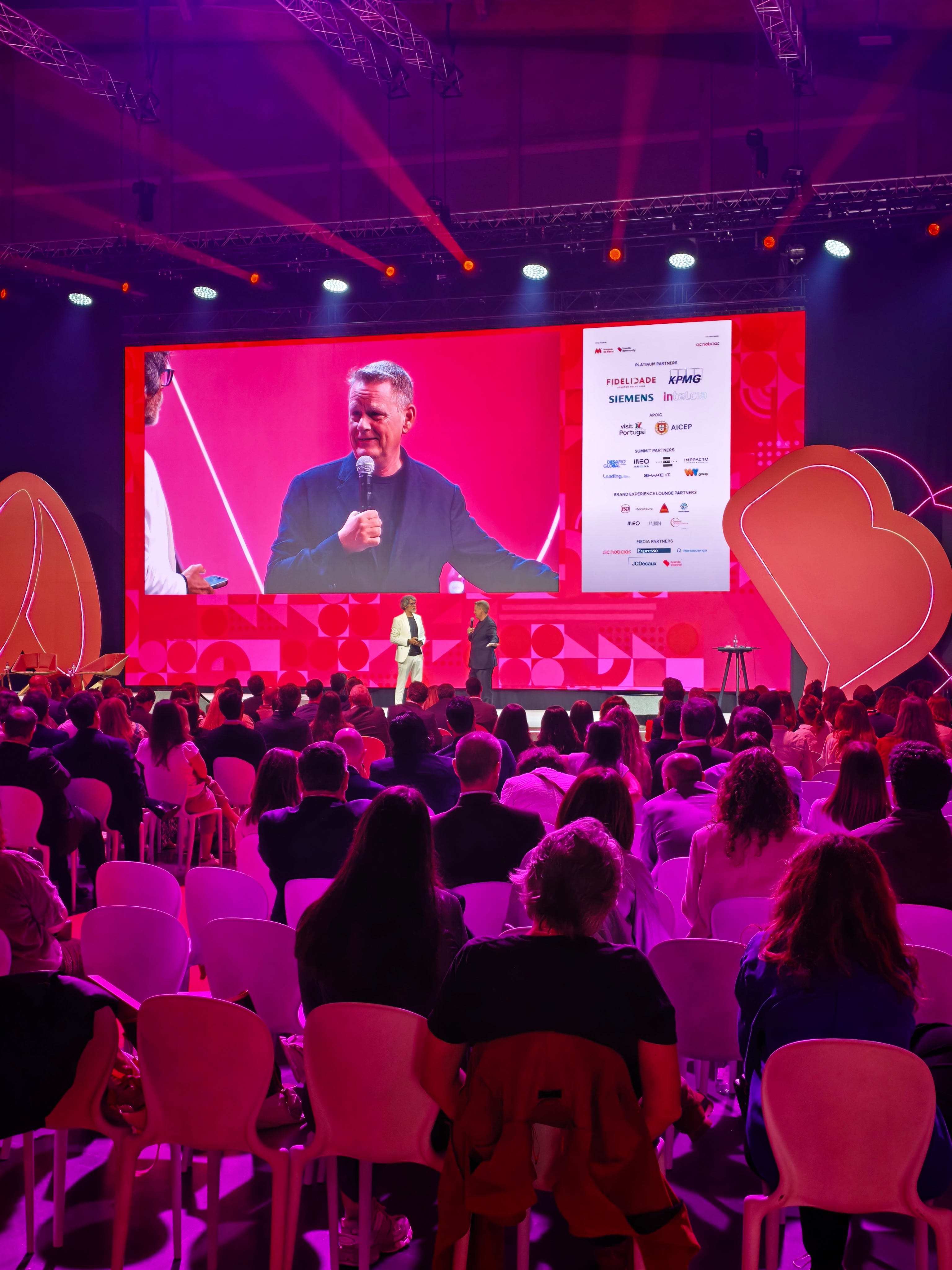
Martin Lindstrom and Carlos Coelho (from Ivity Brand Corp) at the Branding & Business Summit
Lindstrom is also the author of several influential books. Buyology explored how neuroscience shapes purchasing decisions and why emotion drives choice more than logic. Brandwashed examined how companies influence habits and desires in everyday life. Small Data argued that tiny observations often unlock the biggest business opportunities. The Ministry of Common Sense focused on how bureaucracy harms innovation and customer experience, and on how organisations can regain agility and humanity.
During the summit, I had the opportunity to sit down with Martin for a direct, fast-paced conversation about AI, authenticity, consumer behaviour, brand growth, and what will define the strongest brands over the next five years. His answers were sharp, provocative, and deeply human, exactly what one would expect from someone who has spent decades studying why people connect with certain brands and reject others.
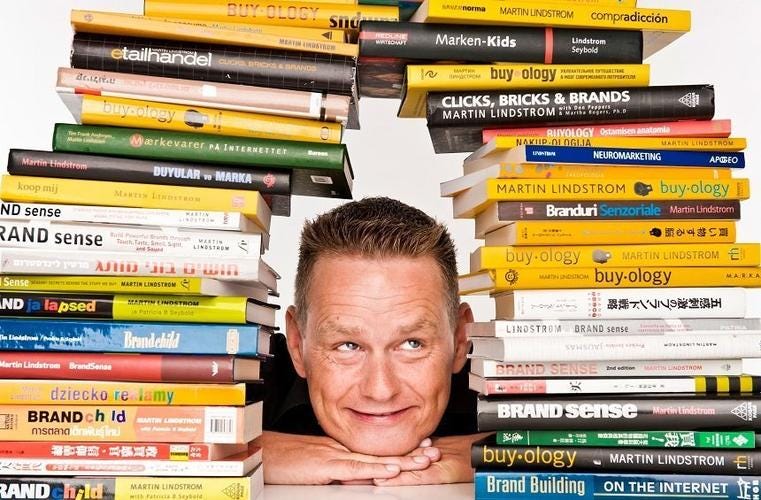
Photo Credits: Carob Mill
Interview with Martin Lindstrom
First of all: how do you present yourself? Because you talk about brands, but you are a brand yourself.
Not really. I mean, at the end of the day, we’re all brands, right? As soon as you’re a living person, you have an identity. You can choose to amplify it or choose not to build your brand.
I tend to say we all have three bank accounts. One is where you get your salary. One is where you educate and train yourself. And then you have your brand account.
The brand account is where you build brand equity. Because in the future, we won’t stay in the same job all our lives. We may be in one job for a year and then move on to somewhere else. The brand equity you’ve built has to go into that account, because then you’re safe when you move on. If you don’t do that, you have to start all over again.
In your opinion, what is the biggest branding mistake companies are making right now?
The biggest branding mistake is very simple: they believe AI is sophisticated enough to create all communication.
That means things become shallow. You can still sense it’s AI, so you never become emotionally attached to what you see.
We’ll get there eventually. But it will take time. If you jump on it now, you’re wasting your media spend, because people can feel it. They’ll say: I don’t want to be influenced by an AI robot trying to make me buy something.
That’s the biggest mistake.
Has AI made branding better, or just more generic?
I think we are in a transition period right now.
In the past, branding had already been going downhill in quality. People believed it was all about the logo and its size. They forgot the emotional side. Then AI came in, and the emotional side continued declining.
But at some point, people get tired of technology. We already see the reputation of technology in the US declining significantly, alongside healthcare. A recent study showed that.
What we’ll see is technology becoming more of an enemy than a friend, as it was perceived until recently. And once that happens, you can’t use technology to communicate a perfect image anymore. People will want the opposite. They’ll want authenticity.
So that migration will happen. AI and technology will be used to distribute, personalise, animate, and make things beautiful, but not yet to create truly emotional messages.
What small human signals, and thinking about your idea of small data, are brands ignoring right now?
The first thing they’re ignoring is that you cannot read in a report how people feel.
You have to get your hands dirty and get into homes, into real life, into reality.
The world has never changed this fast—and it will never change this slowly again. Because of that, the consumer you had five years ago before COVID, the consumer you had three years ago before Ukraine, and the consumer you had one year ago before the wars in Iran, have all completely changed.
Yet we’re stuck with the mindset that people still behave the same way.
So get your hands dirty quickly. Once you touch that nerve and bring it into your product innovation and service innovation, that’s where you stand apart from everyone else right now.
But companies need to grow, to grow, to grow. Can they really grow their brand without losing authenticity?
Yes, they can. They just need to be clever.
Let me give you an example: LEGO first became hugely successful with boys. They tried three times to enter the girls’ segment. They failed twice. The third time was a home run.
The brand returned to form after nearly going bankrupt 16 years earlier. Then everyone said: Okay, that’s it. LEGO is doing well now, but growth will slow down.
Guess what? Through some of our research, we discovered that adults were playing with LEGO—and paying for it.
Today, that represents around 60% of total revenue. They discovered they could create an adult LEGO line—a whole new business.
They thought they were done. They thought there was no more room to grow. But small data helped them uncover a completely untapped opportunity.
In the next five years, what will define the strongest brands?
The strongest brands will have their own communities, and those communities will be highly specific.
They’ll be able to speak to very individual people in exactly the tone of voice those people resonate with. And that voice will be consistent across every touchpoint: from store design to customer service to packaging.
I also think brands will become much more authentic. They will intentionally celebrate mistakes.
And I think brands will begin to question why they exist. Because of that, they’ll need to become much better at usability, much better at connecting with people where they are—instead of forcing consumers to adapt to bureaucracy and compliance.
There will be a lot of change in the next five years.
Last one! In one sentence only: if you could give one recommendation for a new brand, what would it be?
Take your entire team, leave work for one day, move in with consumers, and watch how they interact with your brand or product. Then come back, look at each other, and ask: Are we heading in the right direction?
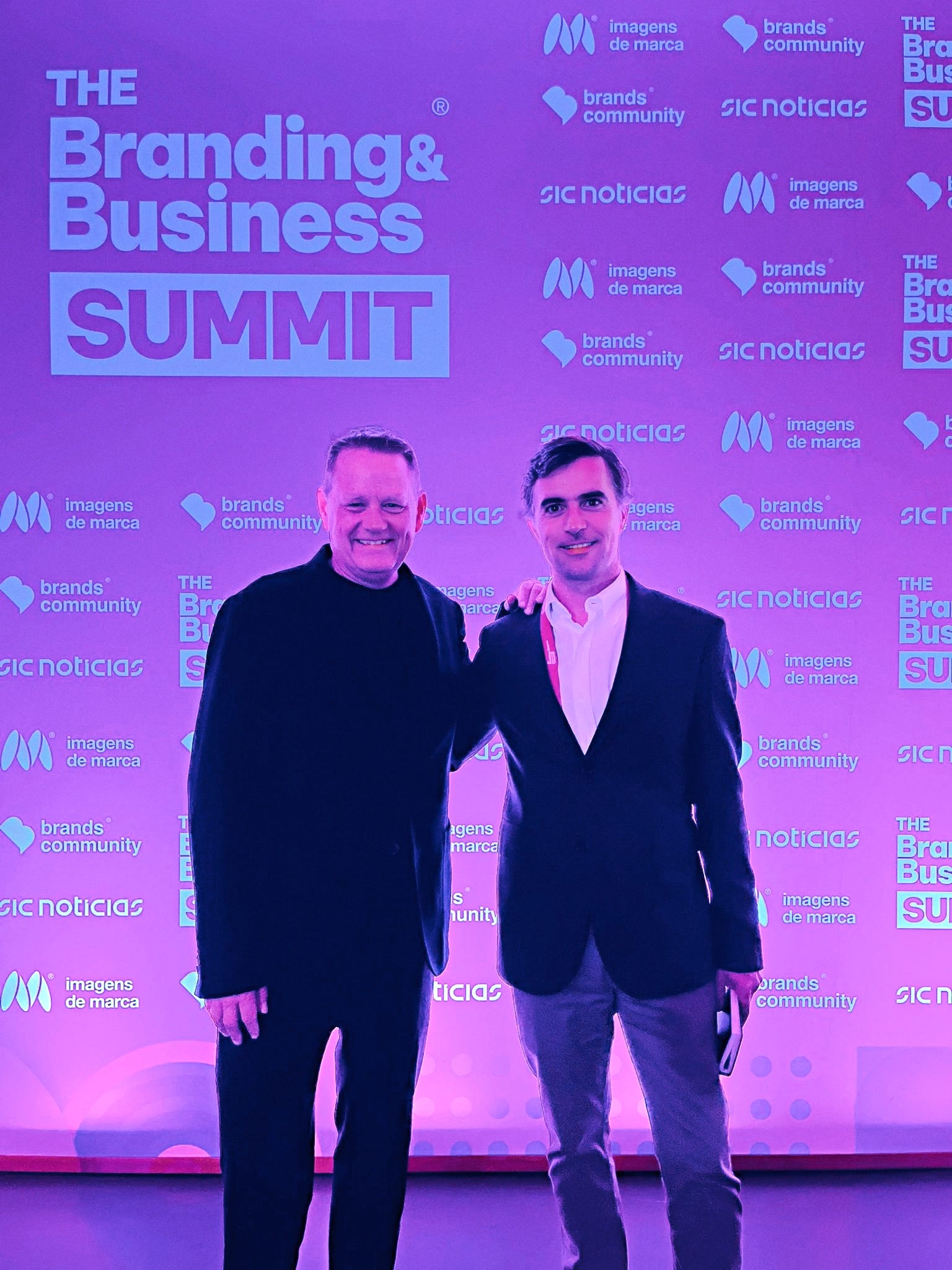
Photo by Catarina Carvalho: Martin Lindstrom and Gonçalo Perdigão after the interview, at the Branding & Business Summit
What became clear throughout both the summit and this interview is that branding is no longer a communications function; it is a leadership function. It is not about logos, slogans, or visual identity alone. It is about trust, coherence, relevance, emotional connection, and the ability to create meaning across every touchpoint of an organisation.
Martin Lindstrom’s central message was especially timely: while businesses race toward automation and AI, the brands that will truly win are those that become more human, not less. Technology can help distribute, personalise, and scale experiences, but it cannot replace empathy, intuition, authenticity, or genuine understanding of people. Consumers increasingly sense when something is artificial, shallow, or manufactured, and they respond accordingly.
His reflections on “small data” were equally powerful. In a world obsessed with dashboards, metrics, and algorithms, Lindstrom reminded us that many of the most valuable insights still come from observation: watching how people live, struggle, choose, complain, improvise, and aspire. Those signals rarely appear in reports, yet they often contain the blueprint for innovation.
The broader atmosphere of The Branding & Business Summit reinforced the same idea. Across panels on geopolitics, talent, leadership, creativity, and transformation, one theme emerged repeatedly: the future belongs to organisations that can combine intelligence with imagination, scale with sensitivity, and growth with authenticity.
Lisbon proved to be the right setting for this conversation, a city increasingly connected to entrepreneurship, global business, and creative energy. Leaving the summit, one thing felt certain: brands that listen more carefully, act more courageously, and stay closer to human reality will define the next decade. And Martin Lindstrom remains one of the clearest voices explaining why.
Disclosure: This interview was recorded using the Xiaomi 17 and its built-in real-time recording and automatic transcription features, which performed impressively in a noisy live-event setting. Xiaomi provided the device for testing purposes only, with no editorial input, sponsorship, or content approval involved. Any future sponsored content will always be clearly disclosed.
At Building Creative Machines, we have dozens of exclusive interviews with the leaders transforming our days. Here you can find past interviews with leaders from Anthropic, Google, IESE, Microsoft, Harvard, TikTok…