

When I visited the Barcelona Supercomputing Center, I expected to see one of Europe’s most powerful scientific infrastructures. What I found was much more than a supercomputer (thanks to Kostiantyn Tsyvinskyi for the great tour).
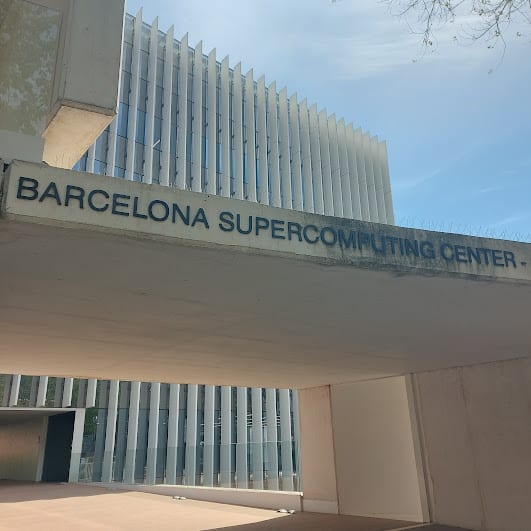
Image: BSC entrance
During a private tour of BSC in Barcelona, I had the opportunity to visit MareNostrum 5, see its two quantum computers, explore the museum, and better understand the ambition behind the project. It is not only about computing power. It is about science, sovereignty, talent, startups, industry, and Europe’s ability to compete in the generative AI era.
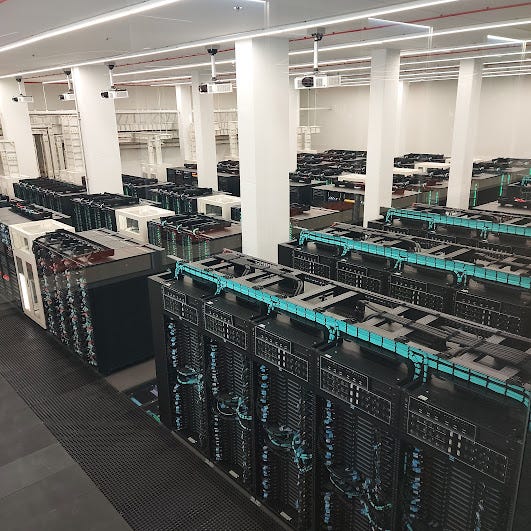
Image: MareNostrum 5
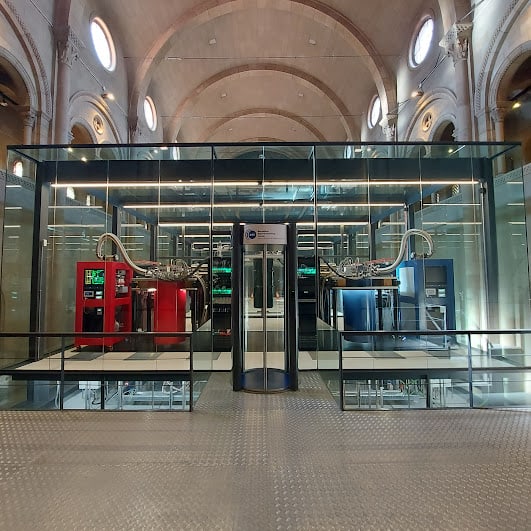
Image: 2/3 (!) quantum computers. MareNostrum 5 – Ona, which includes QBlue, a 20-qubit digital quantum processor; QRed, a 35-qubit digital quantum processor; and QGreen, a 10-qubit analogue quantum processor.
This visit also has a personal connection. I am now part of the CNCA AI Factory (Centro Nacional de Computação Avançada, in Portugal), a project designed to accelerate AI-related startups and give them access to the extraordinary power of MareNostrum 5. With FCT's support (Fundação para a Ciência e Tecnologia) - thanks to Diana Almeida and Susana Caetano (from FCCN - Serviços Digitais da FCT) and the CNCA team's commitment (thanks to Andreia Gaudêncio, Bernardo Malaca, Catarina Ortigão, Daniel Moraes, Larissa Santos and Pedro Marques), this is a rare opportunity to test, build, and scale AI solutions using world-class infrastructure that would normally be out of reach for most founders.
That is why this conversation with Mariona Sanz Ausàs is especially relevant.
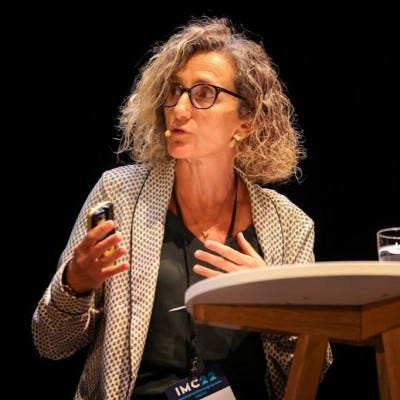
Image: Mariona Sanz Ausàs credits LinkedIn profile
Mariona is the Head of Innovation and Business Development at the Barcelona Supercomputing Center, where she leads business opportunities for the private and public sectors and guides technology transfer.
Her role is central to one of the biggest questions in European AI today: how do we turn excellent research into real companies, useful products, industrial strength, and social impact?
Before joining BSC in 2023, Mariona built a strong career across innovation, business strategy, public policy, and open innovation. She was Director at the Generalitat de Catalunya, led Girbau LAB and Strategic Marketing, and spent more than eight years at ACCIÓ, where she worked on business innovation and R&D support. She also studied European integration and economics at the Université libre de Bruxelles and completed executive education at IESE Business School.
In this conversation, we discuss what makes BSC different from a traditional research centre, why sovereign compute matters for Europe, how AI Factories can help startups and SMEs, and where the real opportunities are for founders building with generative AI.
From your perspective, what makes the BSC model different from a traditional research centre in the generative AI era?
Barcelona SuperComputing Center model represents a departure from traditional research institutions by integrating high-level scientific research with a structured, market-facing innovation ecosystem designed for the generative AI era. There are several elements that define this differentiated character:
First, BSC AI Institute, recently created, conceived to accelerate the development of advanced artificial intelligence solutions within a multidisciplinary research environment where supercomputing and AI converge in areas such as biomedicine, climate, engineering, computational architecture, and the humanities. BSC AI Institute promotes the collaboration among the more than 320 researchers working in AI within the BSC, strengthening talent development, and coordinating international projects with reference centres.
Second, a dedicated Innovation and Business Development area, created in 2023, to lead relationships with the industrial sector and anticipate market needs with a vision where science is transformed into tangible economic and social impact. Today more than 35 professionals work to manage the knowledge and technology produced at BSC, promoting the technology transfer through the foundation of spin-offs with high technological value, the promotion of entrepreneurship among researchers and direct collaboration with the private sector. Today BSC manages a portfolio of 15 spin off companies which had created more than 600 jobs and raised 45M€ of private capital.
Third, BSC AI Factory services which started in April 2025 (with the collaboration of FCT and CNCA in Portugal), as a dynamic ecosystem that foster innovation, collaboration, and development in the field of AI. BSC AI Factory bring together the necessary ingredients – computer power, data, and talent– to create cutting-edge generative AI models- at put them into service for smes, start ups and public administration to foster innovation and the development of new AI-based technologies – including access to experts, software, investors and relevant partners, among others.
The vision for 2030 is ambitious: the BSC aims to act as a “scientific venture builder,” an environment where science does not end in a drawer but evolves into two or three consolidated companies every year.
Europe publishes many strong AI papers; how can institutions like BSC help turn papers into products, startups, and industrial advantage?
BSC has strong commitment toward impact and relevancy of its research and has found the key to breaking this barrier through comprehensive support that spans from intellectual property (IP) protection to market validation.
Is for this reason that addresses the transfer stage through different mechanisms supporting researchers and creating a strong innovation mindset and culture.
With programs like the Innovation Journey to accelerate HPC-based projects, having supported 15 potential spin-offs, or Market Validation Program identifies opportunities and validates technologies against real industrial needs. Strategic connections with industry have also been built with BSC Connects programme to support innovation challenges of big companies. Currently companies such as Vueling, Renfe, or Almirall has joint the programme. Meanwhile, thanks to BSC AI Factory direct access to MareNostrum 5 is provided to SMEs and Startups, an “unfair advantage” that allows them to compete globally without the prohibitive costs of high-level computing
What do most executives still misunderstand about the true potential of generative AI today?
While many directors view AI as a short-term efficiency tool, the BSC’s strategic positioning highlights a fundamental misunderstanding: AI and Generative AI is entirely dependent on calculation capacity to foster real transformation of organisations and society. AI becomes a complete new operating system, and companies will operate in high-tech environments. Companies who develop AI will need to master and apply the scientific method to validate market hypotheses, develop algorithmic thinking, appreciate the importance of data, and understand the transformative potential of disruptive technologies. Companies will be reconfigured around digital hubs of AI and data.
And this is why AI Factories appear to support companies in this AI Development path. The BSC AI Factory is not just a hardware upgrade; it is a response to Europe’s dependency on foreign “hyperscalers”, which lower the entry barriers for start ups and SMEs who develop AI in Europe. These actors are the ones that constitute the beginning of the AI value chain in Europe. They develop solutions that respond to the needs of the industry.
Another critical element often overlooked is ethics. Real barriers still exist to scale from pilot to real implementation. BSC AI Factory bets on “Trusted AI,” ensuring developments comply with the EU AI Act and remain human-centric. For business leaders, the message is clear: the value lies not just in the model, but in data sovereignty and social responsibility
How important will sovereign compute infrastructure be for Europe over the next five years?
Sovereign compute infrastructure will be Europe’s backbone over the next five years. Sovereign compute infrastructure will move from “nice strategic ambition” to one of Europe’s core industrial policy priorities, not because Europe will fully decouple from non-European cloud providers (that’s unrealistic in that timeframe), but because compute is becoming foundational infrastructure for AI, defense, health, manufacturing, and public administration.
AI Factories are an important instrument to increase sovereign compute infrastructure in Europe. With the upgrade of MareNostrum 5—incorporating advanced GPUs specifically for AI—the BSC has been selected by the European Commission as one of the 19 AI Factories in the EU, with the support of Spanish, but also Portuguese and Turkish governments. This “factory” democratizes access to cutting-edge technology, allowing SMEs and startups from Portugal or Spain (and the rest of Europe) to innovate without the financial burden of multi-million dollar hardware investments
If you were advising a young founder in Barcelona today, where would you place your bet: models, applications, or entirely new categories?
If advising a young entrepreneur in Barcelona today, the BSC’s ecosystem suggests a clear path for him: support with expert advice and access to high performance computing infrastructure. But it’s not only about technical support and infrastructure is also support in terms of business opportunities, access to capital and talent. I will recommend him not just build a superficial layer over existing models; real transformation of AI comes when applications solve humanity’s hardest challenges. The real opportunity lies in Deep Tech categories that require supercomputing—from drug simulation to climate resilience and European chip design. With the support of BSC AI Factory the best place to place a bet today is on industrial and scientific applications that generate a real return for society.
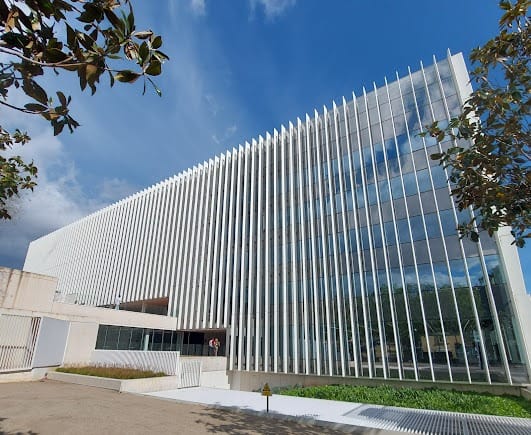
Image: BSC building
This conversation with Mariona Sanz Ausàs shows that the future of AI in Europe will not be decided only by algorithms, papers, or applications. It will also depend on infrastructure, talent, trust, and the ability to connect research with the market.
The Barcelona Supercomputing Center is positioning itself as more than a research institution. It is becoming a bridge between science and industry, between supercomputing and startups, and between European ambition and practical execution.
The key message is clear: generative AI is not just a tool for efficiency. It is becoming a new operating system for companies, governments, and society. To use it well, organisations need more than access to models. They need computing power, high-quality data, technical expertise, ethical standards, and a culture of experimentation.
Several highlights stand out from the interview.
First, MareNostrum 5 and the BSC AI Factory are strategic assets for Europe. They give startups, SMEs, researchers, and public institutions access to computing power that can help them compete globally.
Second, sovereign compute is becoming a core part of Europe’s industrial strategy. In sectors such as health, defence, climate, manufacturing, and public administration, control over data and infrastructure will become increasingly important.
Third, Europe’s challenge is not a lack of research. It is the capacity to transform research into products, companies, and industrial advantage. BSC’s work in technology transfer, spin-offs, market validation, and business development directly addresses that challenge.
Finally, for founders, the biggest opportunity may not be in building another thin layer on top of existing models. It may be in deep tech applications that solve complex problems in science, industry, climate, health, and engineering.
For executives and curious readers, this interview is a useful window into where AI is really going. The next phase will not only be about who has the best model. It will be about who has the infrastructure, the ecosystem, and the ambition to turn AI into lasting economic and social value.