

I met Anna Drobakha through a common friend from the INSEAD AI Venture Lab, and it quickly became clear why her perspective on AI transformation is so relevant for today’s executive teams.
Anna Drobakha is Founder & Chief AI Strategist at BrainHackathon.ai and Global Digital Business & AI Transformation Director at Groupe SEB, the world leader in small domestic appliances and cookware. She leads enterprise AI adoption, cloud activation, and digital business growth across a global portfolio of brands, including WMF, Tefal, Rowenta, KRUPS, and Moulinex.
A former Industry Lead at Google and App Store Business Lead at Apple, Anna brings a rare combination of Big Tech thinking, enterprise transformation experience, and hands-on AI execution. She has built and scaled digital businesses across technology, consumer goods, marketplaces, and global eCommerce.
Through BrainHackathon.ai, Anna helps leadership teams translate AI ambition into measurable business impact. She developed and leads the Executive AI Operating System - a practical leadership AI operating system that helps executives embed AI into how they think, decide, communicate, govern, and scale transformation.
Her work combines AI maturity assessment, executive education, hackathons, prototyping, capability-building, and operating model design, turning AI from scattered experiments into a repeatable leadership rhythm.
She is the winner of Groupe SEB’s AI Accelerator 2025 and a Google Hackathon winner, and is recognised for helping executives turn AI from a productivity tool into a leadership capability.
Our conversation explores how companies can move beyond pilots and productivity gains toward real business value, better decisions, stronger learning loops, and a more future-ready way of leading.
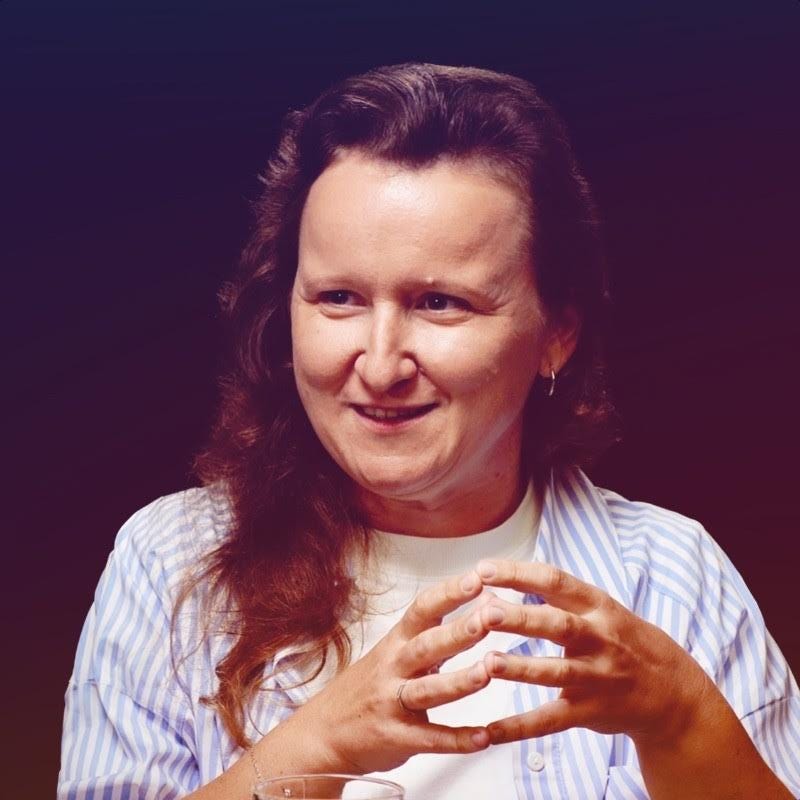
Image: Anna Drobakha
What is the biggest mistake CEOs make when adopting generative AI today?
The biggest mistake I see is not underinvesting in AI. It is overdelegating it.
Many CEOs understand that generative AI is important. They approve the tools, sponsor the pilots, send teams to training, and maybe appoint an AI lead or a task force. All of that can be useful. But then they step back too early.
And this is where the transformation starts to lose energy.
Because when the CEO does not visibly engage with AI, the signal to the C-suite is subtle but powerful: this is important, but not important enough to change how we lead. Then the C-suite delegates it further. Managers treat it as another initiative. Teams feel the gap between ambition and reality. And very quickly, AI becomes something “the business should adopt” rather than something leadership is actively modelling.
My belief is simple: AI transformation does not slow down because people resist it. It slows down because leadership has not made it real.
AI becomes real when leaders use it in their own workflows, decision preparation, communication, board conversations, operating rhythms, and team rituals. When a CEO asks, “How did AI help us prepare this decision?” or “What assumptions did we pressure-test with AI?” or “What did we learn from this prototype?”, the culture starts to shift.
The change starts with the leader.
This is why I often say: do not only sponsor AI transformation. Participate in it. Learn AI by doing. Lead by example. Build rituals around it. Make it visible enough for the organisation to follow.
There is a Gallup insight I love because it captures this clearly: employees with AI-engaged managers are nearly nine times more likely to say AI has transformed how they work. That makes perfect sense to me. People do not adopt new ways of working because they saw a strategy deck. They adopt them because their leaders and managers normalise, make them useful, and present them as expected.
At BrainHackathon, this is one of the reasons we build executive-led transformation programs and the Executive AI Operating System. Not as another layer of AI talk, but as a practical way to help CEOs and leadership teams install AI into the real work of leading: preparing decisions, aligning stakeholders, testing scenarios, improving board conversations, and creating momentum across the organisation.
For me, the biggest mistake is treating AI as something to roll out to the organisation before the leadership team has learned how to work with it themselves.
The future-ready organisations will not be the ones with the most AI pilots. They will be the ones whose leaders model new ways of working early enough for the rest of the business to follow.
That is what accountable acceleration looks like: moving fast, but with leadership, ownership, culture, and capability behind it.
How do you decide which AI use cases should be automated and which should stay human-led?
I don’t start with “Can this be automated?” I start with “Where does human judgment create the most value?”
Some work should absolutely be automated. Repetitive reporting. First-draft analysis. Document synthesis. Workflow coordination. Meeting preparation. Pattern detection. These are areas where AI can remove friction and give people time back.
But other areas should stay human-led, or at least human-heavy.
Strategic relationships are a good example. AI can help you prepare for a client conversation, understand the account context, summarise history, identify risks, or suggest talking points. But it cannot replace trust. It cannot replace presence. It cannot read the emotional temperature of a room in the same way. It cannot carry the accountability of a difficult conversation. Relationships are built through human attention, consistency, empathy, and judgment.
The same is true for leadership decisions, people decisions, ethical trade-offs, brand judgment, and long-term strategic choices. AI can enrich these decisions, but it should not own them.
For me, there are three categories.
First, automate the repeatable. If the work is frequent, rules-based, low-risk, and not dependent on deep context, AI can often take over or significantly reduce the effort.
Second, augment the judgment-heavy. If the work involves strategy, creativity, leadership, customers, people, or risk, AI should become a thinking partner. It can bring more perspectives, more scenarios, more evidence, and better questions into the room.
Third, protect the deeply human. Trust, values, vision, care, accountability, and relationship-building should remain human-led. These are not inefficiencies to optimise away. They are often where differentiation lives.
This distinction matters because some companies view AI solely through a productivity lens. They ask, “How much time can we save?” That is important, but incomplete. The better question is: “Where can AI free human capacity for higher-value work?”
If AI saves a leader two hours, what happens to those two hours? Are they reinvested into strategic relationships, better decisions, coaching, innovation, customer understanding, or building the future of the business? Or are they simply filled with more meetings?
That is the real design question. AI should not make organisations less human. Used well, it should give humans more space to do the work that only humans can do.
What separates companies that experiment with GenAI from those that create real business value with it?
Experimentation is easy. Value creation is much harder.
Many organisations have pilots, tools, and enthusiastic teams. They can show demos. They can run workshops. They can create a few impressive prototypes. But the real question is: does anything change in the way the business works?
The companies that create value connect AI experimentation to business outcomes from the beginning.
For me, AI creates value in three ways.
First, it creates operational value. It makes work faster and lighter by reducing repetitive tasks, simplifying processes, improving productivity, and freeing people to focus on higher-value work.
Second, it creates experience value. It improves customer journeys, employee experience, personalisation, service quality, and usability. This is where AI becomes visible not only inside the company, but also in how customers, employees, and partners experience the business.
Third, it creates strategic growth value. It helps leaders see earlier, decide better, pressure-test assumptions, identify new opportunities, and create new products, services, or business models.
In other words, AI should not just automate work. It should improve how the business operates, how people experience it, and how leaders shape what comes next.
The companies that stay in experimentation mode usually focus on activity metrics: the number of pilots, tools, and people trained.
The companies that create business value focus on outcomes: what improved, what scaled, what capability was built, what decision became better, what experience became stronger, and what new opportunity became possible.
This is why I believe so strongly in Learning AI by Doing. When teams work on real business cases, build prototypes, test them, and see what is possible in practice, AI stops being abstract. It becomes a capability. But a prototype alone is not a transformation. You need the bridge to adoption: ownership, governance, workflow integration, measurement, champions, and leadership rituals.
At BrainHackathon, we move AI ambition to business impact through four connected steps. We assess first, getting clear on where the organisation actually is: maturity, readiness, gaps, priorities, and the outcomes that matter most. We educate next, building the fluency and internal champions you need to move beyond isolated experiments and create shared capability. We accelerate by turning real business challenges into working prototypes through hackathons and hands-on building. And we innovate, scaling what works with clear ownership, governance, and a roadmap for continuous improvement.
For me, this is the difference between AI as an experiment and AI as a transformation. Experiments create excitement. Transformation creates operational value, better experiences, and strategic growth. With a clear path from prototype to scalable business impact.
If you could build one AI agent for every executive team, what problem would it solve first?
If I could build one AI agent for every executive team, I would build an Executive Decision Intelligence Agent.
Not to replace leadership judgment, but to strengthen it.
Most executive teams do not suffer from a lack of information. They suffer from too much noise, too many assumptions, and too little structured challenge before important decisions are made.
This agent would act like a decision cockpit for the leadership team. Almost like an AI Board of Directors that helps pressure-test decisions from different perspectives.
For any high-stakes call, it would push the team toward better questions. What are we missing? What are we assuming? What would the customer say, what would the CFO challenge, what would the regulator worry about? What could go wrong in six months, what would a competitor do, what happens if we do nothing? It would pull together internal data, market signals, financial implications, customer insight, regulatory considerations, operational risk, and the record of past decisions, then help the team see the choice from several perspectives before they commit.
The goal isn’t speed for its own sake. It’s better leadership thinking: clearer signal, better trade-offs, sharper view of the risks, and real alignment before execution. In many organisations, AI won’t fail because the tools are weak. It’ll fail because the decisions around them were unclear, misaligned, or never properly challenged. The strongest teams won’t outsource their thinking to AI. They’ll use it to think more rigorously and more responsibly. That’s the agent I’d build first.
How do you measure whether an AI transformation is truly changing decision-making, not just productivity?
Productivity measures output. Transformation shows up in behaviour. That’s where I’d start.
Productivity is the easy part to measure: hours saved, reports automated, meetings summarised, documents produced faster, workflows simplified. Those numbers matter, but they don’t prove transformation. A company can move faster and still make exactly the same decisions. The harder question is whether AI has changed how the organisation thinks, decides, and learns.
You can see it when AI becomes part of the decision-making rhythm rather than a tool people use on the side. Before the important calls, teams start asking sharper questions. What scenarios did we compare? What assumptions did we challenge? What risks did we surface earlier? What blind spots did AI help us see? What did we weigh on the customer, financial, regulatory, and ethical side, and what still needs human judgment?
So I’d measure across three levels. Productivity: what got faster, lighter, or simpler? Decision quality: what got sharper, better challenged, more transparent, more evidence-informed. And the learning loop: what the organisation actually learned, improved, and fed back into the system. That third level is where the real transformation lives. The best AI work doesn’t only make a company more productive. It makes it more reflective and more adaptive.
In concrete terms, I’d look past adoption rates and time saved and ask whether executives lead differently, managers coach differently, teams prepare differently, and board conversations get more grounded. Are decisions getting faster without getting reckless? Are people weighing more scenarios before they commit and catching risks earlier? Are assumptions being challenged in a systematic way? Are people spending less time gathering information and more time interpreting what matters? Are teams learning from outcomes and feeding that back in?
The real measure of an AI transformation isn’t doing more work faster. It’s making better decisions, building real capability, and becoming a more future-ready organisation.
Anna’s central message is clear: AI transformation is not just a technology rollout. It is a leadership transformation.
The companies that will create lasting value from AI are not necessarily those with the most pilots, tools, or training sessions. They are the ones where executives model new ways of working, managers make AI useful in daily routines, and teams connect experimentation to real business outcomes.
What stands out in Anna’s approach is her insistence that AI should make organisations more human, not less. By automating repetitive work and augmenting judgment-heavy decisions, AI can free leaders and teams to spend more time on strategy, relationships, coaching, creativity, and accountability.
Her idea of an Executive Decision Intelligence Agent captures this philosophy well. The goal is not to replace leadership judgment, but to strengthen it: surfacing assumptions, pressure-testing scenarios, improving alignment, and helping executive teams make better, more responsible decisions.
Ultimately, Anna reframes AI transformation as a question of behaviour. Are leaders thinking differently? Are decisions better challenged? Are teams learning faster? Are organisations becoming more adaptive?
For Anna, the future-ready company is not the one that simply does more work faster. It is the one that uses AI to build capability, improve decision-making, and create a repeatable rhythm for learning, leading, and scaling transformation.
Read dozens of exclusive insights from leaders from Amazon, Anthropic, Apple, Google, Harvard, Microsoft, TikTok, and many more here.