

There is a version of the AI transformation story that is mostly about technology: larger models, more capable agents, better benchmarks, lower inference costs and increasingly autonomous systems.
Alina Vandenberghe sees something else happening inside companies.
For the Co-Founder and Co-CEO of Chili Piper, the interesting question is no longer simply what artificial intelligence can automate. It is what becomes visible in humans once automation removes the repetitive work surrounding them.
Her perspective comes from experience rather than theory.
Romanian-born and now based in New York, Vandenberghe co-founded Chili Piper with her husband Nicolas in 2016 after selling her house to help fund the company. Chili Piper went on to become a major player in B2B demand conversion, building products around qualification, routing, scheduling and the complex handoffs between marketing and sales. Its technology is used by GTM teams at companies including Gong, Verizon and monday.com.
Today, Chili Piper is pushing further into AI-led conversion. Its platform combines established routing and scheduling infrastructure with AI systems that can engage website visitors, qualify prospects, automate follow-up, and book meetings around the clock. The company describes the shift as moving from a passive website towards an AI-led conversion layer operating across the buyer journey.
But Vandenberghe’s thinking about AI was forged internally before it became a product strategy.
In 2023, after Chili Piper’s marketing organisation had contracted from 22 people to two, she made herself CMO and began building AI agents. Instead of delegating experimentation to a technical team, she opened a company-wide Slack channel called #automate-everything and encouraged employees across functions to build.
What followed became an organisational experiment in what happens when AI moves from a strategy deck into everyday operations.
The result challenges several assumptions dominating the corporate AI conversation.
AI automation creates new work as it removes old work. Agents are extremely effective at repetitive processes but far less convincing in moments that depend on trust. Smaller teams can produce considerably more, but headcount becomes a poor proxy for organisational capacity. And perhaps most importantly, automating execution can make exceptional human abilities more, not less, important.
For Vandenberghe, the future executive may therefore look less like a traditional functional leader and more like a systems architect, orchestrating humans and agents together.
We spoke about what CEOs discover when they actually build with AI, where agents will transform marketing and sales, why AI SDRs risk industrialising spam, how Chili Piper increased pipeline with a dramatically smaller marketing team, and why the companies measuring the number of agents they deploy may be measuring the wrong thing entirely.

What can a CEO understand about AI by actually building with it that they’ll never learn from a strategy deck?
Where it breaks
In June 2023, I made myself CMO of my own company. We’d gone from 22 marketers to 2, and I was checking the pipeline number on my phone every night, sweating with stress
I have a scientist’s brain, so I did the only thing I knew how to do: run experiments. I built agents myself. Then I opened a Slack channel called #automate-everything and asked the whole company, not just marketing, to build them too
A strategy deck tells you what AI can do. But building tells you what it costs to make that work. For instance, it won’t warn you that an agent which saves 10 hours a week creates a new job for a human in the loop, because someone has to feed it all the context, check its output, notice when it drifts, etc
When I say “AI ops is messy,” my team knows I mean it, because they’ve watched me clean up my own messes
Where will agents fundamentally change marketing and sales, and where is the hype ahead of reality?
Agents will eat the repetitive middle of the funnel. Everything between “someone raised their hand” and “someone is in a meeting with the right rep” used to be manual: qualifying, routing, scheduling, enriching, prepping, etc. That work is disappearing, and it should. We 4x’d our pipeline between 2022 and 2024 with 2 marketers because agents took over the repeatable work and the humans went back to creating
Our own product came out of that. The 2 most useful agents our team built for ourselves, including a 24/7 conversion assistant that answers, qualifies, and books meetings without a rep online, got pulled into the platform for our customers
The hype is anything that automates the trust moment. AI SDRs blasting cold emails is the same spam we already hated, just cheaper to produce
As AI executes parts of go-to-market autonomously, what becomes more valuable?
When the whole company started building agents, I expected the engineers to be good at it and everyone else to struggle. But I was wrong. Some people’s genius was in the writing. Some could see the big picture, look at a funnel and instantly see which automation would move the pipeline. Some built the most elegant agents; some built the cheapest ones. And some found their genius in teaching everyone else, and in building trust, which turns out to be the only currency that matters in the AI era
AI replaces tasks, and it exposes genius in humans. We now run an informal zone-of-genius program to find where each human actually fits
I found my own two in the process: I get a lot of delight from writing (that’s why I’m so fast in answering your questions, haha), and I get delight from sitting above the whole GTM system, agents and humans together, and seeing the shape of the “AI factory”. That second job didn’t have a name a few years ago. I think every C-level role is turning into it. Chief Architect (of humans working alongside AI agents)
Has AI changed how you think about what a company, and a team, should look like?
It changed the shape of it: smaller, stranger, more creative teams. We’re 140 people across 37 countries. I no longer think about headcount as capacity. I think about it as a collection of non-interchangeable geniuses, each one orchestrating agents that do the repeatable work. Innovation is a heavy rubric in our performance reviews now. Contributing an agent idea isn’t really optional.
The foundation remains the same: culture makes or breaks a company
I got fired twice early in my career because decisions happened in rooms I wasn’t in. So at Chili Piper every decision starts with a written memo anyone in the company can challenge with data
We trained the whole company to manage conflict, to learn to build trust and watched it show up in our mid-market win rates (from 24 to 37%) because our teams now know how to lean in, on an actual board slide
AI made all the above matter more, because when agents do the doing, the quality of your humans, how they decide, how they trust each other, how they create, is the whole moat

Chili Piper team building in Morocco
What are even the smartest people in AI currently getting wrong?
First, they measure the wrong thing. Teams celebrate agents shipped, demos, code, pilots. We only count agents that moved pipeline
Second, the replacement math. It treats humans as interchangeable units of labour you can swap for compute. A decade of building has taught me the opposite: the value was never in the doing. We’re not here to do. We’re here to create. And AI is a mirror: it amplifies whoever is holding it. Which is why I don’t think the doomsday scenarios get solved with better guardrails. They get solved with better humans
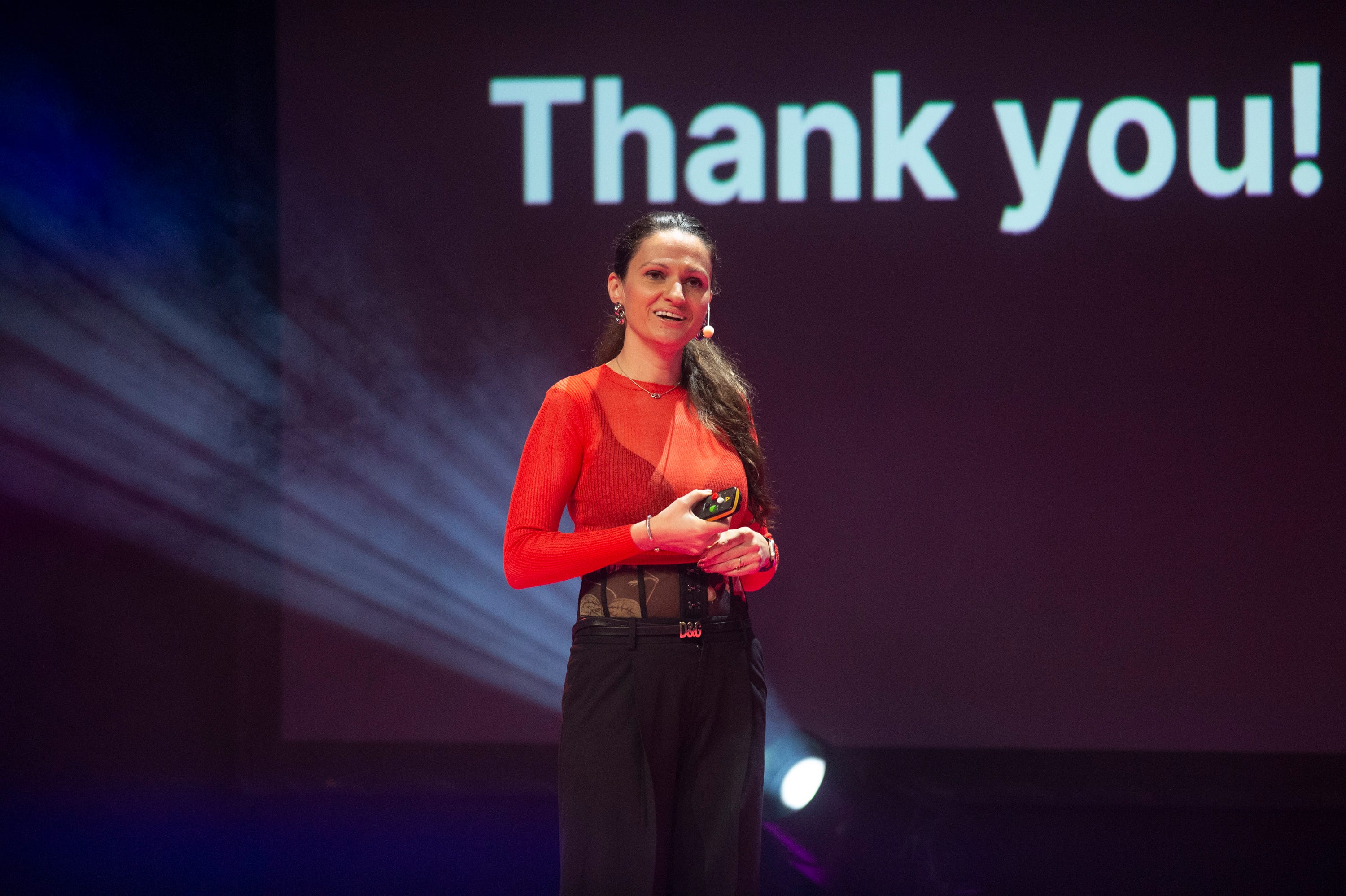
From Headcount to Human Leverage
A deceptively important idea runs through Vandenberghe’s answers:
AI changes the unit by which we measure organisations.
For much of modern corporate management, headcount has been treated as a rough approximation of capacity. More people meant more work could be executed. Growth frequently meant hiring more people to execute more processes.
Agentic systems complicate that equation.
If qualification, routing, enrichment, preparation, scheduling, follow-up and other repetitive tasks can increasingly be delegated to software, then the relationship between employees and organisational output begins to separate.
The question becomes less about how many people we need to execute this process and more about which humans we need to design, supervise, and improve the system performing it.
That is a fundamentally different organisational problem.
And it explains Vandenberghe’s intriguing description of tomorrow’s executive as a Chief Architect.
The CMO of an AI-native company may not simply manage marketers. The executive could increasingly orchestrate a system containing people, models, agents, data, workflows, feedback loops and human-in-the-loop checkpoints. The same logic can extend to sales, operations, customer service, finance and eventually almost every executive function.
But her experience also exposes an inconvenient reality frequently missing from AI transformation narratives.
Automation is not frictionless.
An agent that eliminates ten hours of repetitive work does not necessarily eliminate ten hours of human responsibility. Someone still has to establish context, monitor quality, detect drift, intervene when exceptions occur and decide whether the system continues to serve its original purpose. The work changes before it disappears.
That distinction matters enormously for companies moving from AI experimentation into production.
So does Vandenberghe’s insistence on measuring outcomes rather than deployments. The number of agents created, pilots completed, or demonstrations presented can easily become the AI equivalent of vanity metrics. Chili Piper’s preferred measurement is considerably less glamorous and considerably more useful: did the agent move pipeline?
Perhaps the most interesting consequence, however, is human.
The common fear surrounding AI is that as machines become more capable, human differentiation becomes less valuable. Vandenberghe’s experience suggests almost the reverse.
Once repeatable execution becomes cheap, distinctive judgment becomes expensive.
The person who understands where automation should be introduced matters. The writer who can communicate unusually well matters. The employee who can earn trust matters. The person capable of seeing an entire business system rather than one isolated task matters.
And culture may matter even more.
AI can scale execution, but it can also scale poor judgment, weak incentives and bad organisational behaviour. More capable systems do not automatically create more capable companies.
That is why one of Vandenberghe’s simplest statements may ultimately be the most consequential:
“AI replaces tasks, and it exposes genius in humans.”
If she is right, the defining organisational challenge of the agentic era will not simply be learning how to build better machines.
It will be learning what humans should finally stop doing, and discovering what they are uniquely capable of doing once they do.
More Interviews
Building Creative Machines has published dozens of exclusive conversations with founders, researchers, executives, artists and other leading voices shaping artificial intelligence and its impact on society.
Editorial Disclosure
This interview was conducted independently by Building Creative Machines. No payment, sponsorship, or other editorial consideration was received in connection with its publication. The views expressed are those of the interviewee.
thank you for having me as a guest in your new media endeavor!