

Every November, Lisbon undergoes a curious transformation. Cafés become meeting rooms, hotel lobbies turn into investor lounges, restaurants fill with founders discussing their next funding round, and people wearing Web Summit badges appear in places where you would normally only find locals having a quiet drink.
I’ve attended every edition of Web Summit since it arrived in Lisbon in 2016. And if there is one thing I’ve learnt, it is that the best way to experience Web Summit is to understand that the conference is only part of what is happening.
The rest takes place across Lisbon, often in smaller rooms, over coffee, at dinners, in unexpected conversations and at events you might never find unless you know where to look.
With Web Summit 2026 starting tomorrow, 9 November, here is my practical guide to making the most of the week, whether you have a conference ticket or not.
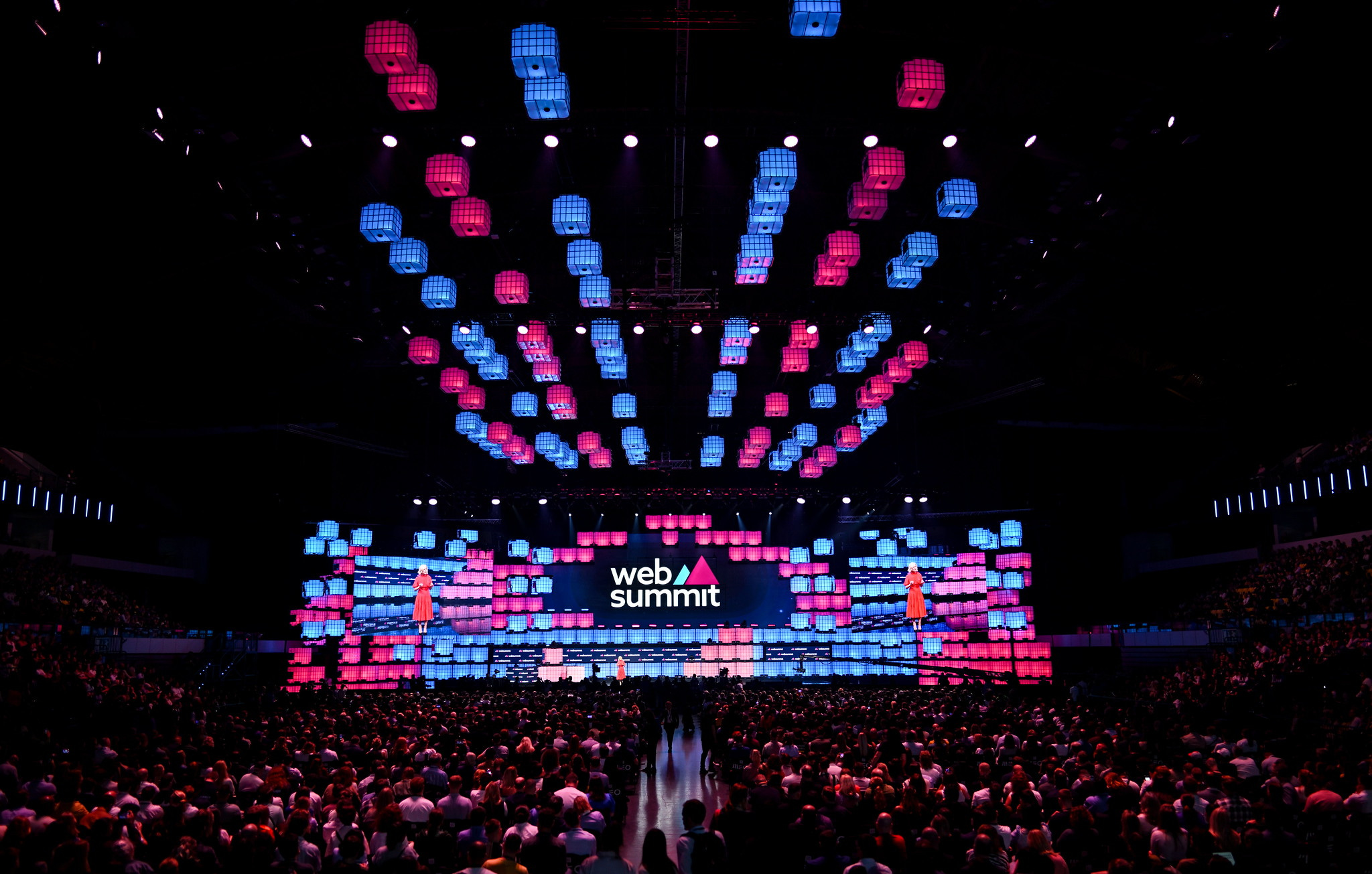
Credits: Web Summit 2025
First, understand Lisbon’s geography
Web Summit takes place at MEO Arena and FIL, in Parque das Nações, the modern eastern part of Lisbon that locals still often call Expo.
It is a great location for a large conference. There are wide avenues, restaurants, hotels, the river, and excellent transport connections through Oriente station.
But here’s the catch: Parque das Nações is not central Lisbon.
The city’s historical and social centre is several kilometres away, and most of the interesting side events will be spread across different neighbourhoods.
A quick geographical cheat sheet:
Parque das Nações (Expo): The conference itself. Modern, convenient, and connected to the airport by Metro.
Baixa and Chiado: Central Lisbon, good for meetings, restaurants and moving between neighbourhoods.
Cais do Sodré and Santos: Excellent for evening events, networking, bars and gatherings near the river.
Bairro Alto and Príncipe Real: Popular for dinners, smaller gatherings and late-night conversations.
Marquês de Pombal and Avenida da Liberdade: Hotels, corporate meetings, investor events and business lunches.
Alfama, Graça and Castelo: Beautiful historic Lisbon, but hills, narrow streets and limited direct transport connections.
Alcântara and Marvila: Creative neighbourhoods with event venues, cultural spaces, restaurants and increasingly interesting tech gatherings.
Don’t underestimate the distances.
Getting from Expo to Saldanha is relatively straightforward. Getting from Expo to Castelo de São Jorge is another story. There is no Metro station at the Castle, so you will need a combination of Metro, walking, bus or taxi. Some places that look close on a map are separated by very steep hills.
Lisbon is compact, but it is not flat.
The most valuable €20 you might spend this week
My strongest practical recommendation is simple: sort out your public transport before you need it.
Lisbon has a good Metro network, reasonably extensive buses and trams operated by Carris, suburban trains and ferries. For Web Summit week, public transport is generally much more predictable than trying to cross the city by car.
Download Citymapper. It is one of the most useful apps for getting around Lisbon, combining different modes of transport and often suggesting connections you would not think of yourself.
I recommend buying a rechargeable navegante ocasional transport card and loading it with Zapping credit in advance.
In 2026, the card costs €0.50 and a standard Carris/Metro Zapping journey costs €1.72. Loading €20 is a sensible starting point, equivalent to roughly eleven journeys at that fare. Top it up when necessary.
There are also 24-hour Carris/Metro tickets (€7.25), which may make more sense if you expect to travel frequently.
This year, there is even a dedicated Web Summit Transport Pass, covering unlimited travel on Carris, Metro and selected suburban rail services. The three-day version costs €23 and the five-day version €31.50, available at the airport’s Web Summit accreditation area during designated sales hours.
You can check the options and conditions on the Lisbon Metro website.
Why bother buying in advance? Because the last thing you want after a long conference day is to queue at a ticket machine with hundreds of other people.
A few transport tips:
The Metro’s normal operating hours are 6.30am to 1am. Don’t assume you can take it home at 2am after a party.
Oriente is your main station for Web Summit, on the Red Line. From there, changing lines gets you to much of central Lisbon.
If you’re going to Belém or Cascais, trains are often more useful than the Metro. For the historic centre, combining Metro with walking is frequently the best option.
Uber and Bolt both operate in Lisbon, but prices and waiting times can increase significantly during major events. Sometimes walking ten minutes away from a busy venue before requesting a car makes all the difference.
And finally, bring comfortable shoes. Lisbon’s famous limestone pavements are beautiful, occasionally slippery, and not particularly forgiving after twelve hours on your feet.
The secret to Web Summit is not attending everything
Web Summit is enormous.
The 2026 programme includes 17 content tracks, with talks, masterclasses, meetups and a vast exhibition area. There is always something happening somewhere.
Trying to see everything is the fastest way to see very little.
Before the first day, open the official Web Summit app and build your agenda. Identify the talks you genuinely want to attend, the people you would like to meet and the companies you want to discover.
Then prioritise.
My suggestion is to have three priorities per day: one important talk or session, one valuable meeting, and one opportunity to discover something unexpected.
Everything else is a bonus.
Group your meetings geographically and avoid unnecessary journeys between conference halls and the city centre. Allow time for walking between stages, queues, security, coffee and unexpected conversations.
If you have a meeting in Chiado at 4pm and another at Expo at 4.30pm, your calendar might accept it. Lisbon won’t.
Also, don’t forget that the exhibition starts on Tuesday, 10 November. Monday, 9 November, is opening night, with activities at the venue rather than the regular exhibition programme.
And here is something I’ve observed over the years: some of the most useful conversations happen when you stop running between sessions and actually spend time talking to people.
Leave space in your agenda for serendipity.
Side events: the other Web Summit
Now we get to what I consider one of the most interesting parts of Web Summit week.
Side events are gatherings organised around the conference, usually outside the official Web Summit programme.
They can be hosted by startups, venture capital firms, accelerators, technology companies, embassies, universities, creative communities or simply groups of people who want to bring others together.
And they come in almost every imaginable format.
There are founder breakfasts, investor lunches, pitch competitions, private dinners, AI workshops, product demonstrations, networking drinks, rooftop parties, community meetups, running clubs and even sporting activities.
Some are carefully curated gatherings of twenty people. Others attract hundreds.
Some are free. Others are paid or invitation-only. Some require an application and approval, even if they appear publicly online.
This year, independent directories already list hundreds of events happening across Lisbon during Web Summit week. The exact totals vary because calendars have different scopes, and events are constantly being added.
Here is the important point: many of these events do not require a Web Summit ticket.
You can participate in a significant part of Lisbon’s technology week without ever entering the main conference.
How to find the best side events
Start with Luma’s Web Summit calendar, where many independent organisers publish their events.
Two particularly useful resources this year are Lisbon Side Events, which has a large curated calendar, and Superworld’s Web Summit map, which helps you find events by location.
Look at the descriptions carefully. Check the organiser, target audience, registration conditions, venue and whether your attendance has actually been confirmed.
A free ticket does not always mean automatic admission. Some events operate waiting lists, screen applicants or reveal the exact location only after registration.
My advice: register early for the gatherings that genuinely interest you, rather than applying indiscriminately to dozens.
And don’t overlook small events. A breakfast with fifteen people working on a problem you care about may be more valuable than a party with five hundred strangers.
Don’t confuse Night Summit with independent side events
This distinction is worth understanding.
Night Summit is Web Summit’s official evening networking programme, associated with the conference.
In 2026, the main Night Summit activities take place in Pavilion 5 at FIL, starting on Monday evening. The programme includes meetups, games, music, drinks and social activities.
There are also Night Summit Downtown gatherings in the city centre.
On Tuesday, 10 November, the meeting point is around Praça de São Paulo, near Cais do Sodré. On Wednesday, 11 November, activities move to Príncipe Real.
Importantly, the Downtown bars are open to the general public, so you can experience those gatherings without having a conference ticket.
Independent side events, on the other hand, are organised by third parties and have their own admission requirements.
Always check the official Web Summit schedule for Night Summit details and the independent organiser’s registration page for everything else.
No Web Summit ticket? You can still have an extraordinary week
This may be my most important recommendation for people living in Lisbon.
Don’t assume Web Summit week is irrelevant because you don’t have a badge.
Quite the opposite.
For a few days, Lisbon hosts an extraordinary concentration of entrepreneurs, investors, researchers, designers, engineers, artists, executives and people building interesting things.
Many are actively looking to meet others.
There are hundreds of opportunities distributed across the city, including free talks, open community events, breakfasts, demonstrations and informal gatherings.
You can easily create your own programme around artificial intelligence, startups, venture capital, creativity, sustainability, science or whatever interests you.
And if you’re based in Lisbon, you have a significant advantage.
You know the city. You don’t need to spend time discovering where everything is. You can attend a breakfast before work, join an evening discussion or meet someone for a coffee without committing four days to the conference.
In fact, you can organise your own event.
A small gathering at your office, an informal dinner with interesting people or a neighbourhood meetup could become one of the most valuable moments of the week.
You don’t need a giant venue or a sophisticated production. Sometimes a table, a few good introductions and an interesting subject are enough.
A few things locals know
Lisbon has some habits that international visitors don’t always anticipate.
Dinner is later than in Northern Europe. Having dinner at 8.30pm or 9pm is perfectly normal. However, this week popular restaurants will be extremely busy. Book ahead, especially for groups.
Avoid restaurants with someone standing outside trying to convince you to enter. This isn’t a universal rule, but in heavily touristed areas it’s often worth walking one street further to find somewhere better.
Coffee is quick and usually inexpensive. If you order a bica, you get an espresso. You don’t necessarily need a laptop-friendly café for every conversation. A small neighbourhood coffee shop can be an excellent place for a thirty-minute meeting.
The weather is unpredictable. November can bring sunshine, wind and heavy rain on the same day. A light waterproof jacket is more useful than an optimistic weather forecast. This year it will rain a lot!
Don’t underestimate the hills. A fifteen-minute walk on Google Maps can feel considerably longer when it involves climbing from Baixa towards Castelo or Bairro Alto.
Be careful with your belongings. Lisbon is generally a welcoming city, but crowded transport and busy tourist areas are places to keep an eye on phones and wallets.
Leave time to enjoy the city. Walk along the river, explore a neighbourhood, have a proper Portuguese meal, or take an hour away from technology conversations.
If you are staying a little longer, Sintra and Cascais are worth exploring. Just don’t try to squeeze a day trip into a schedule that is already overflowing.
How I would organise the week
If I were planning Web Summit from scratch, I would divide the week into different experiences.
Monday, 9 November: Settle in, collect accreditation if needed, prepare transport, confirm your meetings and attend opening activities or one well-chosen side event.
Tuesday, 10 November: Focus on the exhibition, discover companies, attend priority talks and spend the evening in Cais do Sodré or Santos.
Wednesday, 11 November: Prioritise conversations and meetings that build on what you discovered on Tuesday. Join a smaller side event or explore Príncipe Real in the evening.
Thursday, 12 November: Follow up with the most promising connections, revisit interesting companies, attend final sessions and leave room for spontaneous meetings.
Friday, 13 November: If you’re still in Lisbon, consider one of the post-conference community events or, better still, enjoy the city without the pressure of a packed calendar.
Throughout the week, keep a simple system for remembering people. A few notes after each conversation — what they do, what interested you and what you promised to send — will be much more useful than collecting hundreds of contacts you never follow up with.
And don’t send generic LinkedIn invitations to everyone you see. A short, personal message referencing an actual conversation works better.
One final piece of advice: enjoy Lisbon, not just Web Summit
After all these editions, I think the biggest mistake people make is treating Web Summit as an endurance competition.
They measure success in sessions attended, business cards exchanged, kilometres walked and parties visited.
But the value of a week like this is rarely proportional to how exhausted you become.
Sometimes the most interesting conversation happens over breakfast. Sometimes a chance introduction opens a completely unexpected opportunity. Sometimes skipping a keynote to have a proper discussion with someone is the right decision.
And sometimes the best thing you can do is switch off your conference brain for an hour and experience Lisbon.
The city has a lot more to offer than meeting rooms, exhibition stands and networking events.
So plan your days. Sort out your transport. Explore the side events. Meet people outside your usual circles. Make space for the unexpected.
And whether you have a Web Summit ticket or not, take advantage of the fact that, for one week, an unusually interesting part of the world has come to Lisbon.
The conference has a programme. The city has possibilities. Make time for both.