

A revolution that has the potential to reshape industries challenge traditional business models and accelerate innovation at an unprecedented scale. This vision took centre stage at the recent DePIN Summit during WebSummit in Lisbon, where thought leaders and innovators gathered to explore the promise of this emerging frontier.
Understanding DePIN: The Backbone of Decentralization
DePIN stands for Decentralized Physical Infrastructure Networks—a blockchain-driven concept that extends the ethos of decentralization beyond digital assets into the physical world. Think IoT devices, supply chains, autonomous vehicles, and smart cities, all orchestrated on decentralized frameworks.
This technology offers two fundamental advantages:
Trustless collaboration across global networks.
Incentivized participation, where contributors earn through transparent, blockchain-powered mechanisms.
The idea is to move from siloed, centrally controlled physical infrastructures to distributed, permissionless ecosystems.
Generative AI: A Catalyst for Intelligent Systems
Generative AI, with its ability to create, predict, and learn from data, offers a perfect complement to DePIN systems. Here’s why:
Automation: Generative AI can automate tasks such as route optimization in decentralized logistics or predictive maintenance for IoT-connected devices.
Enhanced Decision-Making: AI-driven models enable faster, smarter decisions by processing vast datasets from decentralized infrastructures.
Personalization: Customizing user experiences in areas like decentralized energy grids or peer-to-peer sharing networks.
DePIN and generative AI can unlock self-organizing, adaptive systems with minimal human intervention when paired.
Insights from the DePIN Summit
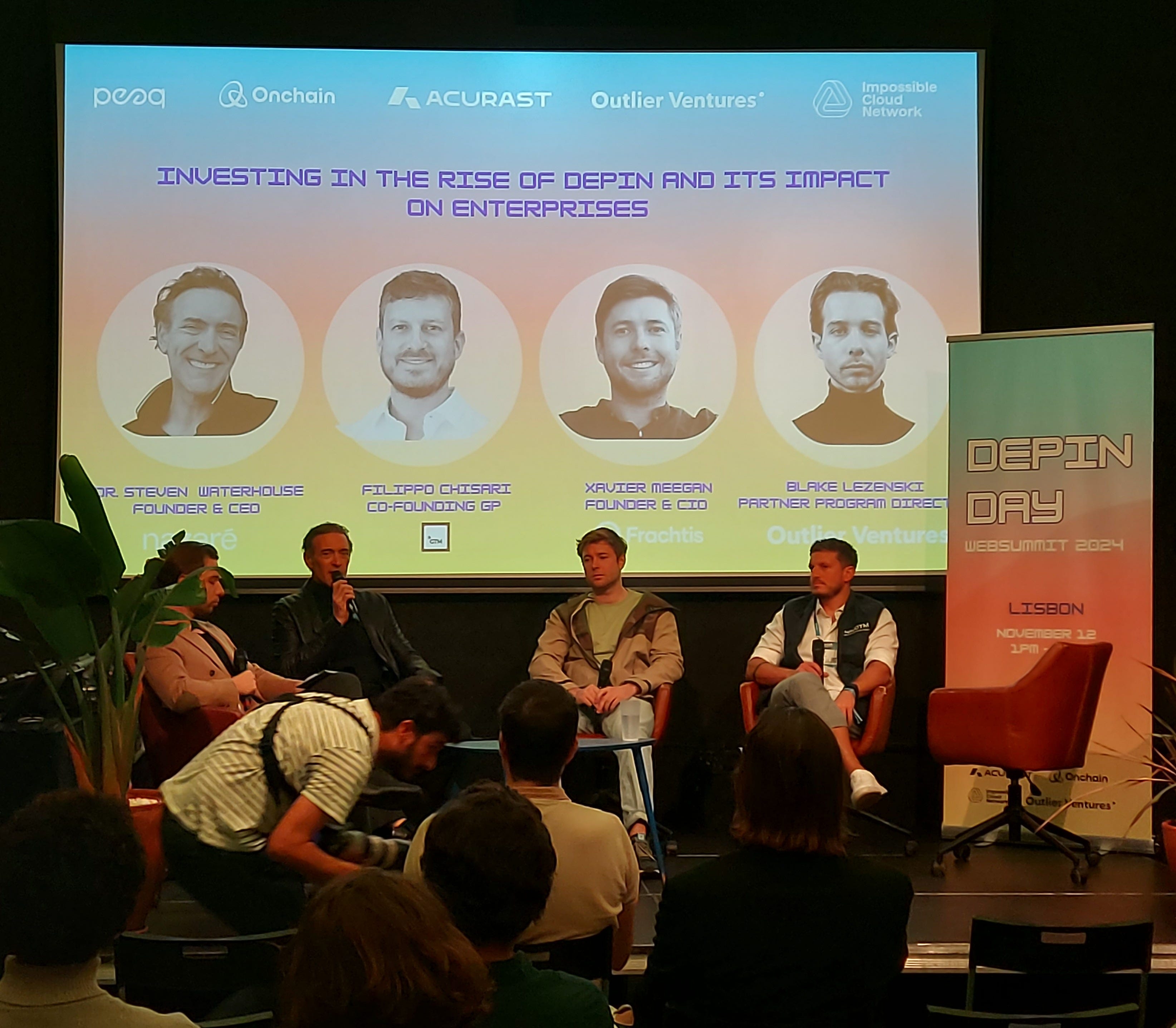
At WebSummit’s dedicated DePIN Day, a diverse lineup of speakers and panels delved into this intersection:
The DePIN Report Presentation by OnChain offered a comprehensive overview of the current state of DePIN projects.
Deep In DePIN Panel highlighted real-world applications, including secure IoT networks (IoTeX) and decentralized cybersecurity solutions (Naoris Protocol).
Investing in DePIN explored the growing interest from venture capitalists and corporations in backing projects at this frontier.
The recurring theme is that collaboration between DePIN and generative AI can lead to more intelligent, resilient, and scalable systems across industries.
Why It Matters to Business Leaders
This convergence is more than a buzzword for enterprises—it’s a strategic imperative. Here’s why businesses should care:
Operational Efficiency: Generative AI enhances the decision-making capabilities of decentralized networks, reducing overheads and improving outcomes.
New Revenue Streams: By integrating DePIN infrastructure, companies can create tokenized ecosystems where participants monetize resources (e.g., bandwidth, storage, or mobility data).
Resilience: Decentralized infrastructure is less vulnerable to single points of failure, making it ideal for critical systems like logistics, energy, and telecoms.
Use Cases in Action
Decentralized Logistics Networks
Generative AI forecasts demand spikes while DePIN coordinates delivery routes across peer-to-peer networks. Result? Reduced delivery costs and faster shipping.
Smart Cities
Generative AI optimizes energy consumption in real time. DePIN incentivizes residents to share unused solar power or EV battery storage.
Healthcare IoT
Wearable devices upload data to DePIN networks, ensuring secure patient data handling. AI detects patterns, providing insights into early diagnosis.
Supply Chain Traceability
AI models predict disruptions, while DePIN ensures transparent tracking of goods from source to shelf.
A Vision of the Future
The buzz at DePIN Day in Lisbon was palpable, with many attendees hailing the synergy between blockchain and AI as the next "internet moment." However, challenges remain, from regulatory hurdles to ensuring interoperability across systems.
Yet, the potential is undeniable. By marrying the computational creativity of generative AI with the decentralized ethos of DePIN, businesses can unlock efficiencies, drive innovation, and build ecosystems where everyone wins.
The next step? Experimentation and collaboration. For enterprises ready to lead this new era, the opportunity is now. Those who hesitate may struggle to catch up in a world increasingly governed by decentralized intelligence.